A team of geologists from China and Australia has found evidence that episodic eruptions from vast marine large igneous provinces (LIPs) drove repeated lower-order extinction events in the Triassic period.

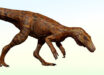
Early Earth. Image credit: Peter Sawyer / Smithsonian Institution.
“Mass extinctions are extremely catastrophic events on Earth,” said Dr. Jian-Jun Fan and colleague from Jilin University and Curtin University.
“Throughout Earth’s evolutionary history, numerous mass extinctions have occurred, with five major mass extinctions being particularly representative.”
“These extinctions have reshaped the course of life’s evolution on Earth.”
“In addition to the five major mass extinctions, many frequent, lower-order extinctions have also taken place on Earth, such as the Norian-Rhaetian extinction during the Triassic period.”
“Regarding the triggering mechanisms of extinctions, the five major events have been relatively well studied.”
“However, the triggering mechanisms of the frequent lower-order extinctions remain unclear.”
In the new study, the authors analyzed oceanic island, seamount, and plateau remnants in the Tibetan Plateau that trace the evolution of Meso- and Neo-Tethys oceans.
During the Triassic, three major episodes of marine LIPs formed at 250-248, 233-231, and 210-208 million years ago.
By integrating geological records of these LIP episodes with Triassic geological datasets, the researchers demonstrated a correlation between marine LIPs and at least four extinctions in marine biota, driven by the resultant anoxic-euxinic events.
“Marine LIPs account for half of the extinctions with an identifiable geological trigger during the Triassic,” the scientists said.
“This indicates that marine LIPs are a key driver of Triassic extinctions.”
“Marine LIP eruptions on Earth are frequent; however, evidence of ancient marine LIPs is likely significantly reduced by subduction during ocean basin closure.”
“This destruction renders such records difficult to identify and, even when identified, challenging to interpret and date precisely.”
“Orogenic belts (i.e., remnants of vanished ancient ocean basins) contain many unidentified ‘ghost’ marine LIPs, and these marine LIP eruptions likely constitute a key driver of other Phanerozoic extinctions that were previously under-recognized in Earth system models.”
The team’s paper appears in the journal Geology.
_____
Jian-Jun Fan et al. Marine large igneous provinces: Key drivers of Triassic recurrent extinction. Geology, published online January 20, 2026; doi: 10.1130/G53406.1