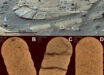
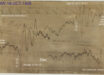
A new nanoscale analysis of the Bennu sample OREX-800066-3 returned by NASA’s OSIRIS-REx mission shows that organic compounds and minerals cluster into distinct regions, suggesting water once altered the asteroid in uneven, localized ways.

This mosaic image of asteroid Bennu is composed of 12 images collected on December 2, 2018 by OSIRIS-REx’s PolyCam instrument from a range of 15 miles (24 km). Image credit: NASA / NASA’s Goddard Space Flight Center / University of Arizona.
Bennu is classified as a primitive carbonaceous asteroid, and is considered one of the best-preserved remnants of the early Solar System.
Meteorites are traditionally considered a source of primitive asteroid materials; however, they carry the risk of being compromised by Earth’s atmospheric entry and terrestrial contamination.
Bennu’s returned samples are considered genuinely pristine, making findings derived from them significantly more reliable.
In new research, Stony Brook University scientists used nanoscale-infrared and Raman spectroscopy to characterize the OREX-800066-3 sample’s chemical composition at spatial resolutions down to 20-500 nanometers/pixel.
All measurements were performed without exposing the sample to air, as contact with the atmosphere can alter sensitive chemical bonds and organic functional groups, compromising the very signatures the researchers looked to detect.
In addition, both techniques are non-destructive, which is an essential consideration given that these samples are irreplaceable.
At nanoscales, the fundamental building blocks of asteroid mineralogy and organic chemistry can be directly observed in such pristine and precious samples.
The new analysis identified distinct chemical domains, such as aliphatic-rich, carbonate-rich and nitrogen-bearing organic-rich regions.
This demonstrates that water-driven alteration on Bennu was chemically heterogeneous.
The nitrogen-bearing organic functional groups are widely preserved despite extensive aqueous alteration.
“These findings carry broader significance for planetary science and astrobiology,” said Stony Brook University’s Professor Mehmet Yesiltas.
“They demonstrate survival of chemically labile, nitrogen-bearing organics through aqueous alteration on a small solar system body has direct implications for long-standing questions about how organic complexity is built up and preserved in primitive planetary materials.”
“By extension, it may reveal how organics relevant to prebiotic chemistry may have been delivered to early Earth via carbonaceous asteroids and may have played a role in the chemical processes that might have eventually led to life.”
The results appear in the Proceedings of the National Academy of Sciences.
_____
Mehmet Yesiltas et al. 2026. Nanoscale infrared spectroscopy reveals complex organic-mineral assemblages in asteroid Bennu. PNAS 123 (14): e2601891123; doi: 10.1073/pnas.2601891123