Space Exploration News
Oct 25, 2014 by News Staff

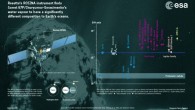
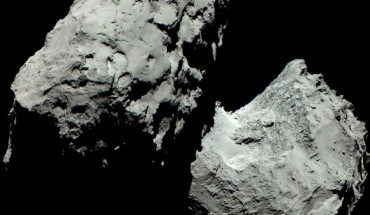
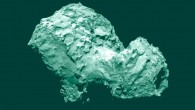
European scientists using the Rosetta Orbiter Sensor for Ion and Neutral Analysis (ROSINA) have found that Comet 67P/Churyumov-Gerasimenko, the target comet of ESA’s Rosetta mission, smells like a combination of rotten eggs, alcohol, horse urine, bitter almonds and vinegar. Comet 67P/Churyumov-Gerasimenko on 3 August 2014 from a distance of 285 km. Image credit: ESA / Rosetta / MPS for OSIRIS team / MPS / UPD / LAM / IAA / SSO / INTA / UPM / DASP...

Oct 21, 2014 by News Staff

Six astronaut-like members of NASA’s Hawaii Space Exploration Analog and Simulation (HI-SEAS) team have embarked on the longest dedicated space travel...

Oct 21, 2014 by News Staff

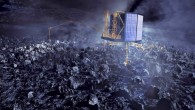
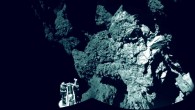
The European Space Agency (ESA) is inviting the public to suggest a name for the spot where the Rosetta mission’s lander Philae will touch down on...

Oct 20, 2014 by News Staff

Three NASA Mars orbiters – Mars Odyssey, Mars Reconnaissance Orbiter, MAVEN orbiter – and two Mars rovers are part of a campaign to study Comet...

Oct 19, 2014 by News Staff

On 19 October 2014, Comet Siding Spring will come within about 139,500 km of Mars – less than half the distance between Earth and our moon and less...

Oct 17, 2014 by News Staff

Mimas – the smallest and innermost of Saturn’s eight main moons – has either a rugby ball-shaped rocky core or an underground ‘life-friendly’...

Oct 15, 2014 by News Staff

European Space Agency’s Rosetta mission managers have confirmed the place and time they will attempt to land the Rosetta spacecraft’s Philae lander...

Oct 14, 2014 by News Staff

A new study published in the journal Nature Geoscience has identified 70 volcanic features scattered across the lunar surface, all younger than 100 million...

Oct 7, 2014 by News Staff

Data from two instruments aboard NASA’s Mars Reconnaissance Orbiter have led to the discovery of a rare acid-sulfate mineral deposit on Mars, providing...

Oct 2, 2014 by News Staff

According to a new study led by Prof Maria Zuber of MIT, Oceanus Procellarum – a vast mare on the western edge of the Moon’s near side –...

Sep 26, 2014 by News Staff

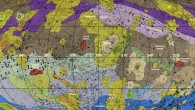
A team of researchers led by Dr Kenneth Tanaka of the U.S. Geological Survey has produced a new global geologic map of Mars that records the distribution...

Sep 26, 2014 by News Staff

Half of the water on our planet predates the formation of the Sun, according to a groundbreaking study carried out by a team of researchers from the United...

Sep 25, 2014 by News Staff

NASA’s MAVEN spacecraft – the first spacecraft dedicated to exploring the upper atmosphere of Mars – has returned its first pictures...

Sep 22, 2014 by News Staff

On September 21, 2014, NASA’s Mars Atmosphere and Volatile Evolution (MAVEN) spacecraft successfully entered the orbit of the Red Planet after completing...

Sep 20, 2014 by News Staff

Brown University planetary scientists in a new study have found that tidal heating is the main reason responsible for the present appearance of Miranda...

Sep 17, 2014 by News Staff

A team of scientists from the United Kingdom and Greece led by Dr Elias Chatzitheodoridis of the National Technical University of Athens has found a mysterious...

Sep 15, 2014 by News Staff

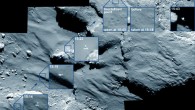
The European Space Agency’s Rosetta mission has picked a location on Comet 67P/Churyumov–Gerasimenko where it aims to land the Rosetta’s lander,...

Aug 25, 2014 by News Staff

On August 25, 1989, NASA’s Voyager 2 spacecraft passed within about 40,000 km of Triton, the largest moon of the planet Neptune. In commemoration...

Aug 22, 2014 by News Staff

Paleosols (ancient fossilized soils) filling the Yellowknife Bay geologic formation within the 3.7-billion-year-old Gale Crater on Mars are strong evidence...

Jul 29, 2014 by News Staff

A team of U.S. researchers using data from NASA’s Cassini spacecraft has discovered 101 active geysers erupting on Enceladus, the sixth-largest moon...