NASA’s Perseverance rover has uncovered the most extensive evidence yet of complex organic molecules on Mars, detecting macromolecular carbon in rocks from the Bright Angel formation in Jezero Crater. The discovery does not constitute evidence of alien life, but it strengthens the case that the building blocks of life may have been widespread on the Red Planet billions of years ago.

This artist’s concept depicts NASA’s Mars rover Perseverance on the surface of the Red Planet. Image credit: NASA / JPL-Caltech.
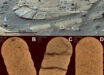
Using the SHERLOC instrument mounted on the rover’s robotic arm, the Perseverance team made hundreds of organic detections across several rocks in the Bright Angel outcrop, a light-toned formation in Neretva Vallis, the ancient river channel that once fed Jezero’s paleolake.
The detected material consists of macromolecular carbon (MMC), large tangled networks of carbon atoms commonly found in rocks on Earth and meteorites and can arise from biotic or abiotic sources.
Because of its durability, the MMC can survive harsh environmental conditions that would destroy simpler organic molecules.
“The Martian surface environment includes radiation and chemical oxidants that are destructive to organics, and terrestrial laboratory simulations have shown that the survival time of organics in Martian-like conditions — especially at or near the surface — depends on factors such as the type of organic molecule and the surrounding minerals,” said Dr. Ashley Murphy, a postdoctoral researcher at the Planetary Science Institute.
“The MMC detected in the Bright Angel mudstones is either resistant to degradation and/or has been sufficiently shielded by other minerals, such as clays, or iron-rich Martian soil.”
In one rock, the MMC is associated with secondary carbonate and sulfate minerals that formed when fluids altered the rocks after their deposition.
In another, the material occurs within the primary silicate-rich matrix of the mudstone itself.
These differing relationships suggest that the organic matter may have been incorporated through multiple processes and at different stages of the rocks’ history.
“While the specific formation mechanism of the MMC detected in the Bright Angel mudstones remains unknown, this is still one of the most exciting findings to date,” Dr. Murphy said.
These detections also represent an organic-bearing mudstone more than 3,500 km away from the detections reported from NASA’s Curiosity rover measurements in Gale Crater, which indicates that the habitability of Mars, and the availability of organics, may have been widespread across the planet billions of years ago.
“It is encouraging for Martian habitability,” Dr. Murphy said.
“This indicates that billions of years ago, organics may have been more than just locally present and may have been more widely available in ancient lakes and rivers on Mars.”
The researchers also outlined several possible origins for the organics: the material could have arrived through carbon-rich meteorites and interplanetary dust, formed through abiotic geochemical reactions involving water and rock, or originated from biological activity.
“Biological, geological, and meteoritic sources of the organics observed are all possible,” they said.
“Further constraining the origin, distribution, and alteration history of the organic carbon requires high-resolution and high-sensitivity analyses in terrestrial laboratories, which can be facilitated by the return of this sample to Earth.”
The findings appear in the journal Science Advances.
_____
Ashley E. Murphy et al. 2026. Spatially distributed complex organic matter detected in an ancient river valley in Jezero crater, Mars. Science Advances 12 (26); doi: 10.1126/sciadv.adx00