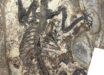
Named Panthera pardus burgtonnae, the newly-identified leopard subspecies roamed Europe during the Eemian interglacial period and was far more heavily built than modern leopards.
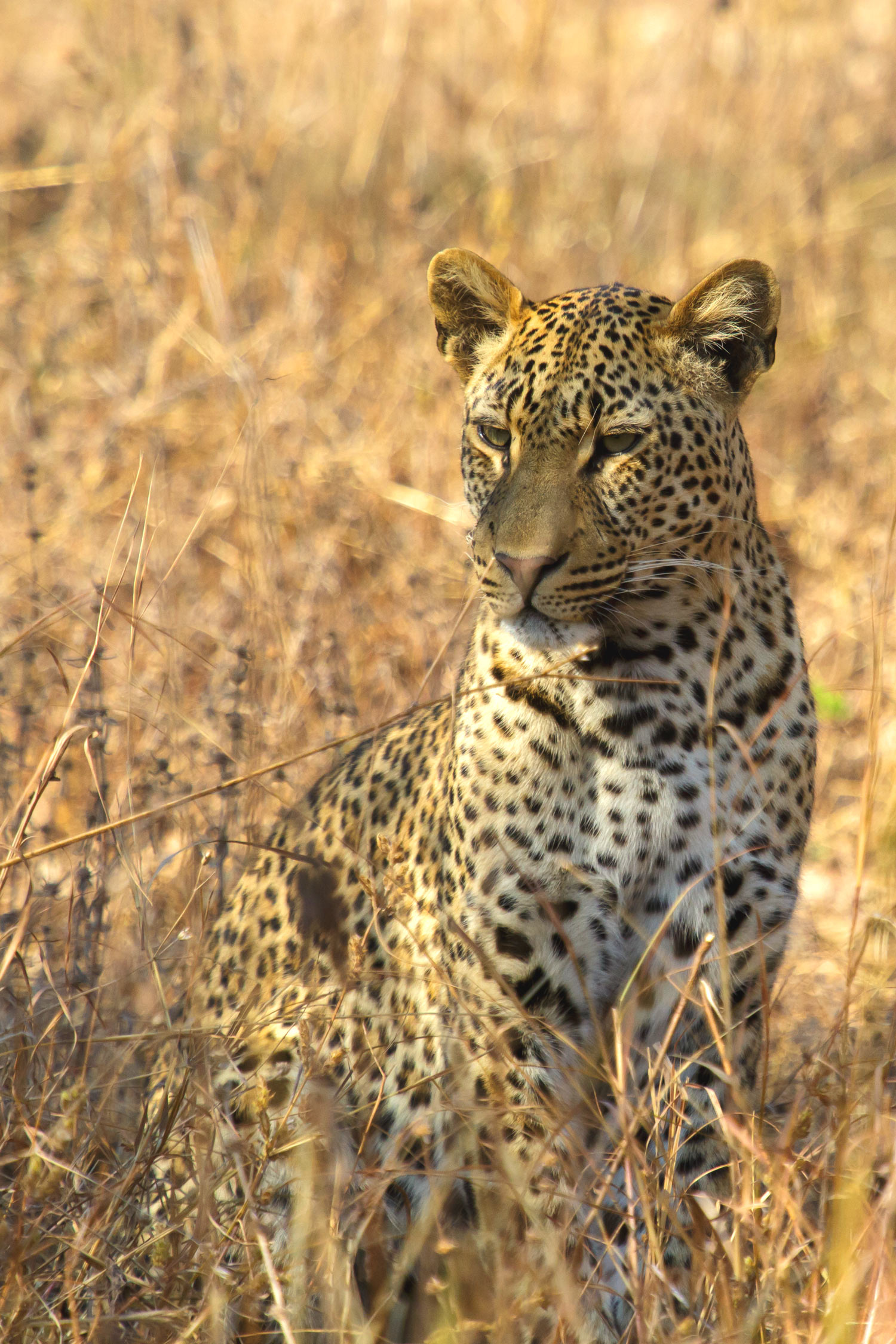
Although Panthera pardus burgtonnae was roughly similar in length to modern African leopards (Panthera pardus pardus), its skeleton suggests a much stockier build. Image credit: Thomas Fuhrmann / CC BY-SA 4.0.
Panthera pardus burgtonnae lived in what is now Germany during the Eemian interglacial period, a warm interval roughly 130,000 to 115,000 years ago that preceded the last Ice Age.
The subspecies’ description is based on part of a lower jaw, an upper carnassial tooth and several limb bones.
The specimens were recovered in 1993 by a private collector from the Burgtonna travertine deposits, a fossil-rich site whose excavation history stretches back centuries.
“Finds of fossil remains of large mammals from the Burgtonna travertine deposits in Thuringia, Germany, which had been mined for centuries, mark the beginning of Quaternary paleontological research in Europe,” said German paleontologists Helmut Hemmer of Mainz and Ralf-Dietrich Kahlke from the Senckenberg Research Station of Quaternary Palaeontology.
“With the earliest scientifically based interpretation of Pleistocene elephant remains by Wilhelm Ernst Tentzel as early as 1696, the Pleistocene site permanently became the focus of supra-regional natural sciences.”
“The Burgtonna travertines yielded fossil finds, to which numerous individual studies and a comprehensive monographic presentation were devoted. Up to that time, the felids Panthera leo ssp. (cf. spelaea) and Felis silvestris ssp. were known from the site.”
“At the beginning of the 1990s, intensified travertine quarrying in the Burgtonna area resulted in new large-scale outcrops, from which the private collector Andreas Lindner was able to recover fossil finds, including approximately 2,500 vertebrate remains over the years.”
“The remains of the new subspecies were found in 1993 by Lindner in the southernmost area of the Burgtonna southern pit.”
According to the paleontologists, the Burgtonna remains belonged to a slender-jawed but robustly built leopard, likely a female, with teeth bearing only minor wear suggesting a relatively young individual.
The animal weighed approximately 35 to 40 kg and stood roughly 107 to 112 cm in head-and-body length.
The authors suggest that it belonged to a group of fossils, previously found at the German sites of Mosbach and Taubach, that share distinctive dental characteristics setting them apart from the more familiar leopards of the last glacial period in Europe.
Those later leopards are reclassified by the team under the name Panthera pardus antiqua.
“Panthera pardus burgtonnae, which is now known in detail and first recorded in Central Europe during a cold phase of the late Middle Pleistocene, was widespread during the early Late Pleistocene, i.e. MIS 5e (Eemian), at least from Central Europe up to the Apennine Peninsula and appeared in Western Europe up to the last glacial period before MIS 2,” the researchers said.
“However, the last glacial (Weichselian) at least in Central and Southeast Europe was mainly characterized by the then very common Panthera pardus antiqua.”
“Both of these late Middle Pleistocene and Late Pleistocene European leopard forms were very large animals that, in contrast to today’s African and Asian species representatives, were characterized by a heavy, jaguar-like build with a high body mass index.”
The findings appear in the journal Palaeobiodiversity and Palaeoenvironments.
_____
H. Hemmer & R.-D. Kahlke. Panthera pardus burgtonnae ssp. nov. (Mammalia, Carnivora, Felidae) from the Eemian of Burgtonna (Thuringia, Germany) – Late Pleistocene European leopards in a new perspective. Palaeobio Palaeoenv, published online June 13, 2026; doi: 10.1007/s12549-026-00702-8