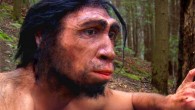
Paleoanthropologists have identified a trove of Denisovan fossils from a cave in China’s Yunnan province, extending the known range of the elusive human...
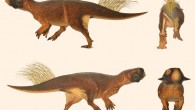
Scientists have identified the first dinosaur fossil from a remote western section of the Bayan Gobi Formation in China’s Inner Mongolia, extending the...
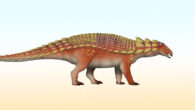
Cranial fossils of a nodosaurid ankylosaur unearthed more than two decades ago on the Japanese island of Hokkaido have been recognized as belonging to...
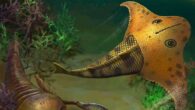
Paleontologists in China have identified a new species of armored, jawless fish from rocks around 419 million years old whose skull was shaped like the...
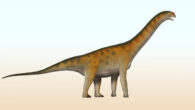
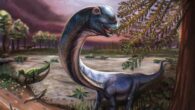
Paleontologists working in southern China have identified a new species of sauropod dinosaur that appears to belong to a group never before documented...
New research led by the University of California, Berkeley reveals that beyond Neanderthals and Denisovans, humans interbred with two mysterious ‘ghost’...
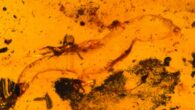
Paleontologists have described a new genus and species of ancient gecko found in two pieces of amber from the 99-million-year-old (mid-Cretaceous) amber...
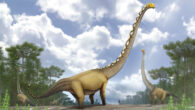
Paleontologists working in northeastern Thailand have identified a new species of mamenchisaurid sauropod dinosaur, offering fresh evidence that a group...
Paleontologists have identified a previously unknown species of amphicyonid — the extinct family of carnivorous mammals popularly known as bear-dogs...
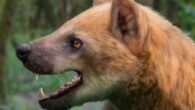
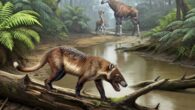
Paleontologists have recovered the fossilized remains of three hyaenodont species, including one previously unknown to science, from Miocene sediments...
Scientists have extracted and analyzed proteins from the tooth enamel of six Homo erectus individuals who lived in China roughly 400,000 years ago, offering...
Examining 31 ancient societies across Europe, Asia, and the Americas, researchers found that democratic systems were more widespread than once believed...
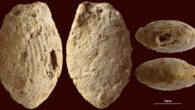
A cache of 142 beads and pendants from five Natufian (15,000 to 11,650 years before the present) sites in Israel reveals that clay was first used not for...
The ancestors of today’s malaria-spreading mosquitoes in the Anopheles leucosphyrus (Leucosphyrus) group may have shifted to feeding on humans around...
New dating of fossil skulls from the Early Pleistocene site of Yunxian in China suggests that early members of Homo erectus lived in eastern Asia nearly...
Between 73,000 and 20,000 years ago (Late Pleistocene), the Japanese Archipelago was inhabited by cave lions (Panthera spelaea), according to a new genetic...
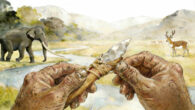
Technological innovations in Africa and Western Europe in the later part of the Middle Pleistocene signal the behavioral complexity of hominin populations....