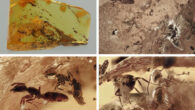
El Soplao, a fossil site tucked into the hills of Cantabria in northern Spain, stands out for yielding amber pieces with a blue-violet hue and abundant...
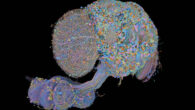
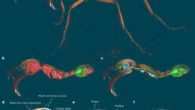
After nearly two decades of work, scientists have completed a wiring diagram of the central nervous system of an adult male fruit fly (Drosophila melanogaster).
The...
Size, it turns out, is not everything when it comes to insect vision. According to a new paper published this week in the Proceedings of the National Academy...
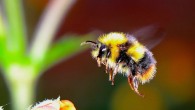
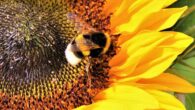
In a new study published in the journal Royal Society Open Science, buff-tailed bumblebees (Bombus terrestris) exposed to a brood-killing fungus shifted...
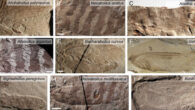
Using lasers, computer models and AI, researchers reconstructed the calls of 165-million-year-old relatives of modern crickets and katydids from fossilized...
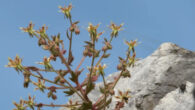
More than 150 years after Charles Darwin first wondered whether certain sticky-leaved Saxifraga plants might be secretly carnivorous, Kunming Institute...
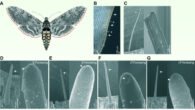
Scientists at the Max Planck Institute for Chemical Ecology have found that moth wings are equipped with odor-detecting receptors, suggesting the insects...
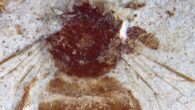
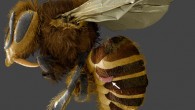
Paleontologists have announced the discovery of a new fossil honeybee species that fills a long-standing gap in the evolutionary record of the genus Apis.
Apis...
Slow-motion video reveals that buff-tailed bumblebees (Bombus terrestris) respond to sweet and bitter tastes with distinct, context-dependent behaviors...
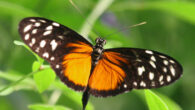
A team of entomologists led by the University of Bristol and the Smithsonian Tropical Research Institute has compiled decades of data from butterfly houses,...
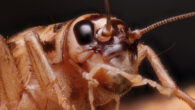
When an antenna of the house cricket (Acheta domesticus) is touched with a heated probe, something curious happens: the insect turns its attention to the...
A new analysis of honeybee vision suggests their ability to distinguish quantities is not a trick of visual patterns, but evidence of genuine numerical...
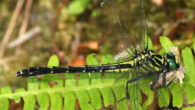
A newly-identified visual protein lets dragonflies detect deep red and near-infrared light using a mechanism strikingly similar to that in human eyes,...
Honeybees (Apis mellifera) are important ecological and agricultural pollinators. In the United States, beekeepers experience substantial annual colony...
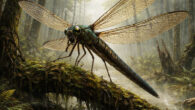
Long thought to be fueled by increased atmospheric oxygen concentration, enormous griffinflies from the Carboniferous period, 300 million years ago, may...
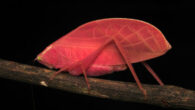
Entomologists in Panama have observed a leaf-masquerading katydid species that begins life bright pink before turning green days later, a shift that may...
Using powerful X-ray beams, automated robotics and AI, entomologists have created interactive digital images representing 212 genera and 792 species of...
Fossils trapped in amber aren’t just beautiful, they may preserve real ecological interactions, including possible parasitism or commensal relationships...
The ancestors of today’s malaria-spreading mosquitoes in the Anopheles leucosphyrus (Leucosphyrus) group may have shifted to feeding on humans around...