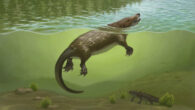
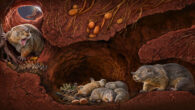
Megacauda sungei, a furry, otter-size mammaliaform that lived in what is now Inner Mongolia, China, some 165 million years ago, was semiaquatic, swimming...
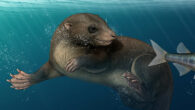
Dongoconodon platycauda, a small eutriconodontan mammal that lived alongside dinosaurs in what is now northeastern China paddled through the water with...
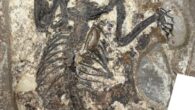
A new species of deltatheroidan mammal from China may be the oldest confirmed ancestor of marsupials yet found, offering fresh evidence that Asia played...
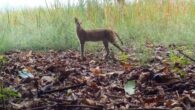
A new camera technique in Congo’s Lomami National Park reveals how monkeys, pangolins and civets divide up life between the ground, the understory and...
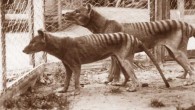
A new study analyzing the walking patterns of predatory mammals suggests that the extinct thylacine (Thylacinus cynocephalus) likely hunted more like an...
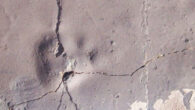
A single fossilized footprint found in volcanic mud on a remote Antarctic island is the first known trackway from a mammal in Antarctica, and the earliest...
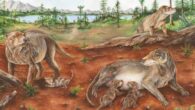
Paleontologists studying a 236-million-year-old cynodont fossil from Argentina say they have found the earliest evidence yet of viviparity (live birth)...
Dinosaurs evolved into some of the largest animals ever to walk the Earth, but a new mathematical model suggests that early mammals may have crowded them...
Domestic cats (Felis catus) develop the same patterns of brain shrinkage and neurological decline as aging humans, and scientists think that makes them...
Paleontologists have identified a previously unknown species of amphicyonid — the extinct family of carnivorous mammals popularly known as bear-dogs...
Along with armadillos and anteaters, sloths are members of Xenarthra, the only clade of placental mammals to have originated in South America. In new research,...
Paleontologists have descibed a new species of the multituberculate mammal genus Cimolodon based on a fossil found in Baja California, Mexico.
An illustration...
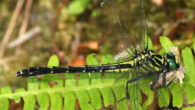
A newly-identified visual protein lets dragonflies detect deep red and near-infrared light using a mechanism strikingly similar to that in human eyes,...
Using high-resolution CT and synchrotron scanning, paleontologists confirmed that the fossilized specimen from the Early Triassic of the South African...
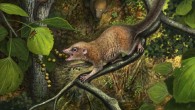
The newly-discovered minuscule fossils of Purgatorius — a shrew-sized mammal considered the earliest known relative of all primates, including humans,...
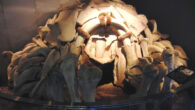
The Upper Paleolithic site of Mezhyrich, located in Cherkasy oblast, central Ukraine, is home to four remarkable mammoth bone structures. Ranging from...
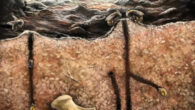
Bees are well known for their species and remarkable behavioral diversity, ranging from solitary species that nest in burrows to social species that construct...
The evolution of the modern mammal jaw is more complex than previously thought, according to a new analysis of fossils belonging to two mammaliamorph species:...
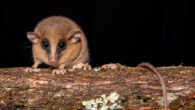
Scientists have identified a new species in the marsupial genus Marmosa from a single specimen collected on the eastern side of the Andes in San Martín...