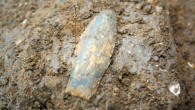
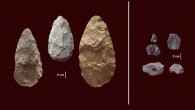
Through excavation of the Debra L. Friedkin site northwest of Austin, Texas, a team of archaeologists has identified a particular style of projectile point...
New evidence from Karnatukul (Serpents Glen), a rock shelter site in the Australian Western Desert, indicates that Aboriginal people lived in this interior...
A study of Pliocene to recent bivalves and gastropods from the Western Atlantic suggests laziness might be a fruitful strategy for survival of individuals,...
A Middle Pleistocene cave bear, also known as the Deninger’s bear (Ursus deningeri), is generally regarded as the direct ancestor of the mostly vegetarian...
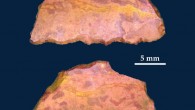
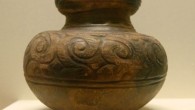
In one of the largest studies of its kind, an international team of researchers conducted organic residue analysis of almost 800 ceramic vessels from 46...
An international team of scientists has found evidence of an interaction between Ice Age humans and now-extinct giant ground sloths.
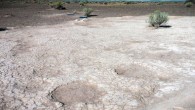
White Sands footprints...
A team of Canadian scientists from the University of Victoria and the Hakai Institute has found fossilized human footprints of at least three different...
Columbian mammoths (Mammuthus columbi) may have moved like modern elephants with infants in matriarchal groups. That’s according to a team of U.S. paleontologists...
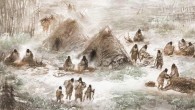
Genetic analysis of DNA from a female infant found at the Upward Sun River archaeological site in Alaska has revealed a previously unknown Native American...
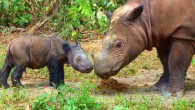
An international team of scientists has produced the first whole-genome sequence for the endangered Sumatran rhinoceros (Dicerorhinus sumatrensis), the...
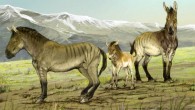
An analysis of mitochondrial and nuclear DNA from fossils of extinct New World stilt-legged horses reveals that, contrary to previous findings, these enigmatic...
An older adult male Neanderthal from the Late Pleistocene, who had suffered multiple injuries, became deaf and must have relied on social support from...
An international team of researchers has used advanced DNA sequencing methods to retrieve and analyze mitochondrial genome data from two lineages of saber-toothed...
A previously unknown mass extinction may have killed up to a third of large marine animals 2-3 million years ago, according to an international team of...
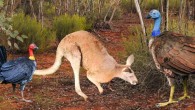
Progura gallinacea, a species of extinct giant brush turkey that lived in Australia during the Late Pliocene and Early Pleistocene (1-3 million years ago),...
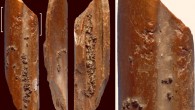
A Vanderbilt University-led team of archaeologists has made a remarkable discovery in Peru: thousands of 15,000- to 10,000-year-old artifacts, including...
Archaeological deposits from a cave on Barrow Island, a large limestone continental island located 60 km off the Pilbara coast of Western Australia, reveal...