Dating of Homo naledi fossils from the Dinaledi Chamber of the Rising Star cave system, South Africa, shows that they were deposited between about 335,000...
New research led by the Max Planck Institute for Evolutionary Anthropology (MPI-EVA) shows that Pleistocene cave sediments represent a rich source of ancient...
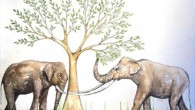
Researchers digging at the Cerutti Mastodon site, an archaeological site from the early late Pleistocene epoch near San Diego, California, found animal...
Two partial archaic human skulls unearthed in central China provide a new window into the biology and populations patterns of the immediate predecessors...
A novel technique developed by a team of researchers in Australia has made it possible to produce some of the first reliable radiocarbon dates for Australian...
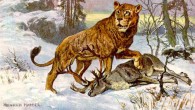
According to a new study, Stone Age humans may have hunted Eurasian cave lions (Panthera leo spelaea) for their pelts, perhaps contributing to their extinction.
Cave...
According to a new study published in the journal Molecular Phylogenetics and Evolution, the yellow-bellied kingsnake (Lampropeltis calligaster), a snake...
Early Homo sapiens arrived in South America earlier than believed, new research shows.
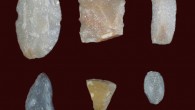
Sample of stone tools (scrapers, flakes and bipolar cobble) found...
An international team of paleontologists from Belgium, Germany, Canada and Japan has taken a step back in time and provided a new insight into the lifestyle...
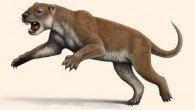
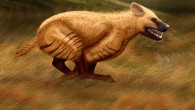
An international team of paleontologists has proposed that an extinct animal called the marsupial lion (Thylacoleo carnifex) hunted in a very unique way...
New research led by University of Victoria’s April Nowell reveals surprisingly sophisticated adaptations by early humans living 250,000 years ago in...
An international team of paleontologists headed by Prof. Mark Purnell of the University of Leicester, UK, and Dr. Yuan Wang from the Institute of Vertebrate...
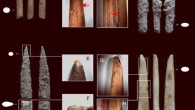
A team of archaeologists studying bone artifacts discovered in a cave on the island of Unguja in the Zanzibar archipelago of Tanzania has found evidence...
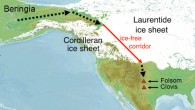
Evidence from bison fossils has enabled researchers to shape a more accurate timeline for the so-called ‘ice-free corridor’ — a route for Pleistocene...
An international team of genetic researchers from the United States and Europe has found new evidence that there was an Ice Age refugium in southern Arabia.
Spatial...
According to a team of scientists headed by Dr. Jean-Jacques Hublin at the Max Planck Institute for Evolutionary Anthropology in Leipzig, Germany, tooth-marks...
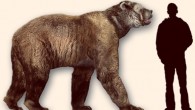
A study led by Dr. Kieren Mitchell of the University of Adelaide sheds new light on the evolution of what are believed to be the largest bears that ever...
The first analysis of nuclear DNA from Sima de los Huesos hominins, conducted by Dr. Matthias Meyer of the Max Planck Institute for Evolutionary Anthropology...
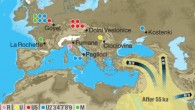
DNA evidence lifted from the bones and teeth of hunter-gatherers who lived in Europe from 35,000 years ago (Late Pleistocene) to 7,000 years ago (early...