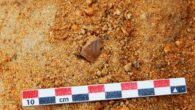
Archaeologists have discovered Oldowan stone tools in three distinct archaeological horizons, spanning approximately 300,000 years (2.75 to 2.44 million...
The Crimean Peninsula in Ukraine contains key Middle to Upper Paleolithic transitional archaeological sites, including the site of Starosele, where archaeologists...
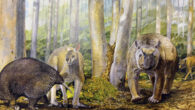
In a new study, University of New South Wales Professor Mike Archer and colleagues re-examined the fossilized tibia (lower leg bone) of a now-extinct,...
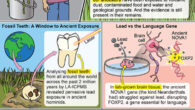
Several hominids — Australopithecus africanus, Paranthropus robustus, early Homo sp., Gigantopithecus blacki, Pongo sp., Papio sp., Homo neanderthalensis,...
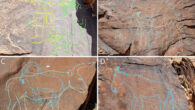
During the Pleistocene-Holocene transition (around 12,000 years ago), humans exploited a network of seasonal water bodies in the interior of northern Arabia,...
Diverse forms of Homo, including Homo longi, coexisted during the Middle Pleistocene. Whether these fossil humans represent different species is debated....
Archaeologists have discovered two Neanderthals tracksites in the southwestern most region of Europe: at Monte Clérigo, dated to 78,000 years ago, trackways...
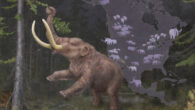
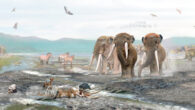
Ancient DNA has been useful in reconciling deep evolutionary relationships and responses to ecological changes in elephants and their relatives. In new...
In a new study, scientists analyzed ancient microbial DNA from 483 mammoth remains spanning over 1 million years, including 440 newly-sequenced and unpublished...
The dispersal of archaic hominins beyond mainland Southeast Asia (Sunda) represents the earliest evidence for humans crossing ocean barriers to reach isolated...
The central Congo Basin contains the world’s most extensive tropical peatland complex, spanning 16.7 million hectares. Until now, radiocarbon dating...
Most megafaunal herbivores in the Americas went extinct around 10,000 years ago, presumably disrupting the long-distance seed dispersal of large, fleshy-fruited...
The Tumat Puppies, two permafrost-preserved Late Pleistocene canids, have been hypothesized to have been littermates and early domesticated dogs due to...
Genetic and archaeological evidence imply a second major movement of Neanderthals from Western to Central and Eastern Eurasia sometime in the Late Pleistocene....
Paranthropus robustus is a well-documented hominin species with no genetic evidence reported so far. It lived between 2 million and 1.2 million years ago...
Today, there are only two sloth species, but historically, there were dozens of them, including one with a bottle-nosed snout that ate ants and another...
A 190,000- to 10,000-year-old fossilized mandible found in the Penghu Channel, Taiwan, in the 2000s belonged to a male Denisovan, according to an analysis...
Scientists have extracted and analyzed 34 new mammoth (Mammuthus spp.) mitochondrial genomes, including two Early Pleistocene and nine Middle Pleistocene...
The Saharo-Arabian Desert is one of the largest biogeographical barriers on Earth, impeding dispersals between Africa and Eurasia, including movements...