Recent discoveries of two diminutive hominin species, Homo floresiensis and Homo luzonensis, raise questions regarding how extreme body size reduction...
Eastern Africa preserves the most complete record of human evolution anywhere in the world but scientists have little knowledge of how long-term biogeographic...
Tanimbar is one of the main island groups in Wallacea (a group of mainly Indonesian islands separated by deep-water straits from the Asian and Australian...
Archaeologists in Argentina have analyzed the 21,000-year-old fossil remains with cut marks belonging to a specimen of the exinct glyptodont Neosclerocalyptus,...
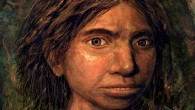
Archaeologists have found a new hominin rib specimen in Baishiya Karst Cave, one of the only two places where Denisovans are known to have lived. Dated...
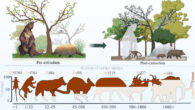
Across the last 50,000 years land vertebrate faunas have experienced severe losses of large species (megafauna), with most extinctions occurring in the...
Cold, dense clouds in the interstellar medium of our Milky Way Galaxy are around four-five orders of magnitude denser than their diffuse counterparts....
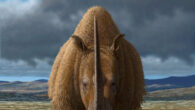
The extinction of the woolly rhinoceros (Coelodonta antiquitatis) at the onset of the Holocene remains an enigma, with conflicting evidence regarding its...
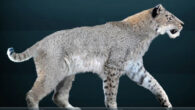
Paleontologists from the University of Texas at Austin and elsewhere have discovered a fragmentary jaw of the scimitar-toothed cat Homotherium on McFaddin...
Paleontologists from the Museums Victoria Research Institute and elsewhere have unearthed a nearly 50,000-year-old skeleton of Simosthenurus occidentalis...
New World porcupines originated in South America and dispersed into North America between 4 and 3 million years ago. Prehensile-tailed porcupines today...
Around 12,440-12,550 years ago, hunter-gatherers returned regularly to Tagua Tagua Lake in Chile to hunt ancient elephant relatives called gomphotheres...
Because of persisting narratives of isolation, inaccessibility, and unattractiveness, the initial peopling of one of the eastern Mediterranean islands...
Kromdraai is a Plio-Pleistocene site located in the Cradle of Humankind, South Africa. It has produced diverse and abundant faunal assemblages and key...
An international team of scientists has generated the highest quality reference genome to date of the world’s most popular coffee species, Arabica coffee...
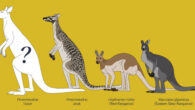
The three new species belong to the extinct kangaroo genus Protemnodon, which were common members of Cenozoic communities across Australia and New Guinea...
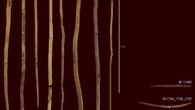
Wooden tools rarely survive in the Paleolithic record limiting our understanding of Pleistocene hunter-gather lifeways. With 187 wooden artifacts, the...
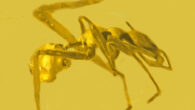
Myrmarachne colombiana is the first species of ant-mimicking spider ever found in copal (fossilized resin) from Colombia.
Myrmarachne colombiana. Image...
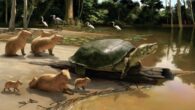
Peltocephalus maturin possibly reached about 1.8 m (5.9 feet) in carapace length and is among the largest freshwater turtles ever found. This finding presents...