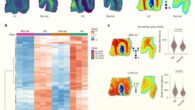
Glucosamine, a widely used over-the-counter supplement for joint pain, may worsen outcomes in people with Alzheimer’s disease and related dementias,...
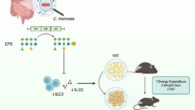
Clostridium immunis, a human gut bacterium, secretes a large sugar molecule that can shrink visceral fat and curb weight gain in mice, according to a paper...
Paleoanthropologists have identified a trove of Denisovan fossils from a cave in China’s Yunnan province, extending the known range of the elusive human...
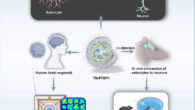
Researchers at the University of South Carolina have developed a nanoparticle-based treatment that appears to improve performance on standard memory and...
Researchers at King’s College London have identified a surprising new therapeutic mechanism for a type of heart failure called heart failure with preserved...
Neanderthals vanished roughly 42,000 years ago, but a piece of their biology appears to be quietly at work in some people today, according to a new study...
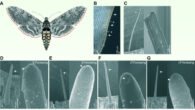
Scientists at the Max Planck Institute for Chemical Ecology have found that moth wings are equipped with odor-detecting receptors, suggesting the insects...
Adding breakfast back into the daily routine of teens around age 18 who habitually skip the meal can meaningfully improve their nutrition, with the biggest...
The extinct Eurasian cave lion (Panthera spelaea) and today’s African and Asian lions (Panthera leo) belong to separate evolutionary lineages that diverged...
In a small clinical trial, researchers at the Ohio State University found that a tomato juice rich in lycopene and soy isoflavones lowered several proteins...
Scientists have extracted and analyzed proteins from the tooth enamel of six Homo erectus individuals who lived in China roughly 400,000 years ago, offering...
New research reveals that 3.4 billion years ago (Archean Eon), ancient microbes relied on molybdenum — a metal that was vanishingly rare at the time...
A new study by Texas A&M University scientists offers fresh clues to a long-standing puzzle: why people who drink coffee tend to live longer and develop...
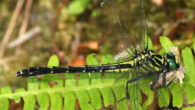
A newly-identified visual protein lets dragonflies detect deep red and near-infrared light using a mechanism strikingly similar to that in human eyes,...
Paleontologists have examined 289-million-year-old specimens of the early reptile Captorhinus aguti that preserve a covering of three-dimensional skin,...
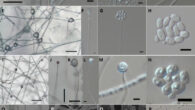
A team of researchers from the United States and Germany has identified fungal proteins that can freeze water at relatively warm subzero temperatures,...
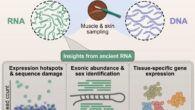
Scientists have successfully extracted and sequenced ancient RNA from permafrost-preserved tissues of 10 woolly mammoths. One of these, dated to be 39,000...
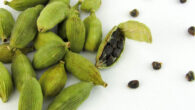
Cardamom (Elettaria cardamomum) seed extract as well as its main bioactive ingredient, 1,8-cineole, have the potential to act as a beneficial antiviral...
Exploring the possibility of the survival of life under extraterrestrial conditions is an important goal of astrobiology. In a new study, scientists used...
Using a technique called Resonance Raman spectroscopy, paleontologists have detected hemoglobin remnants in bone extracts from two dinosaur species, Brachylophosaurus...