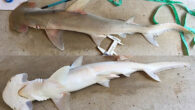
A team of marine biologists led by a Florida International University researcher has described a new species of the shark genus Sphyrna from the Caribbean...
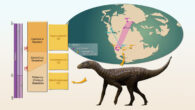
A new genus and species of silesaurid being named Gondwanax paraisensis has been identified from the fossilized remains discovered in Southern Brazil.
Gondwanax...
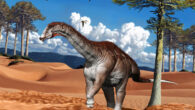
Fossilized remains found in Patagonia, Argentina back in 2009 represent a new genus and species of plant-eating dinosaur that belonged to a group called...
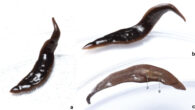
Amaga pseudobama has been found in three locations in North Carolina and in some infested plants from Georgia.
Amaga pseudobama, living specimen collected...
Paleontologists in Brazil have examined the well-preserved fossilized remains of two mammal-precursor species: Brasilodon quadrangularis and Riograndia...
Easter Island, also known as Rapa Nui, is one of the most isolated inhabited places in the world. It has captured the imagination of many owing to its...
Paleontologists have unearthed a 20-million-year-old fossilized skeleton of a species of the dugongid sirenian mammal Culebratherium with shark and crocodylian...
A team of paleontologists led by Southern Methodist University has discovered more than 260 footprints of Early Cretaceous dinosaurs in Brazil and in Cameroon,...
An international team of ornithologists has described a cryptic new species of the bird genus Oceanites from Chile.
The Andean storm-petrel (Oceanites...
Bolivian coffee producers have filmed the Amazon weasel (Neogale africana) near their shade-grown plots as part of a citizen science monitoring program.
The...
Archaeologists in Argentina have analyzed the 21,000-year-old fossil remains with cut marks belonging to a specimen of the exinct glyptodont Neosclerocalyptus,...
The newly-discovered structures predate the famous Inca citadel of Machu Picchu by roughly 3,500 years, and were made long before the Inca and their predecessors,...
Paleobotanists have described nine new species of the grape family Vitaceae on the basis of 60- to 19-million-year-old fossil seeds discovered in four...
The nine-banded armadillo (Dasypus novemcinctus) is actually four different species, including a previously undescribed species endemic to the Guiana Shield,...
A multi-character systematic study led by the Universidade Federal do Pará shows that what ornithologists know as the silvery-cheeked antshrike (Sakesphoroides...
A new genus and species of gracilisuchid reptile from the Triassic period has been identified from fossils found in the Santa Maria Formation in Brazil.
Artistic...
A new genus and species of unenlagiine dinosaur has been identified by paleontologists in Argentina. Named Diuqin lechiguanae, it fills a substantial gap...
Paleontologists have redescribed Epitornoceras baldisi, an enigmatic species of ammonoid cephalopod from the Devonian period of Argentina, using new fossils...
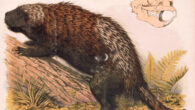
New World porcupines originated in South America and dispersed into North America between 4 and 3 million years ago. Prehensile-tailed porcupines today...
Around 12,440-12,550 years ago, hunter-gatherers returned regularly to Tagua Tagua Lake in Chile to hunt ancient elephant relatives called gomphotheres...