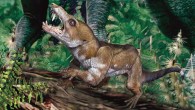
A new species of cynodont has been identified from a fossilized skull found in the San Juan province, Argentina.
An artist’s impression of Pseudotherium...
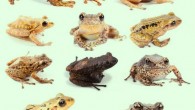
Nadia Paez, a PhD student at the University of British Columbia, and Pontifical Catholic University’s Professor Santiago Ron have discovered eleven new...
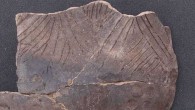
Shards of incised ceramic vessels dating back to 4640-4460 BCE have been found at the site of Real Alto on the Ecuadorian coast.
The 6,500-year-old pottery...
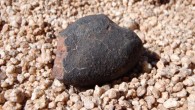
An international team of scientists has found a wealth of well-preserved stony meteorites in the Atacama Desert that allowed them to reconstruct the rate...
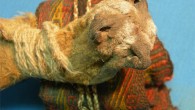
An international team of anthropologists and bioarchaeologists has found the primary ingredients of ayahuasca — a plant-based drink that is reported...
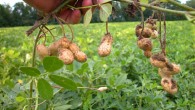
An international team of scientists has produced the high-quality genomic sequence for the cultivated peanut (Arachis hypogaea), an important grain legume...
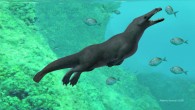
A new species of ancient whale ancestor has been identified from a fossilized skeleton found in Peru.
This illustration shows an artistic reconstruction...
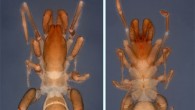
A duo of arachnologists from Brazil has discovered a new species of short-tailed whip scorpion in eastern Amazon.
Male of Surazomus saturninoae: (A) lateral,...
The Younger Dryas impact hypothesis, also known as Clovis comet hypothesis, posits that the hemisphere-wide debris field of a large, disintegrating asteroid...
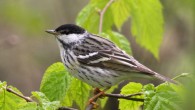
Blackpoll warblers (Setophaga striata) that breed in western North America migrate up to 12,400 miles (20,000 km) roundtrip each year, some crossing the...
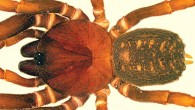
An international team of researchers has described six new species of bald-legged spiders from Colombia and established a new genus for four of them, Stormtropis.
Stormtropis...
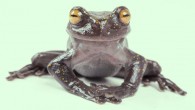
A team of researchers from the Pontificia Universidad Católica del Ecuador has described a new species of treefrog from Cordillera del Condor, a largely...
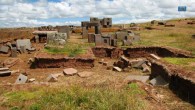
The Pumapunku (Gateway of the Puma or Jaguar), a highly damaged pre-Columbian monument at the ancient archaeological site of Tiwanaku, Bolivia, has been...
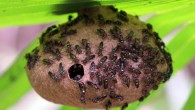
After performing an analysis of the antimicrobial properties of a peptide found in the venom of Polybia paulista, a species of South American social wasp,...
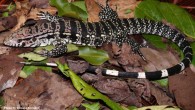
An international team of researchers from Germany and the United States has sequenced the genome of the giant tegu (Salvator merianae), also known as the...
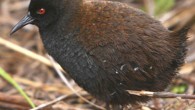
Inaccessible Island, the westernmost of three islands in the Tristan Archipelago, is located about 2,250 miles (3,600 km) east of Porto Alegre, Brazil,...
An international team of scientists has found that the upper Amazon region gave birth to the domesticated Theobroma cacao, the plant from which chocolate...
An international team of paleontologists has identified two new species of ancient mammals that lived about 13 million years ago (middle Miocene epoch)...
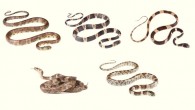
An international team of researchers has discovered five new species of snail-eaters (tribe Dipsadini) living in the forests of Ecuador and Peru.
The five...
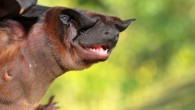
Two new species of dog-faced bats have been discovered in the tropical forests of Central and South America. Both new species are described in the March...