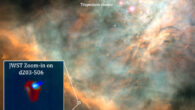
For decades, astronomers have known that the powerful light emitted by massive stars can disrupt the swirling planetary disk of dust and gas around young...
The reionization of the Universe occurred some 500 to 900 million years after the Big Bang. It represents the transformation of neutral hydrogen into ionized...
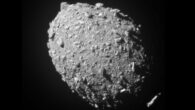
On September 26, 2022, NASA’s Double Asteroid Redirection Test (DART) mission successfully impacted Dimorphos, the natural satellite of the binary near-Earth...
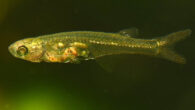
Danionella cerebrum, a translucent fish species of only 12 mm length, produces high amplitude sounds exceeding 140 dB (re. 1 µPa, at a distance of one...
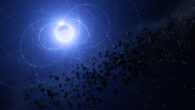
Dynamically active planetary systems orbit a significant fraction of white dwarf stars. These stars often exhibit surface metals accreted from debris disks....
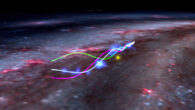
Our Sun lies within 300 parsecs (around 1,000 light-years) of the 2,700-parsec- (around 9,000-light-year-) long sinusoidal chain of dense gas clouds known...
This stability exists despite the incredible diversity seen today in wing patterns, sizes, and caterpillar forms across over 160,000 species globally,...
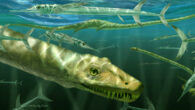
Paleontologists from Germany, China, the United Kingdom and the United States have described in detail Dinocephalosaurus orientalis, a remarkable marine...
SN 1987A is the only supernova visible to the naked eye in the last 400 years and the most studied supernova in history. The event was a core-collapse...
In a new study, astronomers from Yale University and MIT examined the joint spin-orbit and orbit-orbit distribution for exoplanets residing in binary and...
The history of water on Mars is a puzzle that is of interest to planetary scientists as well as the general public. The Red Planet currently has water...
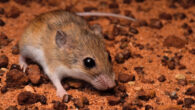
Mice of the genus Pseudomys are among the few terrestrial placental mammals that colonized Australia without human intervention.
The Pilbara delicate mouse...
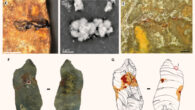
Archaeologists have found traces of ancient ochre-based multicomponent adhesives on 40,000-year-old stone tools from Le Moustier, France.
Photographs,...
The hindbrain of both sea lampreys and humans is built using an extraordinarily similar molecular and genetic toolkit, according to new research led by...
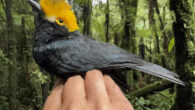
The yellow-crested helmetshrike (Prionops alberti) is listed as a ‘lost bird’ by the American Bird Conservancy because it had not seen in nearly two...
Kuiper Belt objects (KBOs) are thought to be the dominant source of interplanetary dust particles in the outer Solar System due to both collisions between...