Two fossilized leg bones of Denisovans — an extinct archaic Homo group whose lineage diverged from the Neanderthal lineage 550,000 years ago and was widely distributed across eastern Asia until 45,000 years ago — dredged decades ago from the seafloor off Taiwan indicate that at least some members of the group were remarkably large-bodied.

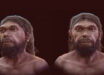
An artist’s concept of a Penghu Denisovan walking under the bright Sun during the Pleistocene of Taiwan. Image credit: Cheng-Han Sun.
“Denisovans (or Denisova clade) is a sister group of Neanderthal proposed from ancient genomic evidence,” Dr. Yousuke Kaifu, a researcher at the University of Tokyo and the National Museum of Nature and Science in Tokyo, and colleagues wrote in their paper.
“So far, a well-preserved cranium, two mandibles, dental remains, a phalanx, and other fragmentary fossils from Denisova Cave (southern Siberia), Xiahe (Tibet), Harbin (Northeast China), and Penghu (Taiwan) have been biomolecularly identified as belonging to this clade.”
“Based on the previous morphological studies of these fossils, diagnostic morphological features of the Denisovans now include a large brain size, a robust mandibular body, large teeth, a three-rooted lower second molar, and a reduced/deficient third molar, non-Neanderthal-like phalange, among others.”
“However, Denisovan’s body architecture such as body size and proportion, skeletal robusticity, as well as their general postcranial morphology remain unknown, except for hypothetical inference based on their DNA, due to the paucity of their postcranial remains.”
In the new research, the authors examined two Denisovan leg bones — a femur and a tibia known as Penghu 2 and Penghu 3 — recovered from the Penghu Channel, a stretch of submerged continental shelf in the Taiwan Strait.
They analyzed ancient proteins preserved in the specimens and found a genetic variant in a collagen protein that is specific to Denisovans.
Radiocarbon dating of related fossils from the same channel suggests the bones are between 45,000 and 43,000 years old, not long before Denisovans are thought to have disappeared.
What surprised the researchers most was the sheer size of the bones.
Based on their dimensions, the scientists estimated that the femur’s owner stood about 180 cm (5 feet 11 inches) tall and weighed roughly 83 kg (183 pounds), while the tibia’s owner may have reached about 190 cm (6 feet 3 inches) and 91 kg (200 pounds).
These sizes rival the largest known individuals from Pleistocene Africa and Europe and dwarf earlier Homo erectus populations and Stone Age modern humans from the same region.
The finding runs counter to a long-standing expectation in paleoanthropology, known as Bergmann’s rule, which predicts that populations living farther from the equator tend to be larger-bodied, while those closer to the tropics — like Taiwan, at roughly 23 degrees north latitude — tend to be smaller.
According to the team, Denisovans’ unusually large stature may instead be tied to their meat-based diet and hunting strategy.
“Given the recent evidence that Denisovan population in Tibetan Plateau exploited a wide range of animal species including Caprinae (sheep and goats), megaherbivores and carnivores, and isotopic evidence that the Penghu 3 individual heavily relied on meat, one possible hypothesis is that the large body size was essential for their hunting strategy relying on a tool kit different from those of the local Homo sapiens, who achieved explosive geographic expansion beyond the distribution of the Denisovans, and invented sophisticated tools such as seagoing crafts and fishhooks,” the authors wrote in the paper.
The Penghu 2 femur also displayed an unexpected trait: a pronounced ridge of bone on its back surface, called a pilaster, that is typically associated with modern humans and thought to reflect a highly mobile lifestyle.
The feature could reflect either behavioral convergence with early modern humans or interbreeding between the two groups, a possibility consistent with earlier genetic evidence of gene flow between Denisovans and anatomically modern Homo sapiens in Asia.
“Although genetic basis of femoral pilaster remains unknown and this hypothesis must be tested ultimately by genomic data from Denisovan fossils, it does not contradict with the genomic evidence of Denisovan introgression into modern humans in southern Asia, and chronological overlap between Penghu 3 and the earliest modern humans in this region,” the researchers wrote.
The team’s paper was posted August 8, 2026 on the preprint server bioRxiv.org.
_____
Yousuke Kaifu et al. 2026. Denisovan leg bones from Taiwan reveal large body size. bioRxiv, doi: 10.64898/2026.08.07.743438