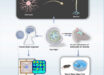
Researchers from the Hebrew University of Jerusalem and the Universidade NOVA de Lisboa have identified a molecular pathway that may explain how folic acid (vitamin B9) helps prevent neural tube defects, linking the vitamin to a key developmental signal made from vitamin A.

Folic acid supplementation during pregnancy is the commonly accepted treatment to prevent neural tube defects.
“Before an embryo has a recognizable brain or spinal cord, a sheet of cells called the neural plate begins to fold upward,” said Hebrew University of Jerusalem Ph.D. student Tamir Edri and colleagues.
“Its edges must meet and close, almost like a zipper, to make the neural tube. If that process goes wrong, neural tube defects can result.”
“Scientists have long known that folic acid can help prevent many of these defects. But the vitamin seems to be doing more than simply supplying nutrients.”
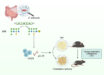
In the new study, the authors found that folic acid helps switch on ALDH1L1, a gene that makes the ALDH1L1 enzyme.
“The ALDH1L1 enzyme can then help turn a vitamin A-related molecule called retinaldehyde into retinoic acid,” they said.
“Retinoic acid acts like a set of instructions, telling developing cells when to grow, what to become, where to go, and when to stop dividing.”
To test whether ALDH1L1 was truly important, the researchers used frog embryos, a common model for studying early development.
They created embryos with neural tube closure problems and then treated them with folic acid, which helped many of the embryos develop more normally.
Then the scientists disrupted the ALDH1L1 gene. This time, folic acid lost its protective effect.
The result was a major clue: without ALDH1L1, folic acid could no longer rescue the developing neural tube.
The authors pushed the idea further, demonstrating that the human ALDH1L1 can produce retinoic acid.
They also found evidence that the same biological pathway is active in mammalian cells, strengthening the possibility that the mechanism could be relevant to humans.
Edri and co-authors also saw what happened when this signaling system broke down.
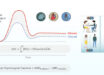
“When retinoic acid levels were too low, the cells that would become part of the nervous system multiplied too quickly. The neural plate became abnormally expanded. Folic acid helped bring that cell growth back toward normal — but only when ALDH1L1 was working,” they said.
The findings also raised another possibility. Because ALDH1L1 uses a vitamin A-derived molecule to make retinoic acid, the researchers tested whether vitamin A and folic acid might work together.
In their embryo experiments, small amounts of retinol, a form of vitamin A, improved the effect of low-dose folic acid.
This does not mean pregnant women should start taking extra vitamin A.
The scientists warn that too much vitamin A can itself cause serious birth defects, and healthy development depends on keeping retinoic acid levels within a narrow range.
“Instead, the discovery gives us a new way to think about a decades-old question,” they said.
“Folic acid may not protect the developing nervous system by acting alone.”
“It may work partly by helping the embryo produce the right amount of another crucial developmental signal at exactly the right time.”
“The finding could also help explain why folic acid works well in many pregnancies but does not prevent every neural tube defect.”
“Problems in the ALDH1L1-retinoic acid pathway could be one possible reason, although much more research is needed to determine whether the same mechanism operates in human pregnancy.”
The team’s paper was published on July 30, 2026 in the Proceedings of the National Academy of Sciences.
_____
Tamir Edri et al. 2026. Folic acid prevention of neural tube defects requires retinoic acid produced by ALDH1L1. PNAS 123 (31): e2616501123; doi: 10.1073/pnas.2616501123