Archaeopteryx — the first ever bird to inhabit the Earth — may have hopped its way into the air, rather than launching with the single powerful leap modern birds use, according to a new biomechanical study published in the journal Developmental Biology.
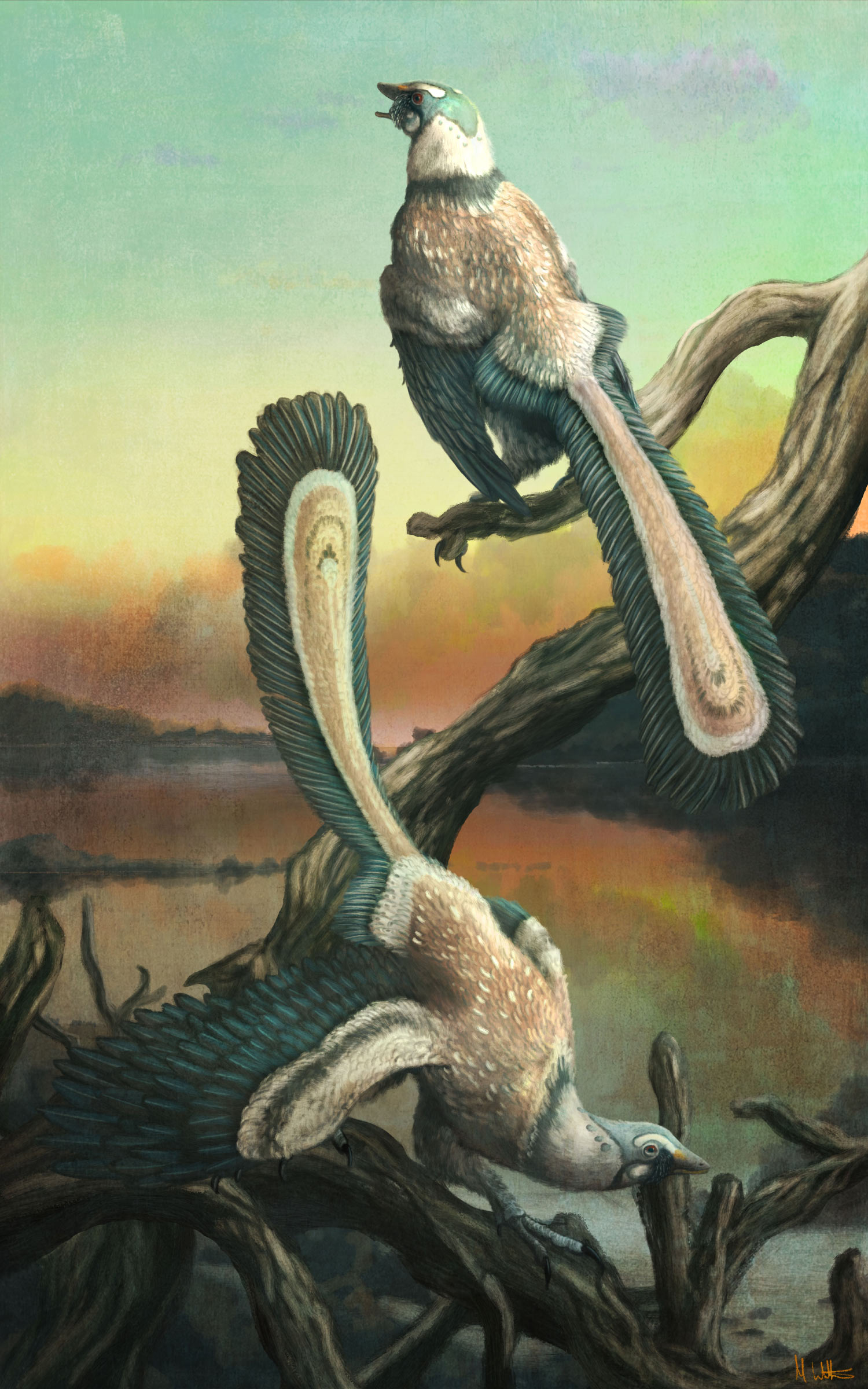
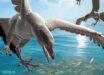
An illustration of Archaeopteryx. Image credit: Mark Witton.
Archaeopteryx lived in what is now Germany during the Jurassic period, approximately 150 million years ago.
Regarded as the first-known bird, it possessed primitive traits like teeth and a long bony tail.
It also had limited shoulder mobility and no breastbone, which hampered its ability to quickly reach flight speed. Exactly how it left the ground has, until now, remained a puzzle.
“Archaeopteryx is the first real bird,” said University of Southampton’s Dr. Neil Gostling.
“It was covered in feathers and possessed wings, but also retained a number of distinctly dinosaur features, such as a long bony tail, claws on separate fingers, and teeth in a beakless jaw.”
“It wasn’t a particularly well developed ‘bird’ compared to those we know today.”
“We know Archaeopteryx couldn’t rely on its wings to take off — with no keeled sternum, and a shoulder that couldn’t lift the wing above the back — so we asked what its legs could contribute,” said University of Southampton’s Professor Markus Heller.
“It turns out that is where take-off is won: the legs generate the force, and the wings take over afterwards.”
For the study, the researchers built a detailed musculoskeletal computer model of the 150-million-year-old creature’s hindlimbs, scaling data from living birds to Archaeopteryx’s anatomy.
They suspected the animal’s wings could not have generated the forceful stroke modern birds rely on for takeoff.
Instead, the study points to Archaeopteryx’s unusually robust legs, which made up roughly 13% of its body mass, compared with 9-10% in living birds.
The scientists calculated that a single jump could have propelled the animal to about 3 m/sec, well short of the roughly 7 m/sec needed for sustained flight.
However, the model showed that two or three successive leaps, potentially combined with modest wing flapping in between, could have closed the gap.
In one scenario, three unassisted jumps built up enough forward momentum that only a brief final flap was needed to reach flying speed. In another, two leaps separated by a wing downstroke achieved the same result even faster.
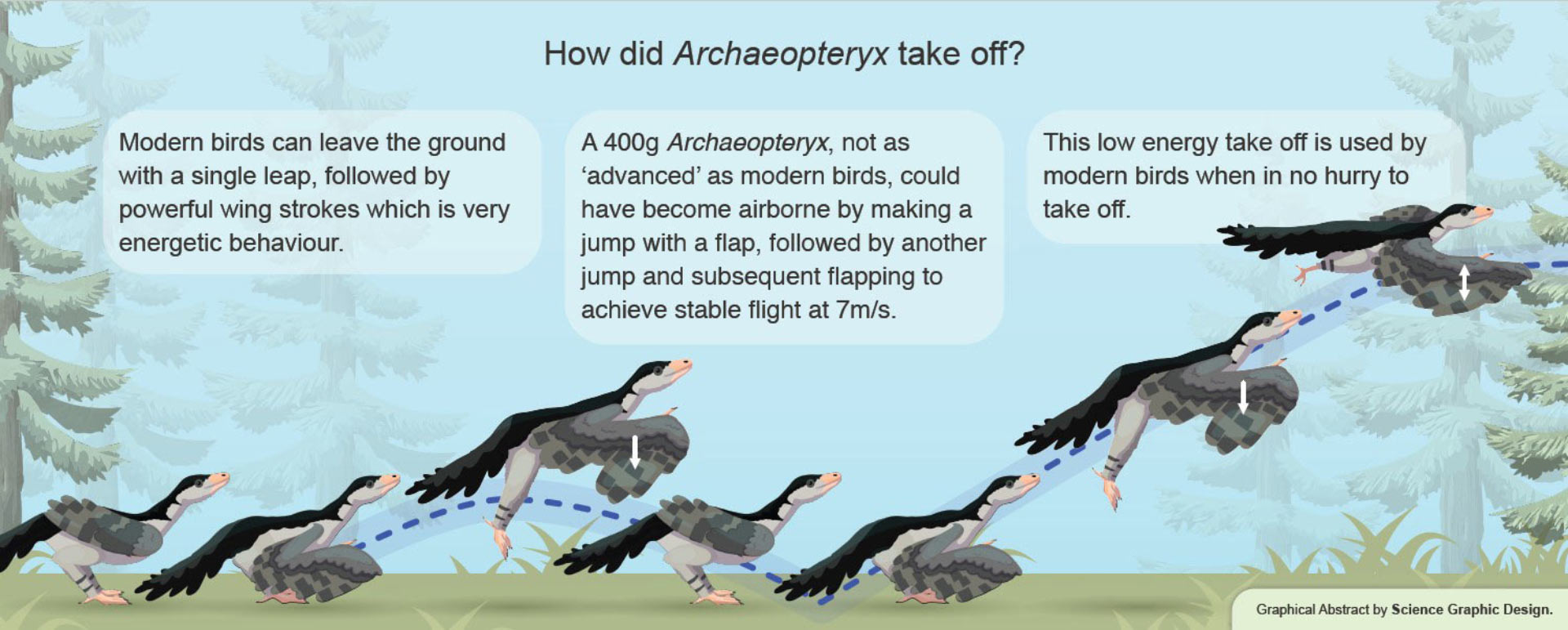
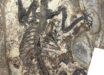
An illustration of how Archaeopteryx could have taken off. Image credit: Science Graphic Design.
The findings support a ground-up origin of powered flight, in which early birds gradually built up speed through repeated leaps — a strategy still observed in some ground-dwelling birds today, including crows and magpies — rather than the abrupt, high-force takeoff seen in most modern species.
This incremental behavior may represent an evolutionary stepping stone toward the takeoff mechanics birds use now.
“Our findings show that a mid-sized, 400-gram Archaeopteryx could have achieved a sustainable flight speed of 7 m/sec with three bipedal leaps, or with two bipedal leaps with a downward flap between jumps,” said Dr. Erik Meilak, a researcher at the University of Southampton.
“All birds push with their legs when they take-off,” Dr. Gostling said.
“In fact up to 90% of the force required to get off the ground comes from the legs and then the wings take over.”
“Archaeopteryx would have either taken off with a leap, leap, leap and then lots of flapping, or a leap, a flap, another leap and more flapping.”
“Although today’s birds can take-off with just one leap, we still see many, such as crows, magpies and seagulls, also using the multiple hop technique.”
“They use one leap if startled, stressed or threatened, or — like their ancestors — two or three or more if they are saving energy.”
_____
Erik A. Meilak et al. 2026. Hop, hop and away: On the take-off of Archaeopteryx using a multiple leaping mechanism. Developmental Biology 539: 57-64; doi: 10.1016/j.ydbio.2026.07.018