Scientists analyzing DNA of Madagascar’s iconic baobab trees have concluded that a widespread species called Adansonia za is actually two, formally resurrecting a name first given to the tree more than a century ago and raising the tally of baobab species native to the island from six to seven.
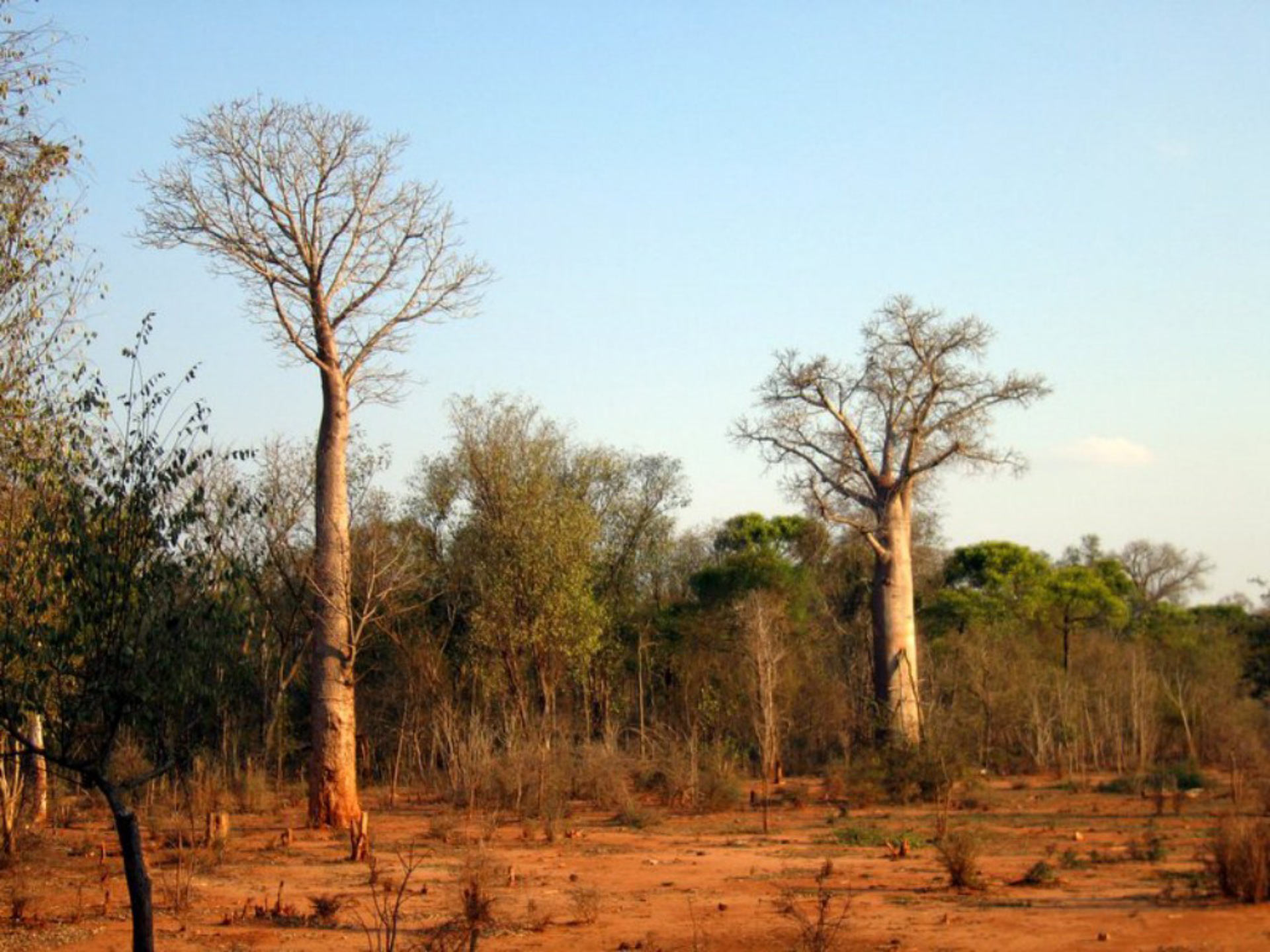
Adansonia za. Image credit: Hectonichus / CC BY-SA 3.0.
Baobabs — with their swollen trunks and umbrella-like branches — are among the most recognizable trees on Madagascar, which is home to six of the world’s eight baobab species (an additional species grows in continental Africa and one in northwestern Australia).
Despite their fame, basic questions about how many distinct baobab species exist, and how they are related to one another, have remained unresolved for decades.
“Baobab trees, genus Adansonia, are among the most iconic and ecologically significant plants of Madagascar,” said Dr. Nisa Karimi of Missouri Botanical Garden and colleagues.
“Eight species are currently recognized in the genus, with one species restricted to northwestern Australia (Adansonia gregorii), another to continental Africa (Adansonia digitata), and six endemic to Madagascar (Adansonia grandidieri, Adansonia madagascariensis, Adansonia perrieri, Adansonia rubrostipa, Adansonia suarezensis, and Adansonia za), albeit with the possibility that Adansonia madagascariensis is native to the neighboring island of Mayotte from whence herbarium collections are known.”
“The biogeographic and diversification history of baobabs has been investigated previously using genomic data, but with conflicting results and only limited sampling of the species from Madagascar.”
In the study, the researchers used targeted sequencing technology to examine hundreds of genes, as well as complete chloroplast genomes, from baobab trees sampled across Madagascar.
The genetic data showed that populations of Adansonia za — long recognized as the most widely distributed baobab species in Madagascar — in the north are genetically distinct from those farther south, despite having been classified as the same species.
The northern trees share more genetic material with two other species, Adansonia perrieri and Adansonia madagascariensis, than they do with their southern counterparts.
Because of this distinctiveness, along with differences in leaf structure, fruit stalks and petal color, the scientists elevated the northern population to full species status, resurrecting the name Adansonia bozy.
This name was first proposed in 1910 by the botanists Joseph Jumelle and Henri Perrier de la Bâthie, but not used as a species designation since.
The type specimen supporting the resurrected name was collected in 1909 in the Sambirano River valley and is held at the Muséum national d’Histoire naturelle in Paris.
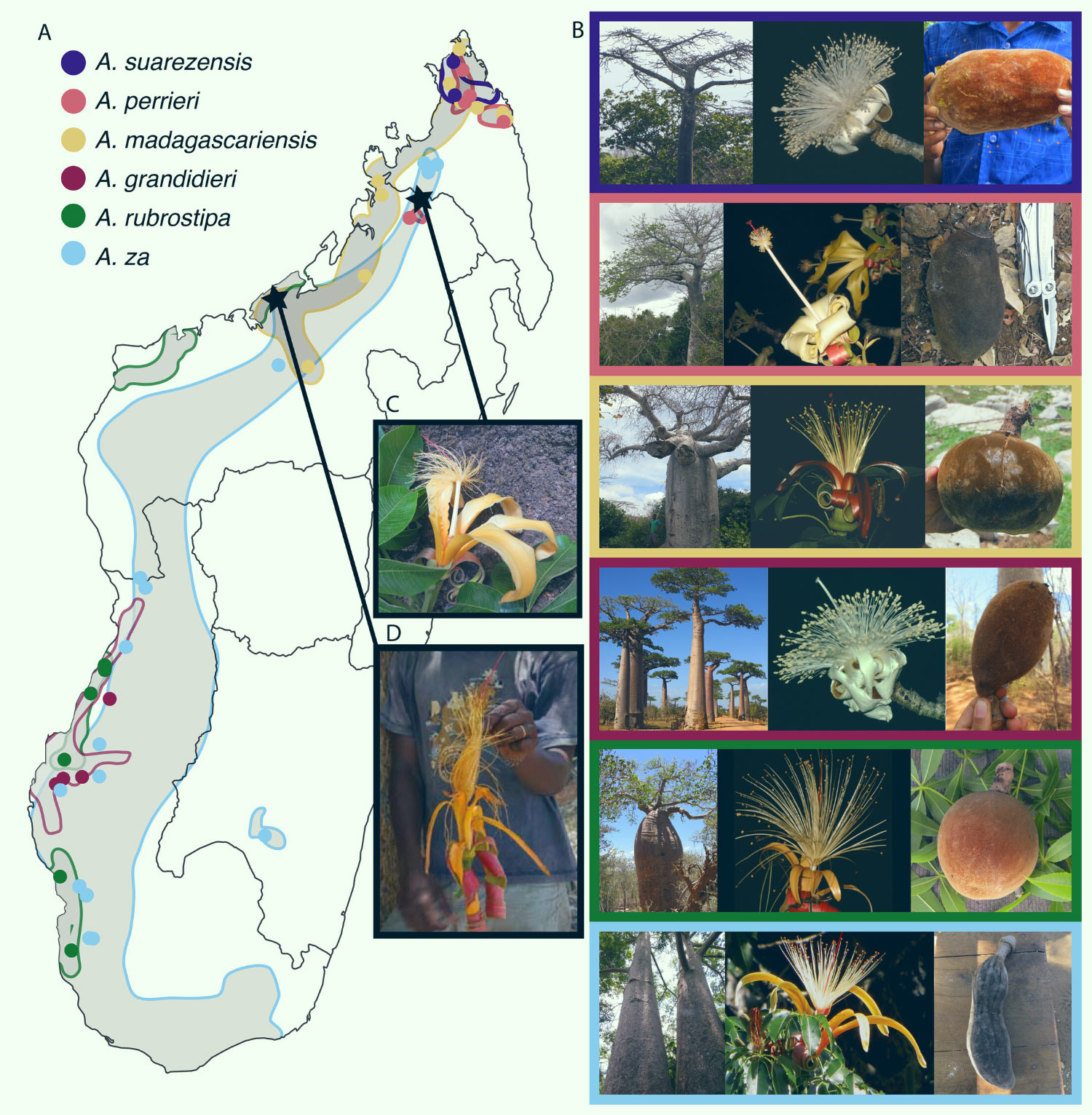
Malagasy baobabs: (A) approximate ranges of the six baobab species of Madagascar; samples analyzed are indicated on the map by colored points; stars indicate sampled individuals of possible hybrid origin based on morphological traits that are intermediate between two currently recognized species; (B) images of trees, flowers, and fruit for the six species of baobab endemic to Madagascar; (C) photo of a flower of the possible Adansonia za x Adansonia perrieri individual; (D) photo of the putative Adansonia rubrostipa x Adansonia madagascariensis individual. Image credit: Karimi et al., doi: 10.1002/tax.70176.
“Despite it sharing morphologies to the species that it was later classified with, Adansonia bozy is actually more closely related to two other groups in northern Madagascar than the species it was synonymized with,” Dr. Karimi said.
Adansonia bozy occurs within the relatively moist Sambirano River region in the northwest of Madagascar, Antsiranana province.
Populations may also occur slightly further south near Marofandelia and the western slopes of Manongarivo.
“It’s surprising that we’re still answering basic biological questions about baobabs, in terms of how many species actually exist on the landscape,” Dr. Karimi said.
Adansonia bozy is likely to qualify as Endangered under global conservation guidelines, given the extensive clearing of forest in the Sambirano basin for cacao plantations and slash-and-burn rice farming.
“Given current threats and population sizes, this taxon would be classified as Endangered under the IUCN Red List guidelines,” the authors said.
The team’s findings were published July 12 in the journal Taxon.
_____
Nisa Karimi et al. 2026. Phylogenomic analysis of Madagascar’s baobabs reveals admixed populations and supports resurrection of a previously described species. Taxon 75 (4): e70176; doi: 10.1002/tax.70176