Biology News

Sep 30, 2014 by News Staff

According to WWF’s Living Planet Report 2014, global wildlife populations have declined by 52 per cent in 40 years. Global wildlife populations have declined by more than half in just 40 years as measured in the Living Planet Report 2014. The Living Planet Report 2014 is the 10th edition of WWF’s biennial flagship publication. The report tracks over 10,000 vertebrate species populations from 1970 to 2010 through the Living Planet Index. This...

Sep 29, 2014 by News Staff

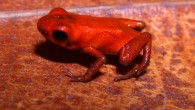
A team of scientists from Germany, Colombia and Panama led by Prof Andrew Crawford of the Universidad de Los Andes in Bogota has described a new species...

Sep 23, 2014 by News Staff

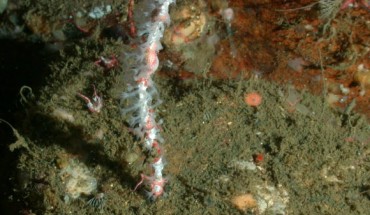
U.S. scientists headed by Dr Chi-Hing Christina Cheng of the University of Illinois at Urbana–Champaign have discovered that the so-called ‘antifreeze’...

Sep 22, 2014 by Natali Anderson

An international team of ornithologists led by Dr Marcos Bornschein of the Mater Natura-Instituto de Estudos Ambientais in Curitiba has described an endangered...

Sep 7, 2014 by Natali Anderson

According to a team of scientists from the University of Copenhagen in Denmark, two species of sea-dwelling, mushroom-shaped organisms discovered off Australia...

Sep 6, 2014 by News Staff

According to a duo of German ichthyologists reporting in the Current Biology, archerfish are much more adaptable and skillful target-shooters than previously...

Sep 3, 2014 by News Staff

A non-native species of camel cricket known as the Greenhouse camel cricket (Diestrammena asynamora) has spread into homes across the eastern United States,...

Aug 30, 2014 by Sergio Prostak

French ichthyologists led by Dr Philippe Keith of the National Museum of Natural History in Paris have described a new species of pike from the Charente...

Aug 28, 2014 by News Staff

A study on an African fish called the Senegal bichir (Polypterus senegalus) led by Dr Hans Larsson of McGill University shows what might have happened...

Aug 21, 2014 by Natali Anderson

A team of researchers from the United States, Italy and the United Kingdom, has discovered a complex assemblage of bacteria and archaea in the waters and...

Aug 19, 2014 by Sergio Prostak

A multinational team of scientists headed by Dr Goncalo Rosa of the University of Kent’s Durrell Institute of Conservation and Ecology has described...

Aug 15, 2014 by News Staff

U.S. biologists led by Prof James Westwood of the Virginia Tech’s Department of Plant Pathology, Physiology and Weed Science have found that parasitic...

Aug 12, 2014 by Natali Anderson

Two new species of jellyfish – Keesingia gigas and Malo bella, both believed to cause Irukandji syndrome, have been discovered off Western Australia’s...

Aug 11, 2014 by News Staff

About half the world’s population carries a newly discovered gut virus, dubbed CrAssphage, says a team of virologists led by Prof Robert Edwards of San...

Aug 8, 2014 by News Staff

According to a new study published in the journal PLoS ONE, the eyes of mesopelagic bioluminescent sharks have a higher rod density when compared to other...

Aug 5, 2014 by News Staff

According to a study reported in the journal Current Biology, horses can communicate with their mobile ears and eyes. Horses in Navarre, Spain. Image credit:...

Jul 24, 2014 by News Staff

According to University of California San Diego researchers Dr Christine Harris and Dr Caroline Prouvost, dogs feel jealousy too. German Shepherd puppy....

Jul 23, 2014 by News Staff

The Greater mouse-eared bat (Myotis myotis) is the first mammal that’s known to use polarization patterns in the sky to calibrate an internal magnetic...

Jul 22, 2014 by News Staff

A multinational group of scientists headed by Dr Scott Gardner of the University of Nebraska-Lincoln has described four new species of burrowing rodents...

Jul 16, 2014 by News Staff

Scientists led by Dr Vladimir Pešić of the University of Montenegro have discovered a new species of pontarachnid mite in Bajo de Sico – a mesophotic...