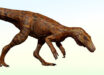
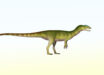
A remarkably complete skeleton of the alvarezsauroid dinosaur species Alnashetri cerropoliciensis from Patagonia, Argentina, as well as two alvarezsauroid specimens from the northern hemisphere reveal how the once-mysterious lineage of theropod dinosaurs evolved and spread before continents drifted apart, challenging long-held assumptions about their origins.
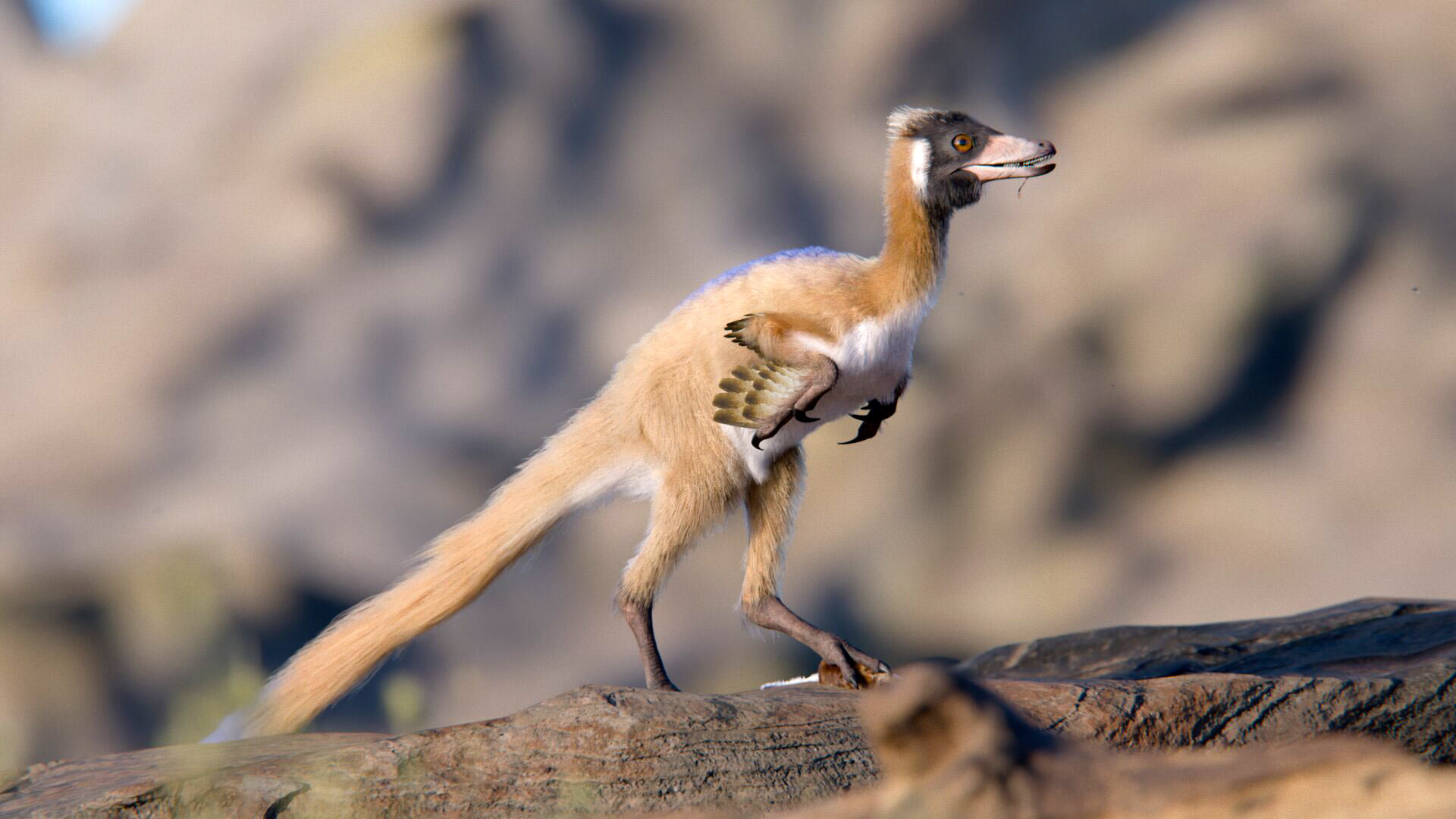
Alnashetri cerropoliciensis. Image credit: Gabriel Díaz Yantén, Universidad Nacional de Río Negro.
Alnashetri cerropoliciensis lived in what is now Argentina during the Cenomanian age of Late Cretaceous epoch, some 90 million years ago.
First described in 2012 from fragmentary remains, the species belongs to a group of bird-like dinosaurs called the Alvarezsauroidea.
These small dinosaurs are famous for their tiny teeth and stubby arms ending in a single large thumb claw.
“Alvarezsauroids are an enigmatic clade of predominantly small-bodied theropod dinosaurs that are known mainly from the Jurassic to Cretaceous periods of Asia and South America,” said University of Minnesota Twin Cities paleontologist Peter Makovicky and his colleagues.
“Late Cretaceous alvarezsauroids possess specialized forelimbs adapted for digging, minute supernumerary teeth and heightened sensory capacities, and are interpreted as myrmecophagous (feeding primarily on ants).”
“They are hypothesized to exhibit evolutionary miniaturization coupled to their dietary specialization.”
The new, almost complete skeleton of Alnashetri cerropoliciensis was discovered in the La Buitrera fossil area in Río Negro province, northern Patagonia.
Microscopic analysis of the specimen confirmed the animal was indeed an adult of at least four years old.
It weighed less than 0.9 kg (2 lbs), making it one of the smallest dinosaurs known from South America.
Unlike its later relatives, Alnashetri cerropoliciensis had long arms and larger teeth.
According to the paleontologists, this proves that some alvarezsauroids evolved to be tiny long before they developed these specialized features thought to be adaptations for their ant-eating diet.
By identifying previously found alvarezsauroid fossils in museum collections from North America and Europe, the researchers also proved these dinosaurs originated much earlier than expected when the continents were still connected as the supercontinent Pangea.
Their distribution was caused by the breakup of the Earth’s landmasses, not unlikely treks across oceans.
“Our biogeographical analyses infer a Pangean ancestral distribution for Alvarezsauroidea, with vicariance dominating the early history of the clade,” the scientists said.
Their paper was published today in the journal Nature.
_____
P.J. Makovicky et al. Argentine fossil rewrites evolutionary history of a baffling dinosaur clade. Nature, published online February 25, 2026; doi: 10.1038/s41586-026-10194-3