The near-Earth object (875163) 1998 SH2, which is currently classified as an asteroid, has revealed a hidden identity: it’s actually a comet in disguise, according to a new study published in the journal Nature Astronomy.
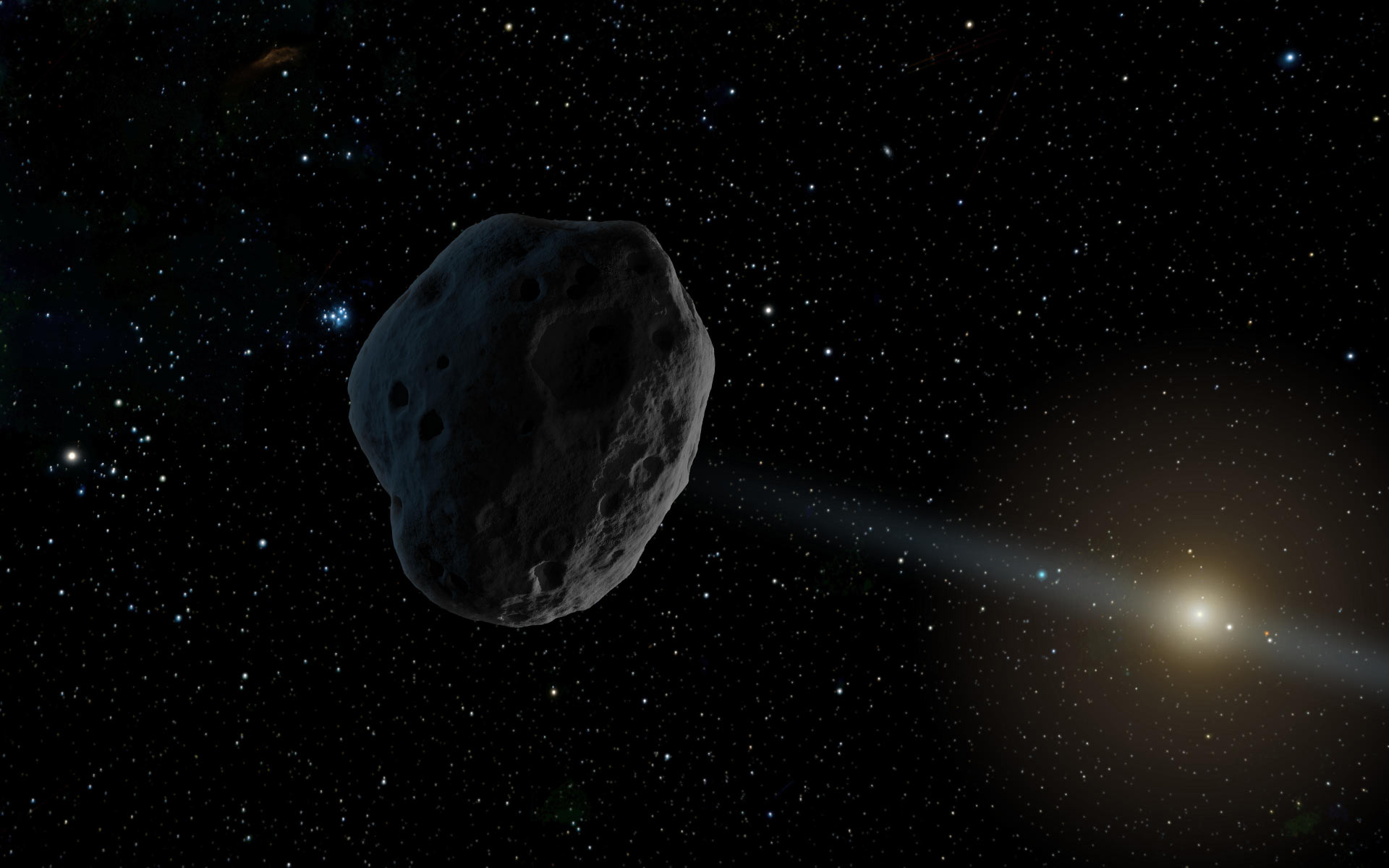
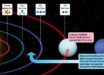
This artist’s concept depicts a near-Earth asteroid with an elongated orbit; a few objects such as these can exhibit significant perturbations in their motion around the Sun and, like 1998 SH2, could turn out to be regular comets with a weak tail and coma. Image credit: NASA / JPL-Caltech.
The mystery began on August 28, 2025, when 1998 SH2 swept safely past Earth at a distance of 3 million km (about 1.86 million miles) during its 4.5-year trip around the Sun.
Dr. Davide Farnocchia and his colleagues at NASA’s Jet Propulsion Laboratory planned to track it with the Deep Space Network’s planetary radar, using its well-established orbit to predict exactly where it would be.
But the object didn’t show up where expected, tipping the astronomers off that something unusual was tugging at its path.
That ‘something’ turned out to be outgassing, the same process that powers a comet’s tail.
“After we measured the non-gravitational perturbations affecting the motion of 1998 SH2 and recognized they weren’t compatible with the object being an asteroid, we suspected the object could be an active comet,” Dr. Farnocchia said.
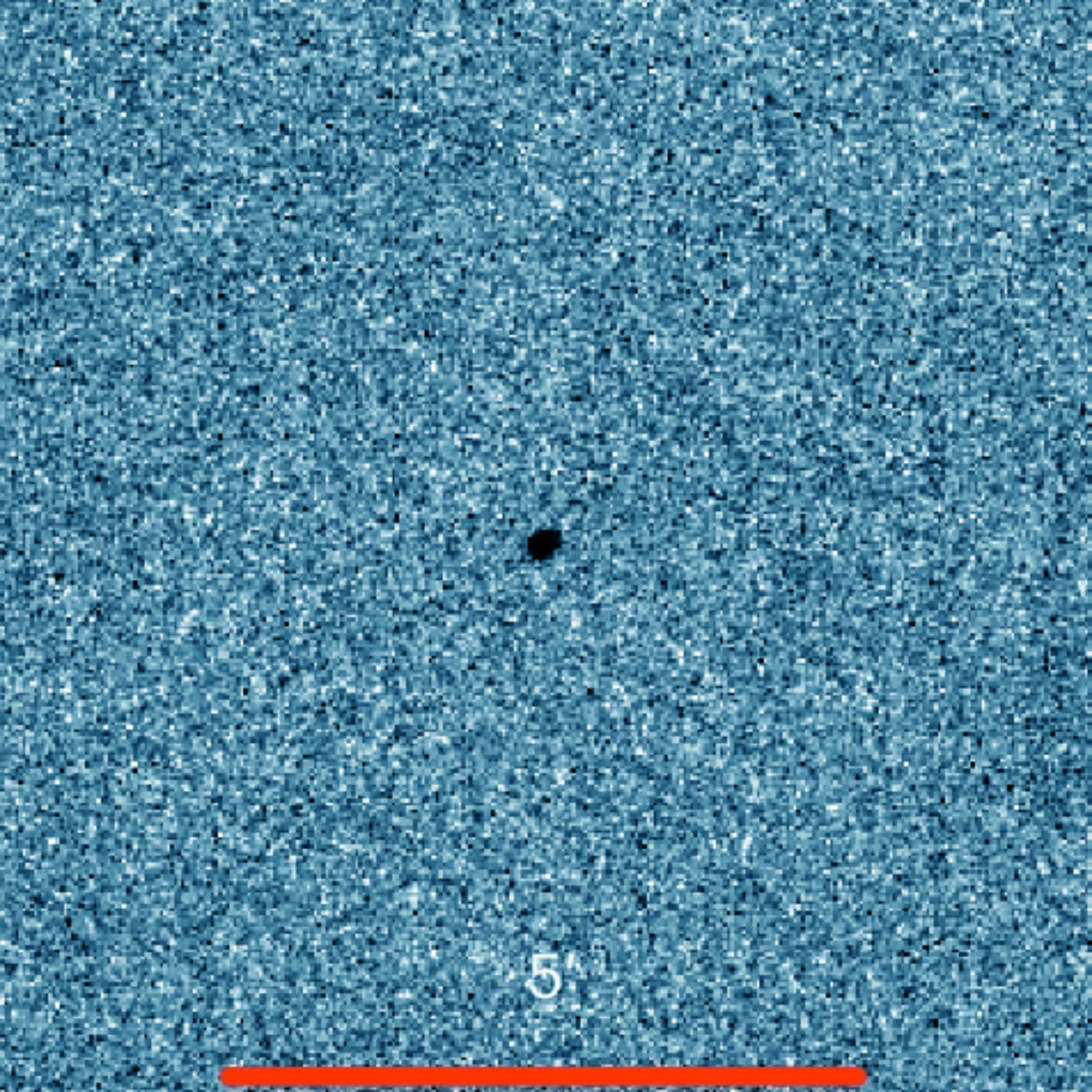
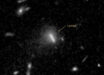
A median stack of the eight exposures of 1998 SH2 from the ATLAS-Chile telescope taken on September 3 and 4, 2025; no coma nor tail are apparent. Image credit: ATLAS / Farnocchia et al., doi: 10.1038/s41550-026-02913-7.
The researchers dug through observations dating back to the object’s 1998 discovery and pieced together a hypothesis: sunlight was warming ice mixed into the object’s rocky material, turning it to gas and creating a faint jet-like thrust.
Unlike classic comets with dramatic tails, this venting was apparently too weak to have been noticed by most telescopes.
The August 2025 flyby gave the scientists a rare chance to check their hypothesis with the Canada-France-Hawaii Telescope, ESO’s Danish Telescope and Very Large Telescope.
The images showed a faint but unmistakable tail, confirming that 1998 SH2 is indeed a comet.
The object has since picked up a new designation to match its new identity: P/1998 SH2.
“The images we collected from these observatories showed a weak but clear tail, thus confirming that 1998 SH2 is, in fact, a comet,” said Dr. Olivier Hainaut, an astronomer with ESO.
“That’s how science works — you form a hypothesis, and you set out to test it.”
“These data are exactly what was needed to confirm our hypothesis that 1998 SH2 was a comet.”
“This work shows the importance of continuously tracking near-Earth objects,” Dr. Farnocchia said.
“Because of outgassing, the motion of comets is more significantly perturbed than that of asteroids.”
“Detecting these perturbations can be an important diagnostic tool for planetary defense that will help understand which objects may be comets rather than asteroids, how their orbits evolve, and how that influences their Earth impact risks.”
_____
D. Farnocchia et al. Non-gravitational acceleration indicative of cometary activity of near-Earth object. Nat Astron, published online July 10, 2026; doi: 10.1038/s41550-026-02913-7