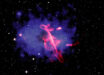
Astronomers using the NASA/ESA/CSA James Webb Space Telescope have produced a spectacular infrared image of the spiral galaxy NGC 5134.
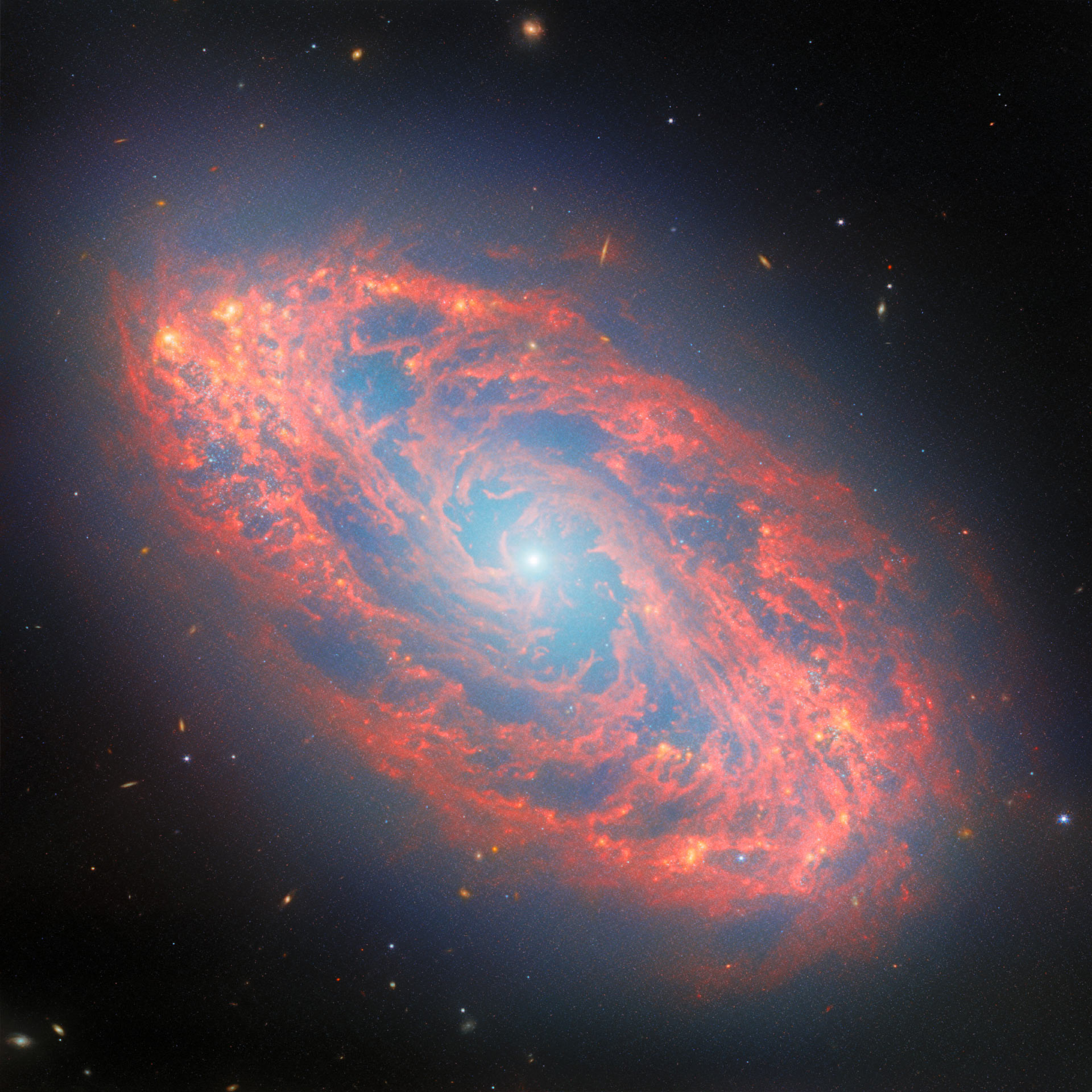
This Webb image shows NGC 5134, a spiral galaxy some 65 million light-years away in the constellation of Virgo. Image credit: NASA / ESA / CSA / Webb / A. Leroy.
NGC 5134 is located approximately 65 million light-years away in the constellation of Virgo.
Otherwise known as ESO 576-52, LEDA 46938 or IRAS 13225-2052, this galaxy was discovered by the German-British astronomer William Herschel on March 10, 1785.
NGC 5134 is a member of the NGC 5084 group, a group of five galaxies that also includes NGC 5084, NGC 5087, ESO 576-50 and ESO 576-40.
“Because of the galaxy’s relative proximity, Webb can spot incredible details in its tightly wound spiral arms,” the Webb astronomers said in a statement.
The new image of NGC 5134 includes both infrared observations from both Webb’s Mid-InfraRed Instrument (MIRI) and the telescope’s Near-InfraRed Camera (NIRCam).
“MIRI collects the mid-infrared light emitted by the warm dust that speckles NGC 5134’s interstellar clouds, tracing clumps and strands of dusty gas,” the astronomers said.
“Some of the dust is composed of complex organic molecules called polycyclic aromatic hydrocarbons, which feature interconnected rings of carbon atoms and provide a way for astronomers to study the chemistry happening in interstellar clouds.”
“NIRCam records shorter-wavelength near-infrared light, mostly from the stars and star clusters that dot the galaxy’s spiral arms.”
“Together, the MIRI and NIRCam data paint a portrait of a galaxy in constant ebb and flow.”
“The gas clouds that billow along NGC 5134’s spiral arms are the sites of star formation, and each star that forms chips away at the galaxy’s supply of star-forming gas,” the researchers said.
“When stars die, they recycle some of that gas back into the galaxy.”
“Massive stars more than about eight times the mass of the Sun do so spectacularly, in cataclysmic supernova explosions that spread stellar material across hundreds of light-years.”
“Stars like the Sun give back some of their material as well, though more gently.”
“These stars will balloon into bubbling red giants before shrugging off their atmospheres and sending them into space.”
“Whether expelled by explosive supernovae or gentle red giants, this gas can then be incorporated into new stars.”