Researchers have identified more than 1,200 locations in the human genome associated with personality traits, offering the most detailed look yet at the...
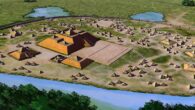
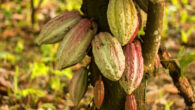
Long before Europeans arrived, cacao (Theobroma cacao) may have traveled far beyond its Central and South American homeland to reach Etowah, a major Mississippian-period...
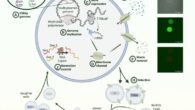
Researchers from the Hebrew University of Jerusalem and the Universidade NOVA de Lisboa have identified a molecular pathway that may explain how folic...
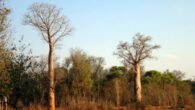
Scientists analyzing DNA of Madagascar’s iconic baobab trees have concluded that a widespread species called Adansonia za is actually two, formally resurrecting...
Neanderthals vanished roughly 42,000 years ago, but a piece of their biology appears to be quietly at work in some people today, according to a new study...
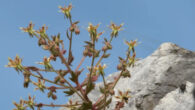
More than 150 years after Charles Darwin first wondered whether certain sticky-leaved Saxifraga plants might be secretly carnivorous, Kunming Institute...
New research led by the University of California, Berkeley reveals that beyond Neanderthals and Denisovans, humans interbred with two mysterious ‘ghost’...
A large British study spanning more than 70 years has found that people who experience chronic money struggles over their working lives show measurable...
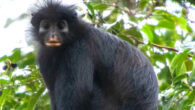
Researchers have identified and formally described a new species of the African monkey genus Colobus living in the remote interior of the Democratic Republic...
In an analysis of 390 traditionally cultivated cacao trees representing traditional Amazonian varieties, researchers identified four previously unknown...
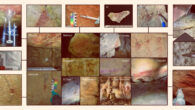
For the first time, researchers have extracted ancient human DNA directly from the walls of a cave. Although their results do not conclusively link ancient...
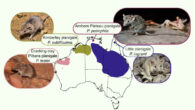
Scientists in Australia have revealed that what was long thought to be a single widespread planigale species is actually four distinct ones, including...
Scientists have generated genetic data from 27 Neanderthals who lived in Belgium and France less than approximately 52,500 years ago, painting a richer...
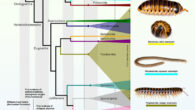
Two elusive groups of millipedes, Siphoniulida and Siphonocryptida, were the last missing pieces in the evolutionary history of Earth’s oldest land animals,...
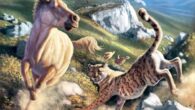
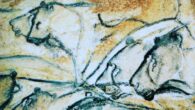
The extinct Eurasian cave lion (Panthera spelaea) and today’s African and Asian lions (Panthera leo) belong to separate evolutionary lineages that diverged...
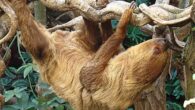
Along with armadillos and anteaters, sloths are members of Xenarthra, the only clade of placental mammals to have originated in South America. In new research,...
Euplotes gigatrox, a new species of ciliate collected from a seawater filtration system on the Caribbean Island of Curaçao, can transform into a cannibalistic...