Scientists sequencing the DNA of howler monkeys across South America have identified two previously unrecognized species in the Amazon, and found that much of the genus’ diversity there arose within the past million years.
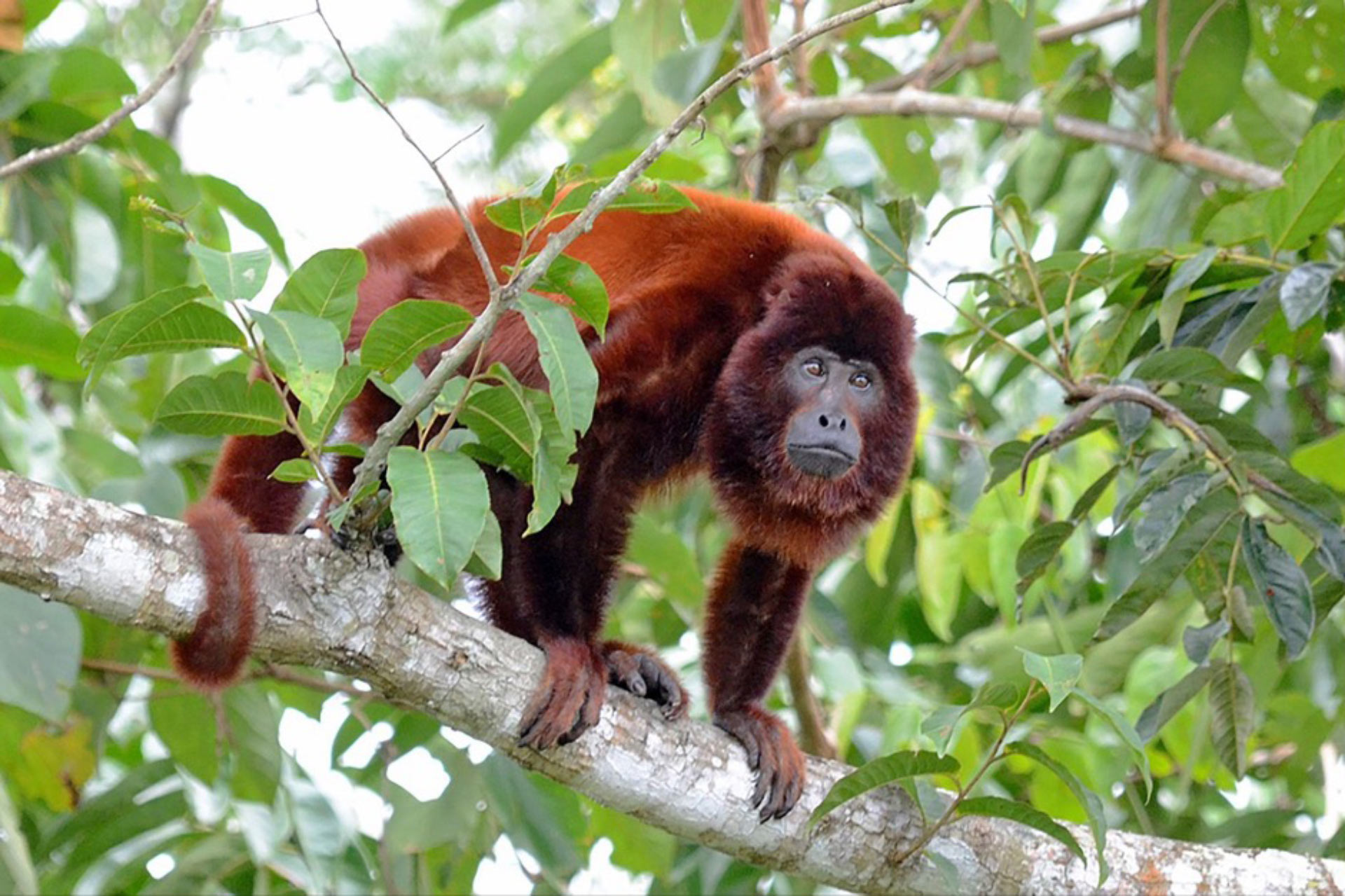
Alouatta matogrossensis. Image credit: Bruno Rennó / University of Salford.
Howler monkeys (genus Alouatta) are a group of large, tree-dwelling primates native to the tropical forests of Central and South America.
There are 13 recognized species, varying in size and coloration, from reddish-brown and golden to almost entirely black.
Among the largest monkeys in the Americas, they are best known for their remarkably loud vocalizations, which can carry for several kilometers through dense forest.
These deep, guttural calls are produced with the help of an enlarged hyoid bone, a hollow, bony structure in the throat that acts as a resonating chamber.
Howler monkeys spend most of their lives in the forest canopy, moving quadrupedally along branches and using their long, prehensile tails as an additional limb to grip and support their bodies.
Their diet consists primarily of leaves, supplemented by fruits, flowers and occasionally other plant material.
“Howler monkeys are among the most successful and widespread radiations of platyrrhine primates, noted for their adaptability and broad geographical distribution across diverse habitats in the Neotropics,” said Romina Batista from the University of Salford and colleagues.
“This atelid lineage inhabits a wide range of environments, from lowland and montane tropical rainforests to dry forests, gallery forests, ecotonal regions, and in the forested portions of open formations such as the Cerrado, Chaco, Pantanal, Gran Sabana and Caatinga.”
“In Amazonia, howler monkeys are ubiquitous and a significant source of meat for local indigenous populations.”
“Due to their ecological importance as folivores and seed dispersers, howler monkeys have been studied extensively, particularly their behavior, ecology, dietary adaptations, and conservation.”
“Key questions remain, regarding species boundaries and evolutionary relationships within the genus.”
In the new study, the authors analyzed whole-genome data from 86 howler monkeys, covering 11 of the 13 recognized species.
They also built evolutionary trees from thousands of conserved stretches of DNA, and checked them against the animals’ skulls, skins and geography.
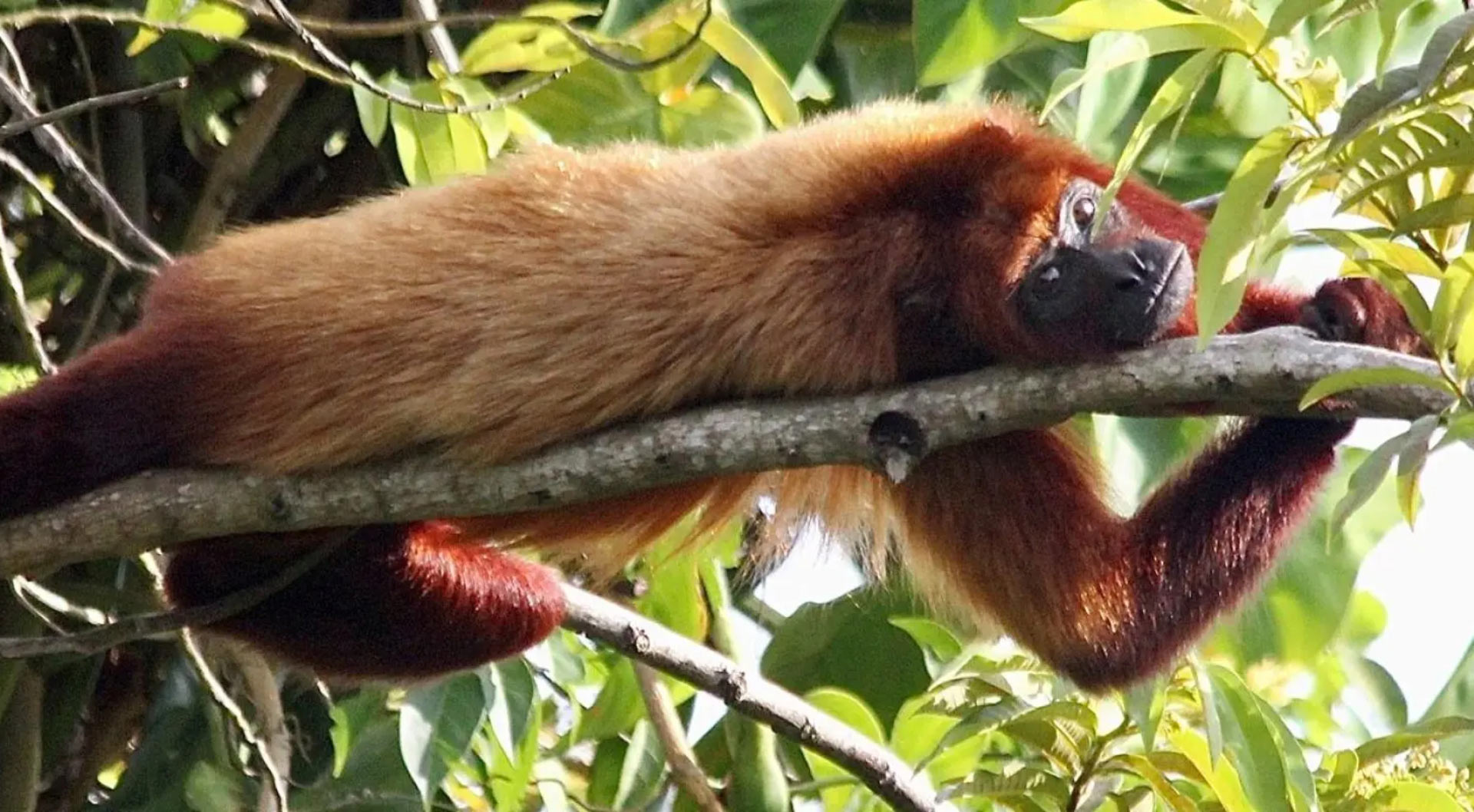
Alouatta iroi. Image credit: John Trent / University of Salford.
The two newly identified species are red howlers: Alouatta iroi (common name is the Pantepui red howler) and Alouatta matogrossensis (the Mato Grosso red howler).
Alouatta iroi lives in the northwestern Amazon, bounded by the Rio Branco, the Rio Cauaburi and the confluence of the Rio Negro and Rio Branco.
The holotype specimen was collected in 2005 near the Aracá Tepui range in Amazonas state, Brazil.
The species differs from its closest relative, Alouatta macconnelli, in coat color, among other features, with a dorsal coat ranging from bright yellowish-brown to light golden-brown.
The second new species, Alouatta matogrossensis, occupies southern Amazonia between the Madeira and Teles Pires rivers in Brazil.
It is closely related to Alouatta sara of Bolivia and Peru, but differs in coat color and in skull and throat-bone features.
“Our study shows that the Amazon still holds remarkable biological secrets, even among well-known animals such as howler monkeys,” Dr. Batista said.
“These findings are particularly important because many of these populations are facing increasing pressure from habitat loss and environmental change.”
“Understanding the different species in existence is the first step towards protecting them.”
The researchers conclude that the genus’ first split, between Central American and South American lineages, occurred about 3.5 million years ago, around when the Panama land bridge opened.
Howlers most likely originated in Mesoamerica. Most of the diversification among Amazonian red howlers came in the last million years.
The newest split, between Alouatta macconnelli and Alouatta iroi, is dated to about 700,000 years ago and is associated with the Rio Branco.
The scientists point to large rivers and to open savanna and transitional habitats as barriers that isolated forest-dwelling populations.
“This discovery comes at a critical time, as increasing deforestation, climate change and habitat loss threaten many Amazonian species before they are fully understood or even discovered by science,” said Professor Jean Boubli, also from the University of Salford.
“We hope these findings will help conservation organizations identify the most vulnerable populations and prioritize protection efforts across the Amazon Basin.”
The discovery is reported in a paper in the journal Communications Biology.
_____
R. Batista et al. Genome-wide analyses reveal recent diversification and hidden diversity in Amazonian howler monkeys, including two new species. Commun Biol, published online October 30, 2026; doi: 10.1038/s42003-026-11187-8