Clostridium immunis, a human gut bacterium, secretes a large sugar molecule that can shrink visceral fat and curb weight gain in mice, according to a paper published in the journal Cell Host & Microbe.
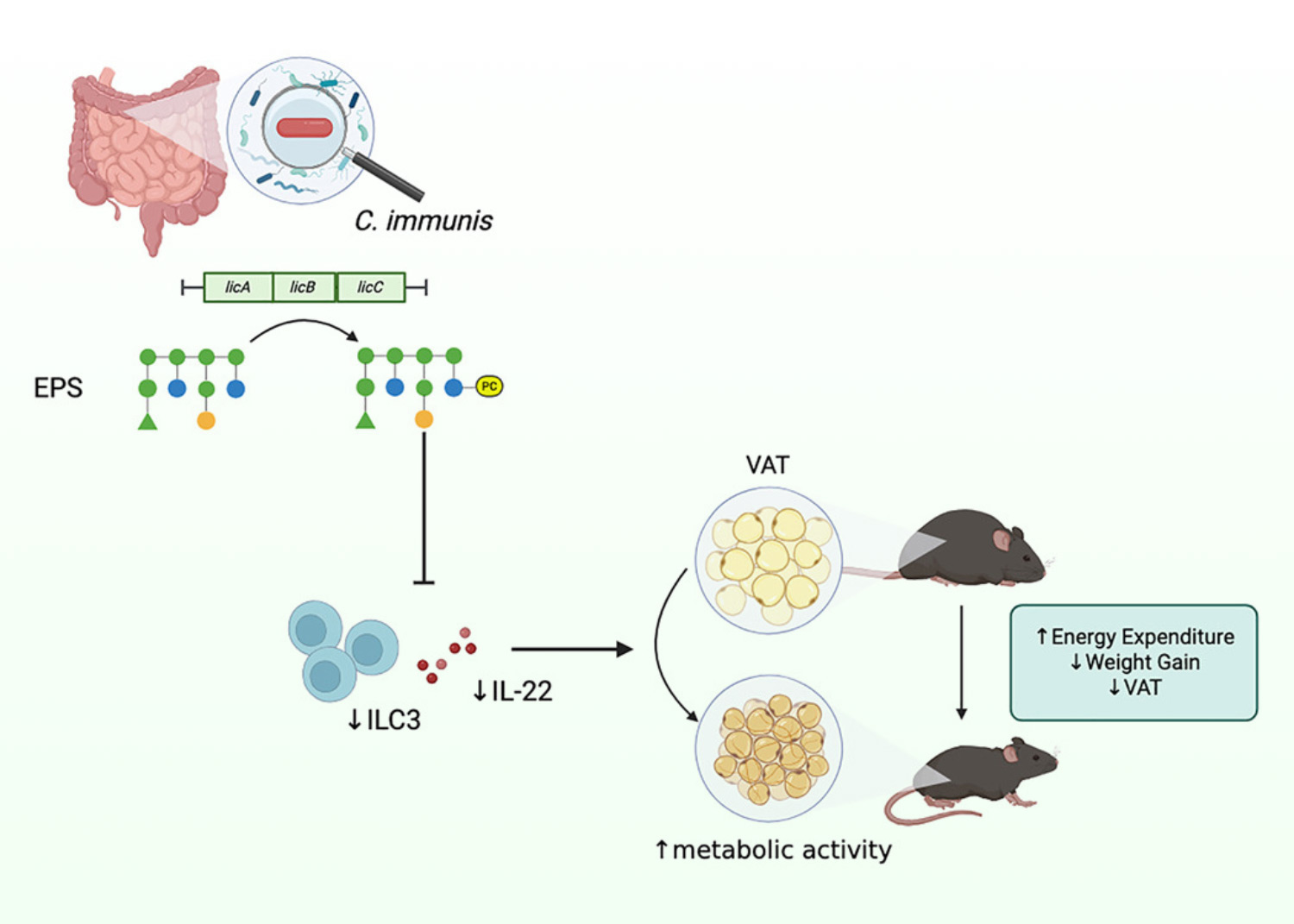
Yee Tan et al. discovered a human commensal bacterium, Clostridium immunis, which prevents and treats obesity in mice by secreting a phosphocholine-modified exopolysaccharide (EPS). Image credit: Yee Tan et al., doi: 10.1016/j.chom.2026.08.018.
“The global obesity epidemic continues to worsen, with over half the world’s population estimated to be overweight or obese by 2035,” said Dr. Neeraj Surana from the Duke University School of Medicine and his colleagues.
“This increase in the prevalence of obesity is estimated to drive sharp increases in cardiometabolic diseases, such as coronary heart disease, type 2 diabetes, and stroke.”
“Obese and lean humans have marked differences in the composition and functional potential of their gut microbiomes, but it has been challenging to disentangle the cause-effect relationship between the microbiome and obesity in human studies.”
“In previously published work, we identified Clostridium immunis, a human commensal bacterium that protects mice against colitis,” they said.
“To better understand how Clostridium immunis protects against colitis, we compared the colonic transcriptional profile of gnotobiotic mice harboring a mouse microbiota treated with or without Clostridium immunis.”
In the study, mice given a single oral dose of Clostridium immunis lost body weight, had lower blood triglycerides and showed roughly a one-third reduction in visceral fat within a week, without any change to subcutaneous fat.
The bacterium also blunted weight gain in mice fed a high-fat diet over 12 weeks and improved their glucose tolerance.
The researchers traced this effect to a large sugar molecule, or exopolysaccharide, secreted by the bacteria.
Critically, the sugar only worked when it carried a chemical tag called phosphocholine — a modification more commonly associated with bacteria that cause respiratory infections, where it helps pathogens evade the immune system.
When the scientists engineered a mutant strain of Clostridium immunis lacking the genes needed to attach phosphocholine, the exopolysaccharide lost its fat-fighting power.
Conversely, when they inserted those same genes into a closely related, inactive species, Clostridium symbiosum, it gained the ability to reduce weight and fat.
According to the team, the molecule lowers levels of a signaling protein called IL-22 that is produced by immune cells known as group 3 innate lymphoid cells.
The drop in IL-22 appears to trigger fat tissue to recruit heat-generating cells containing a protein called UCP1, boosting the body’s energy expenditure specifically in visceral fat.
To test whether the findings might be relevant to people, the authors analyzed genetic data from thousands of human stool samples collected in previous studies.
They found that genes needed to make the phosphocholine tag were less common in the gut microbiomes of people with obesity or high triglyceride levels compared to those with healthier metabolic profiles.
The researchers caution that important questions remain, including whether the compound’s effects persist after it clears the body and whether other immune cells beyond the ones identified play a role in recognizing it.
“Considered together, our work couples biochemical and genetic approaches to characterize a commensal bacterium-derived, phosphocholine-containing exopolysaccharide that protects against obesity in an IL-22-dependent manner,” they said.
“Our findings offer the possibility for a microbiome-derived product that treats obesity and related comorbidities.”
“More broadly, our work highlights that as the ability to culture and genetically manipulate commensal organisms continues to advance, demonstrating the genetic, structural, and mechanistic basis for how the microbiome impacts host physiology will become more commonplace, just as it has become de rigueur in microbial pathogenesis.”
_____
Chin Yee Tan et al. A commensal-derived sugar protects against obesity by regulating immunometabolism. Cell Host & Microbe, published online September 23, 2026; doi: 10.1016/j.chom.2026.08.018