Researchers have obtained the first-ever photographs of the Cozumel dwarf fox (Urocyon sp.), an elusive dwarf fox living on the Caribbean island of Cozumel, off Mexico’s Yucatán Peninsula. Captured in September 2023, the images provide the first confirmed evidence since 2001 that the elusive animal still survives on the island.
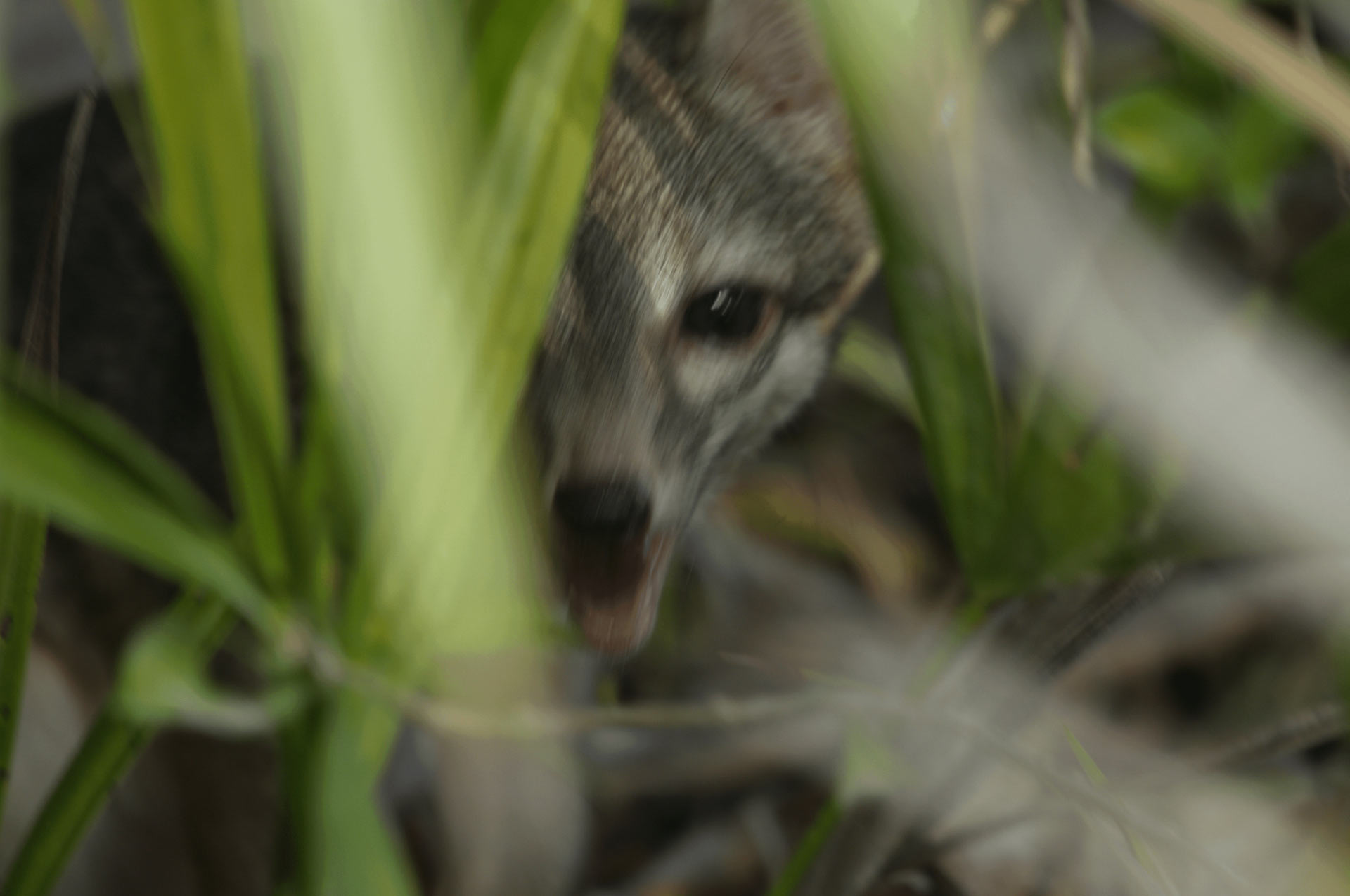
This image of a dwarf gray fox (Urocyon sp.) was captured on the island of Cozumel, Mexico: an adult male is shown partially concealed behind foliage before capture by the Fundación de Parques y Museos de Cozumel on September 14, 2023; this represents the first photograph ever taken of the species on the island and the first reported sighting since 2001. Image credit: Rafael Chacón.
The Cozumel dwarf fox belongs to Urocyon — the same genus as the North American gray fox — but island life has shrunk it dramatically.
Subfossil remains suggest this taxon is between 60 and 80% smaller than its mainland relatives, the result of thousands of years of isolation that may date back as far as 37,000 years.
“The genus Urocyon currently comprises two living species: the gray fox (Urocyon cinereoargenteus), one of the most widely distributed canids across the Americas, and the island fox (Urocyon littoralis), which is endemic to six of California’s Channel Islands,” said lead author Travis Bayer of Pathos Wildlife and his colleagues.
“The island fox represents a well-studied example of insular dwarfism and rapid evolution following isolation.”
“Compared to its mainland relatives, it shows clear morphological, genetic, and ecological differentiation.”
“Archaeological records also reveal that a dwarf fox (Urocyon sp.) has inhabited the island of Cozumel, Mexico, for millennia, with evidence suggesting its presence may predate early Mayan settlement.”
“This population has never been formally described or designated as taxonomically unique.”
“Sightings of this fox are exceptionally rare and consist of only a few eyewitness accounts and second-hand reports. The most recent dates back to 2001.”
“The only physical evidence of the species’ presence on the island comes from subfossil remains, which indicate pronounced insular dwarfing (a 60-80% reduction in body size), and suggest that isolation began approximately 5,000-37,000 years ago.”
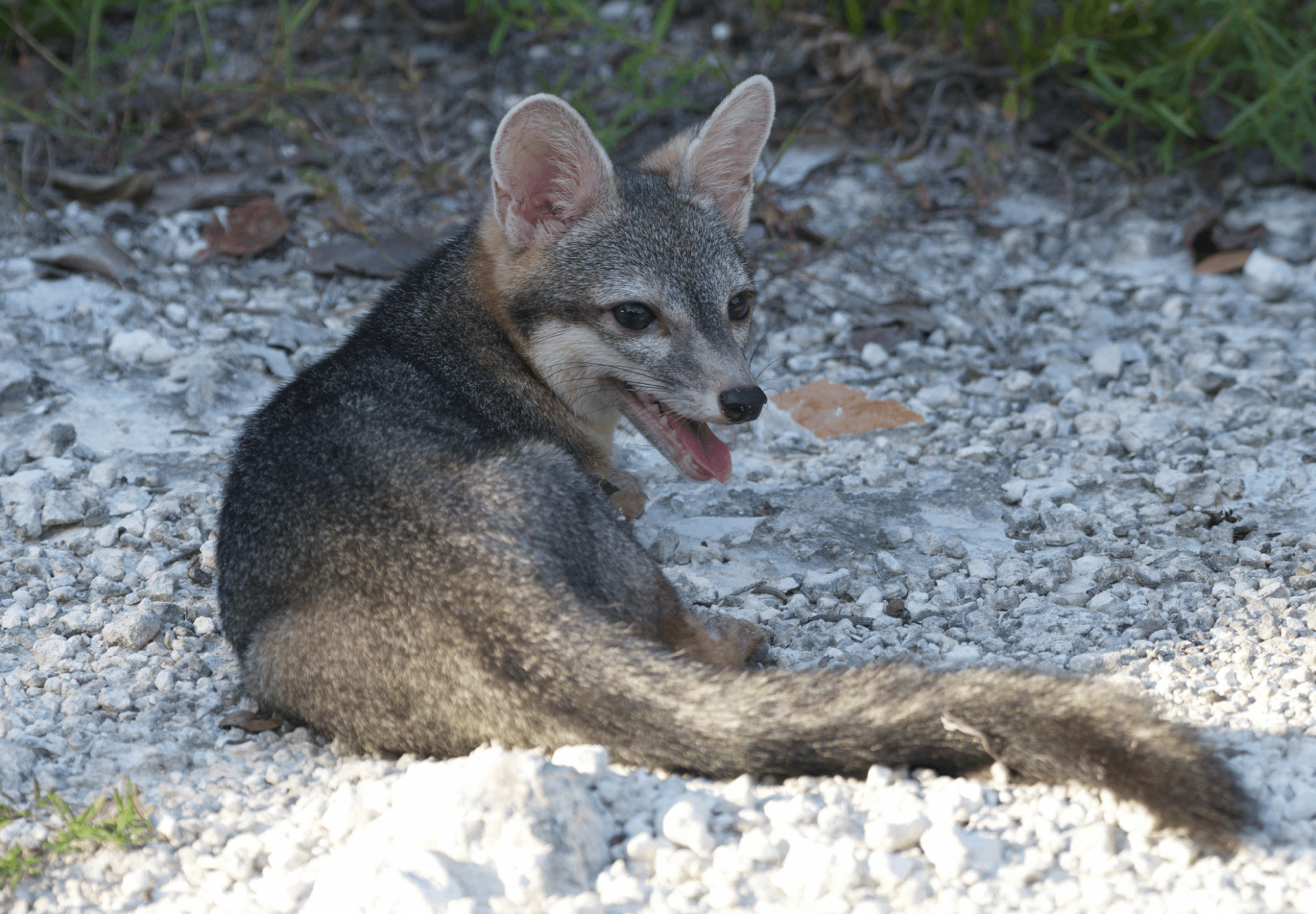
Full-body photograph of adult male Cozumel fox following release in Laguna Colombia State Reserve; the photograph was taken on September 17, 2023, following a health assessment and release within the Reserve. Image credit: Rafael Chacón.
According to the team, an adult male Cozumel dwarf fox was spotted in the early morning of September 14, 2023, after locals reported a disoriented animal near a coastal highway.
In response, one of the study authors, Rafael Chacón, and rescuers from the Fundación de Parques y Museos de Cozumel recovered the animal.
They monitored it for several days, and then released it into the Laguna Colombia State Reserve, a protected area in southern Cozumel.
“One of the most important takeaways from this research is that species can quietly disappear without the world even realizing they are gone,” Bayer said.
“We often think extinction is something dramatic and obvious, but in reality, it can happen gradually and silently, especially for rare species living in remote or understudied habitats.”
“The rediscovery of the fox is not a conservation success story yet, but it represents a second chance.”
The researchers argue that the discovery underscores the need for urgent field surveys, population monitoring and habitat protection, particularly in southern Cozumel, where development, invasive species and other pressures continue to threaten the island’s ecosystems.
“The biggest challenge facing the Cozumel fox is that we still know almost nothing about it, including its remaining population size, distribution, or ecology,” Bayer said.
“That uncertainty alone is dangerous, because it makes effective conservation extremely difficult.”
“Ultimately, we hope this work helps move the Cozumel fox from a little-known, uncertain presence on the island to a better-understood key part of Cozumel’s ecosystems.”
“We also hope it demonstrates that conservation is often most urgent when certainty is lowest and that uncertainty itself can be a call to action.”
The team’s paper was published online on May 4, 2026 in the journal Neotropical Biology and Conservation.
_____
T.D. Bayer et al. 2026. First photographic evidence of an insular dwarf fox (Urocyon sp.) on the island of Cozumel, Mexico. Neotropical Biology and Conservation 21 (2): 123-129; doi: 10.3897/neotropical.21.e187967