Ararat-1, a modest limestone cave that lies at an elevation of 1,034 m on the eastern flanks of the Ararat Depression in central Armenia, has yielded a striking puzzle about how Middle Paleolithic humans moved across their landscape.
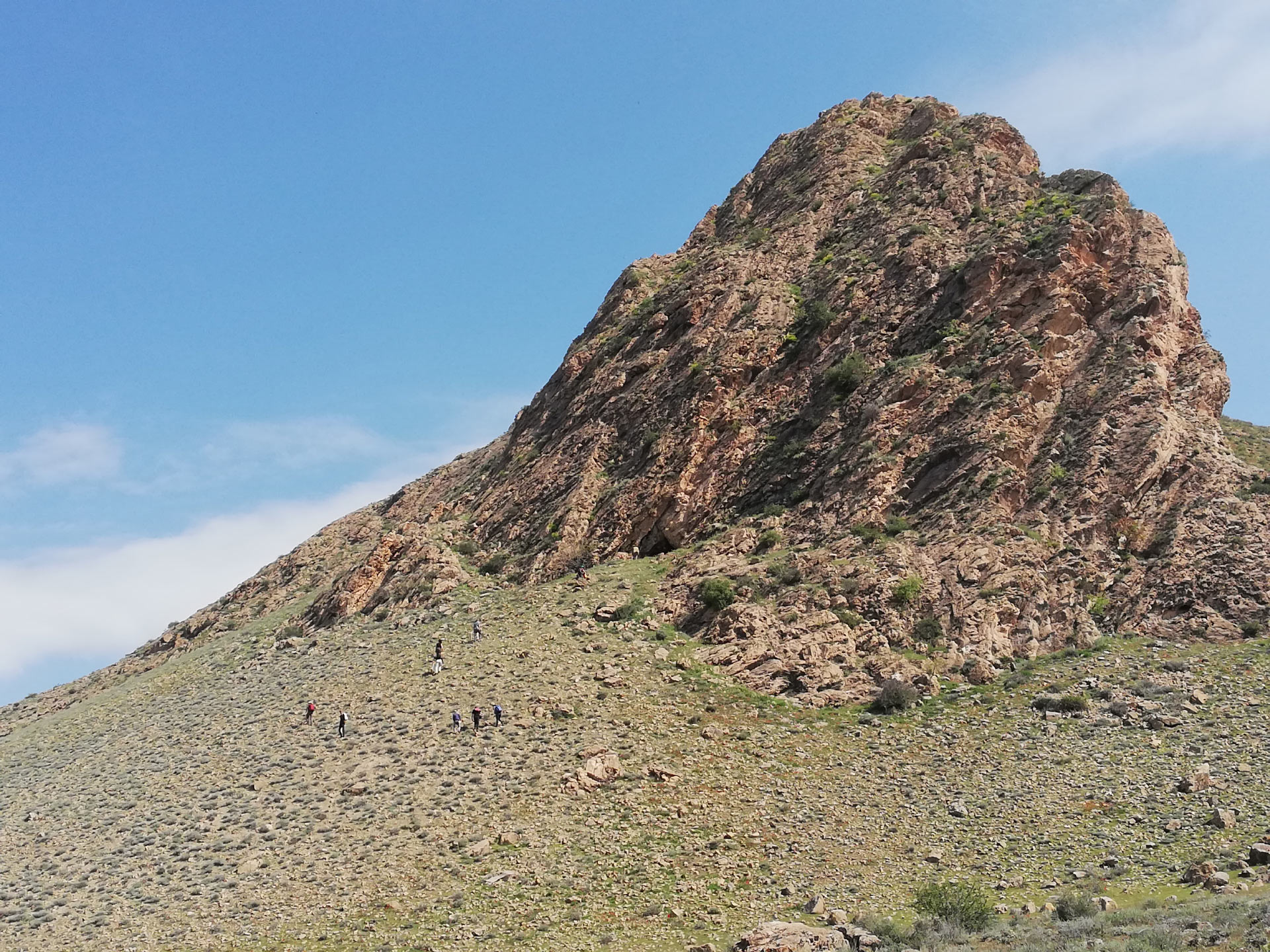
A look at Ararat-1 Cave from the bottom of the Ararat Depression. Image credit: Ariel Malinsky Buller.
“The Caucasus is a geographically and ecologically diverse region that created a complex environment for past human populations and endemic species of flora and fauna,” said Dr. David Nora from the Hebrew University of Jerusalem and his colleagues.
“The region hosts a rich archaeological record, with the Middle Paleolithic being the most represented period, encompassing approximately 60% of the over 450 known Paleolithic sites.”
“These sites include caves, rock shelters, open-air sites, and single-find spots.”
“They are strategically positioned across diverse landscapes such as river canyons, terraces, coastal peninsulas, mountain plateaus, hills, and lava domes.”
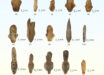
In the new study, the authors examined 1,770 stone tools excavated from Ararat-1 Cave, a site perched above the Ararat Depression northeast of Mount Ararat.
The tools date back roughly 52,000 to 35,000 years, a period known as the late Middle Paleolithic.
What the researchers found was a tale of two raw materials: obsidian and chert.
Obsidian, the volcanic glass that was the dominant stone resource in the area, showed heavy signs of retouching, reshaping and repair — evidence that toolmakers were carrying finished or partly finished obsidian pieces with them and maintaining them carefully over time, sometimes sourced from outcrops tens to nearly 200 km away.
Chert, by contrast, was mostly worked from scratch on-site, with far less evidence of curation, suggesting it was gathered locally and used expediently before being discarded.
That contrast matters because archaeologists have long used the balance between ‘curated’ and ‘expedient’ technologies as a signal of how mobile a group was.
A heavily curated, well-traveled toolkit usually points to people who moved frequently and needed durable, multipurpose tools. An expedient, locally sourced toolkit typically suggests longer stays in one place, where replacing worn-out tools cost little effort.
According to the researchers, the problem is that Ararat-1 Cave displays both signatures within the same archaeological layers: one pointing to high mobility, the other to a longer-term camp.
“Ararat-1 Cave leaves us with a conundrum regarding the ways to interpret the mobility signature,” they said.
“Within the same sedimentary units, we observe two distinct interpretive scenarios for mobility: a higher mobile toolkit, represented by the obsidian assemblages, and a less mobile one, as indicated by the chert.”
“These two signatures led us to question whether either chert or obsidian can be an outlier in terms of technological strategy (curated vs. expedient).”
To make sense of the contradiction, the scientists turned to an unusual class of evidence: tiny waste flakes, many smaller than 2 cm, produced when a tool’s edge was sharpened or rejuvenated.
Because so much of the Ararat-1 assemblage consists of artifacts under 2 cm, they built a five-category system to track these flakes as direct evidence of tool maintenance, even when the tools themselves were no longer present at the site.
By reading this maintenance debris alongside the distances obsidian had traveled, they argue that Ararat-1 functioned less as a long-term base camp and more as a way station: a stop where groups paused to rest, repair, and refresh their portable obsidian toolkits during repeated short-term visits, while nearby chert was quarried and used up on the spot for more immediate needs.
“Our study demonstrates that ancient hunter-gatherers were highly flexible and strategic thinkers,” said Dr. Ariel Malinsky-Buller, a researcher at the Hebrew University Institute of Archaeology.
“They did not rely on a single way of doing things. Instead, they carefully balanced portable, long-distance toolkits with immediate local resources, treating caves like Ararat-1 as critical hubs to rest, repair their gear, and plan their next move across a challenging landscape.”
The study was published in the journal Quaternary Science Reviews.
_____
David Nora et al. 2025. The role of lithic technology in shaping mobility and decision-making: The case of Ararat-1 Cave. Quaternary Science Reviews 366: 109524; doi: 10.1016/j.quascirev.2025.109524