A comprehensive genome-wide analysis of Amazonian two-toed sloths (genus Choloepus) suggests the animals are more genetically diverse than once believed, raising the possibility of previously unrecognized species.
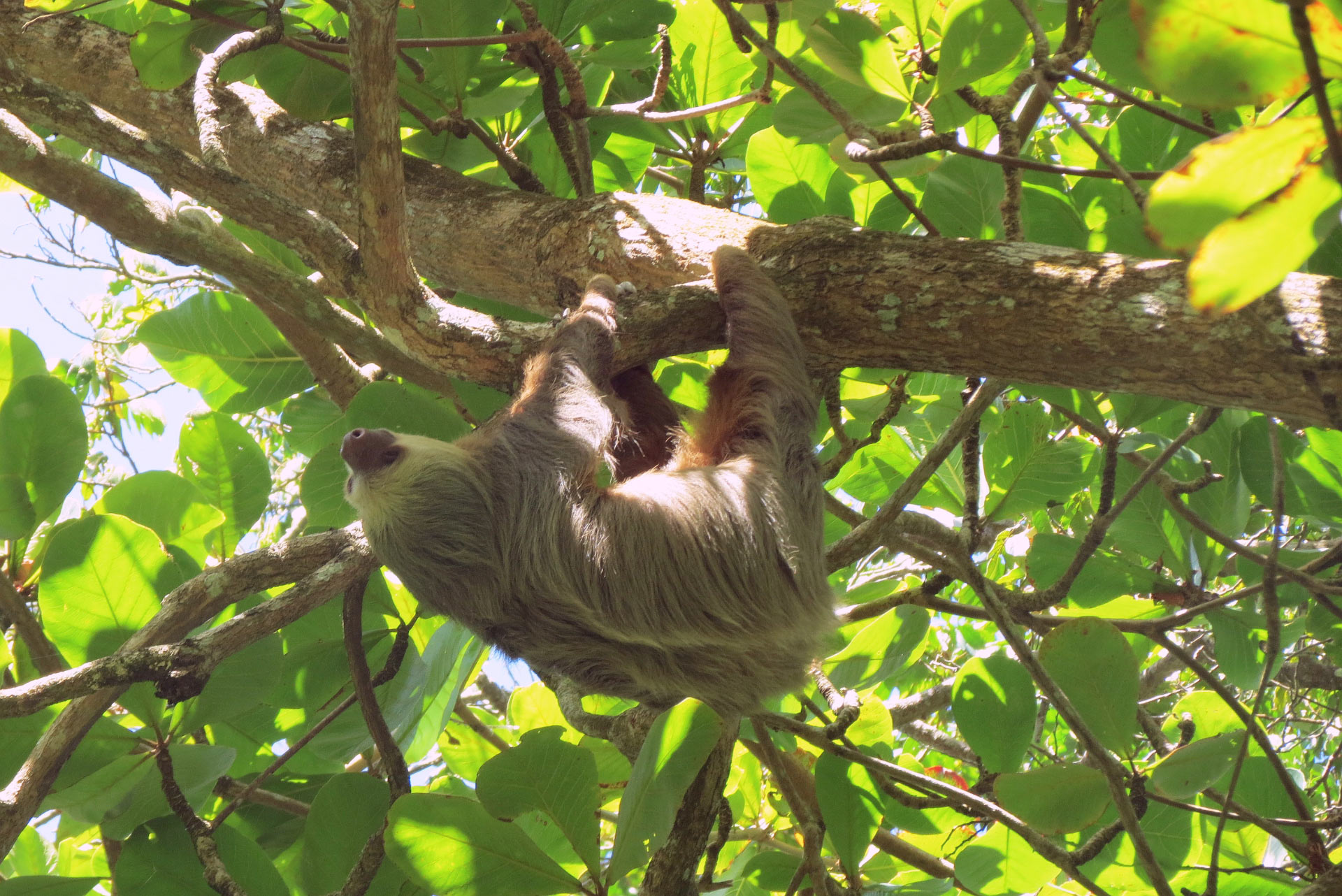
The Hoffmann’s two-toed sloth (Choloepus hoffmanni). Image credit: Camila Mazzoni.
Two-toed sloths are slow-moving, tree-dwelling mammals native to Central and South American rainforests.
Despite the name, they don’t actually have ‘two toes’ in the strict sense, the name refers to the two clawed digits on their forelimbs, which distinguish them from three-toed sloths.
Two-toed sloths belong to the genus Choloepus, within the monotypic family Choloepodidae.
Today, scientists recognize two species: the Hoffmann’s two-toed sloth (Choloepus hoffmanni), which ranges from Central America into parts of South America, and the Linnaeus’s two-toed sloth (Choloepus didactylus), found across much of the Amazon Basin.
“While Choloepus didactylus is monotypic and widely distributed in Amazonia, Choloepus hoffmanni has five recognized subspecies occurring both west (Central America and northwest of Venezuela, Colombia and Ecuador) and east of the Andes,” said Dr. Camila Mazzoni from the Leibniz Institute for Zoo and Wildlife Research amd her colleagues.
“The two species purportedly occur in sympatry in Western Amazonia, the region with the highest terrestrial mammal richness in Amazonia, and are distinguished morphologically by pelage color and osteological features.”
“However, the large overlap in external morphology, particularly in body size and coat color, may hinder accurate taxonomic classification.”
To clarify the systematics and biogeographic history of the genus in Amazonia, the authors compiled all publicly available mitochondrial data and generated new genomic data, mitochondrial and whole-genome sequences for Choloepus individuals sampled in three distant regions in Amazonia.
Using these datasets, they assessed the population structure, phylogenetic relationships, demographic history, and patterns of genomic diversity among the sampled lineages.
They found that Choloepus hoffmanni, as currently defined, is not a single cohesive lineage.
Instead, populations east of the Andes are genetically closer to Choloepus didactylus than to their supposed counterparts west of the mountain range.
This makes Choloepus hoffmanni ‘paraphyletic’ — a sign that its taxonomy does not accurately reflect its history.
Even more striking, the researchers uncovered at least three deeply divergent genetic lineages within Amazonian sloths, with evidence suggesting there may be even more.
The roots of this hidden diversity stretch back millions of years. By comparing nuclear and mitochondrial DNA, they reconstructed the sloths’ evolutionary timeline and found that major splits between lineages coincide with periods of environmental change.
The divide between sloths on either side of the Andes likely emerged around 4.6 million years ago, during the final phases of mountain uplift that reshaped South America’s landscapes.
Later, roughly 2.6 million years ago, the onset of the Quaternary glaciations appears to have fragmented Amazonian forests into isolated pockets.
For tree-dwelling animals like sloths, these changes would have created barriers to movement, splitting populations and setting them on separate evolutionary paths.
Genetic data also reveal that sloth populations expanded and contracted over time, tracking cycles of glacial cooling and warmer interglacial periods.
“Amazonian sloths are both relics of an ancient evolutionary past and sentinels of today’s deforestation,” Dr. Mazzoni said.
“The discovery of cryptic lineages and potentially new species underscores the urgency to accelerate sloth research, a mission our group is actively pursuing.”
“This highly collaborative study provides a vital foundation for the future of sloth conservation.”
“It demonstrates the importance of genomic research in uncovering hidden biodiversity in the Amazon and directly informs conservation planning, ensuring that efforts are directed toward protecting unique evolutionary units before they face irreversible impacts from human activities.”
The findings appear in the journal Molecular Phylogenetics and Evolution.
_____
Larissa S. Arantes et al. 2026. Genomic insights into the evolutionary history and cryptic diversity of two-toed sloths (Choloepus) in Amazonia. Molecular Phylogenetics and Evolution 221: 108620; doi: 10.1016/j.ympev.2026.108620