In a new animal study published in the journal Cell Metabolism, scientists found that adding a precise amount of a single amino acid to a low-protein, plant-based diet dramatically reduced frailty and fat in mice; a cross-sectional analysis of epidemiological data from over 200,000 men and women pointed to similar benefits.
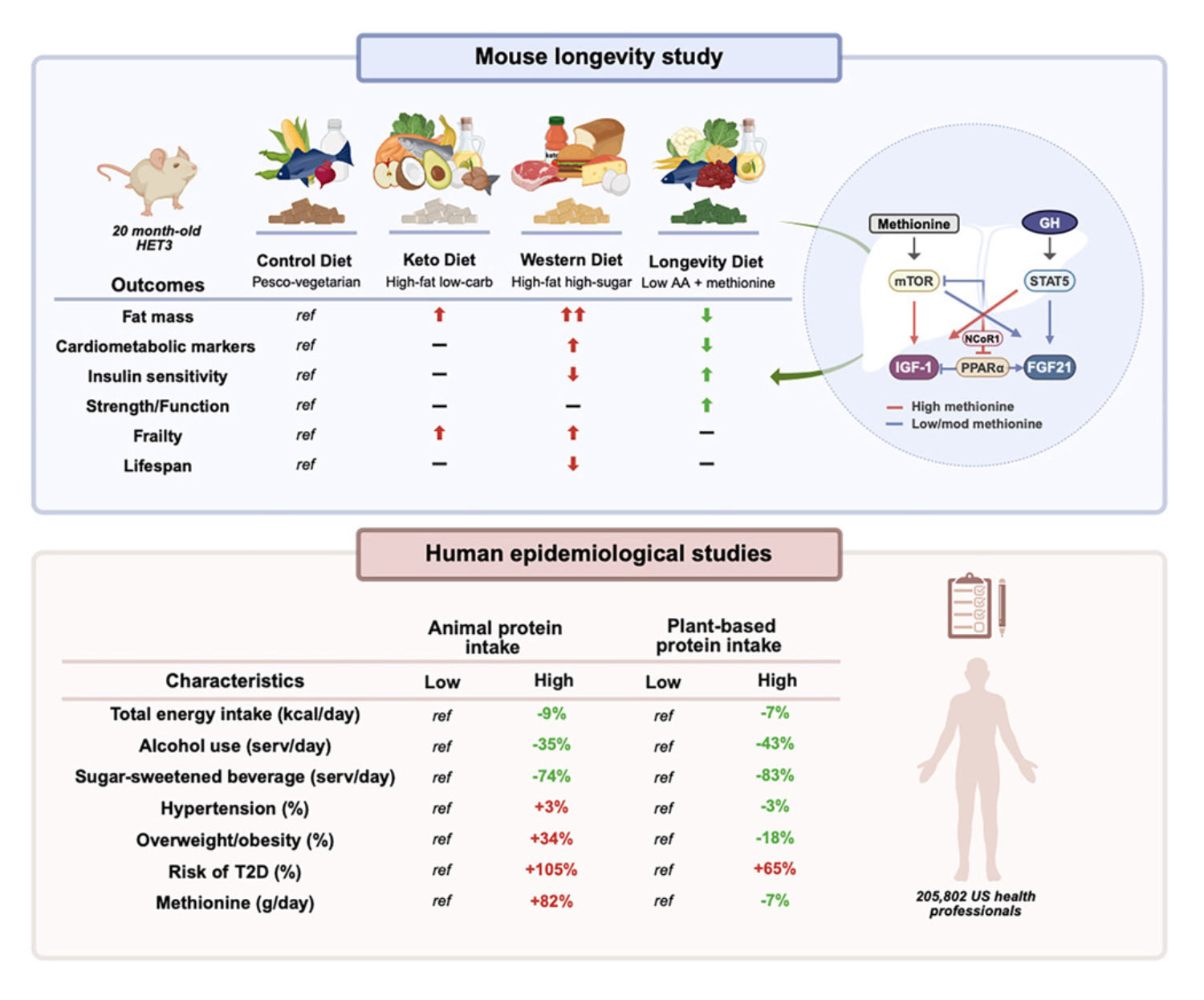
Mostly plant-based low-amino-acid diets have the most potent effects on healthspan but require moderate methionine intake to minimize frailty. Image credit: Fanti et al., doi: 10.1016/j.cmet.2026.05.015.
“The combined data from mice and humans indicate that the best health outcomes may be obtained by following a ‘longevity diet’ that’s largely vegan or vegetarian, but with fish added,” said University of Southern California researcher Valter Longo and his colleagues.
“The Mediterranean-inspired diet provides a small but sufficient amount of methionine and other essential amino acids.”
Mediterranean countries have some of the highest life expectancies in the world, yet they display relatively high frailty.
As plant-based foods have lower amounts of essential amino acids than animal products, Dr. Longo and colleagues developed a longevity diet supplemented with a small amount of the essential amino acid methionine to test its effects on frailty risk.
For the experiment, groups of 20-month-old mice were fed one of four diets: a standard diet; a Western diet high in fats and sugars; a low-carbohydrate ketogenic diet; or the low-protein, methionine-supplemented longevity diet (LDMM).
Mice that received the LDMM showed significantly better outcomes, including a longer healthspan (the portion of life spent in good health), reduced fat mass and less frailty.
“We expected different diets to produce different outcomes, but what really impressed us was how modulating just a single amino acid, methionine, in the longevity diet could produce such dramatic metabolic changes,” said University of Southern California researcher Maura Fanti.
“It points to the idea that amino acid composition, not just overall protein quantity, may be the target of strategic metabolic interventions.”
“In addition, tests revealed several biomarkers of better cardiometabolic health in LDMM mice, including higher amounts of signaling molecules that affect metabolism and aging across species, such as GLP-1.”
“There are, of course, differences in how these pathways are regulated between mice and humans, but seeing such coordinated changes across multiple metabolic hormones is genuinely encouraging, and we’re very curious to know whether effects of similar magnitude would be seen in human studies.”
One of the most remarkable findings was that mice on the LDMM could eat more food than any other group and as much calories as any other group and yet lose fat without losing lean body mass — but only when methionine levels were low but sufficient.
Additionally, human data showed that participants who ate the highest levels of animal protein — therefore consuming the highest amount of methionine and other essential amino acids — had a higher prevalence of obesity and twice the rate of diabetes compared with those consuming little to no animal protein.
“This persisted even though those eating more animal protein had a lower calorie intake and otherwise healthier nutrition,” Dr. Longo said.
“This challenges the dogma that calorie reduction is necessary to lose weight, but it also tells us that we need to have clear understanding of the mechanisms.”
“Too little methionine caused frailty, but too much methionine abolished the benefits of this diet, which was otherwise based on the diet of long-lived populations like the traditional Italian and Okinawa diets.”
“These results indicate that overall protein intake may be less important than specific amino acid intake.”
“The next step the team hopes to pursue is a controlled clinical trial of the LDMM in humans.”
_____
Maura Fanti et al. Methionine-supplemented longevity diet increases growth hormone, GLP-1, and FGF21; reduces frailty; and promotes healthspan. Cell Metabolism, published online June 23, 2026; doi: 10.1016/j.cmet.2026.05.015