Copper diacetyl bis(4-methyl-3-thiosemicarbazone), or Cu(ATSM), restored a key waste-removal system in the brain, reducing toxic amyloid-beta buildup and improving spatial memory in lab models of Alzheimer’s disease, according to a team of researchers at Monash University.
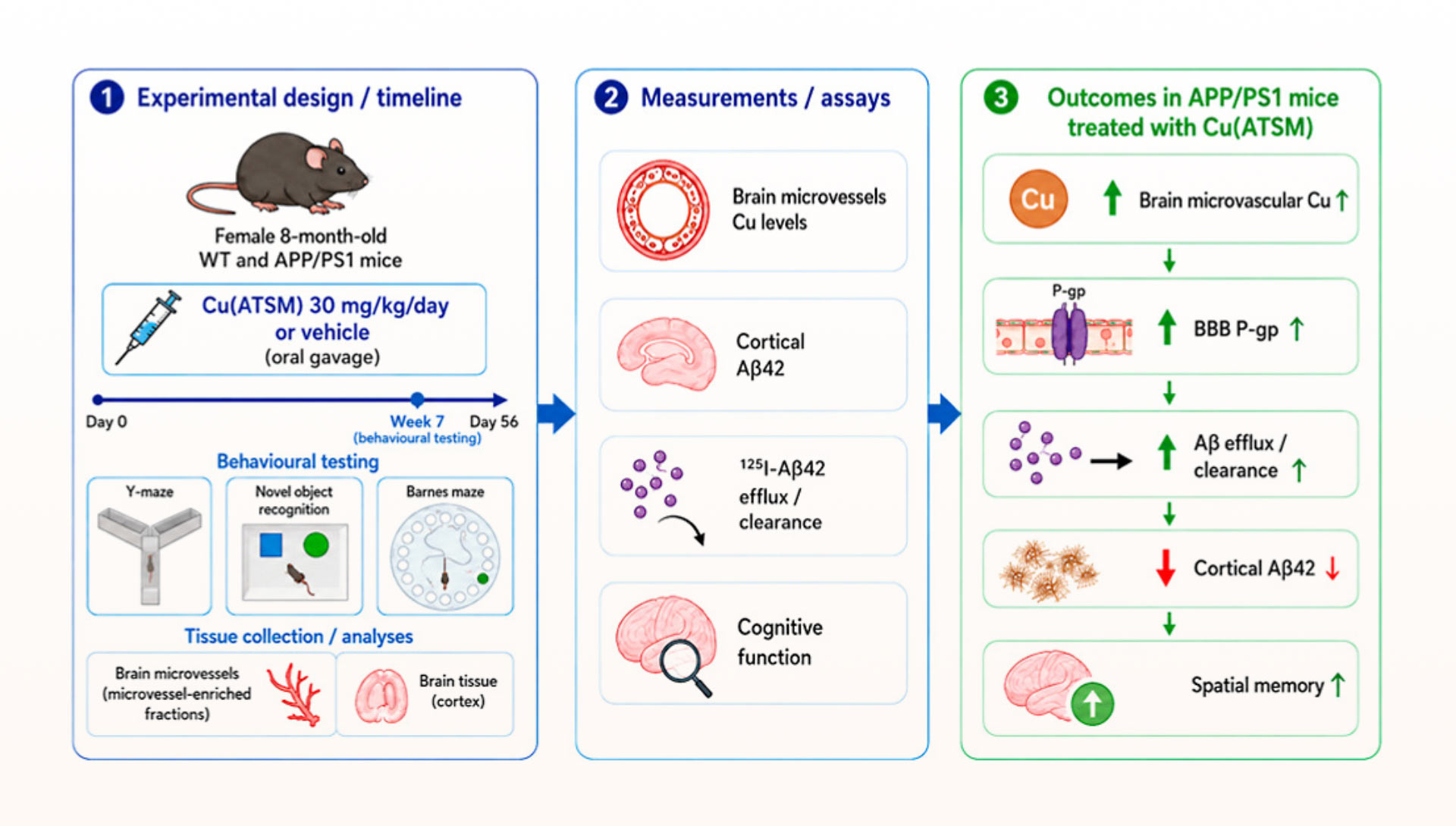
Using the APP/PS1 mouse model of familial Alzheimer’s disease, Pyun et al. investigated the effect of Cu(ATSM) on brain microvascular abundance and function of P-glycoprotein and the associated effects on exogenous amyloid-beta clearance, brain amyloid burden, and cognitive function. Image credit: Pyun et al., doi: 10.1021/acschemneuro.6c00252.
Alzheimer’s disease is driven by the buildup of toxic proteins called amyloid-beta.
Normally, the brain flushes these out into the bloodstream through the blood-brain barrier.
In Alzheimer’s, the pumps doing the heavy lifting, called P-glycoprotein, weaken significantly, clogging the drain and trapping the toxic proteins in the brain.
“The treatment successfully engages the brain’s blood vessels to lower toxic protein levels, which results in behavioral benefits,” said Dr. Jae Pyun, lead author of a paper published in the journal ACS Chemical Neuroscience.
“This is the first study to show that Cu(ATSM) can increase the abundance of P-glycoprotein clearance pumps in an Alzheimer’s model, by 24.1%, effectively linking the repair of the blood-brain barrier to a reduction in toxic proteins and improved cognitive function.”
“By improving the pumps, the brain can finally clear out the trapped waste.”
“Over 56 days, the treatment reduced toxic amyloid-beta by 42% and improved spatial learning by nearly 44%.”
“The compound has strong potential to quickly transition into human clinics because it has already undergone safety evaluations for other diseases,” added Professor Joseph Nicolazzo, senior author of the paper.
“Cu(ATSM) is a copper compound with anti-inflammatory and neuroprotective properties that has already progressed to clinical testing for conditions like Parkinson’s and amyotrophic lateral sclerosis.”
“Because reducing amyloid burden is clinically proven to improve functional outcomes, these preclinical results strongly support the rationale for testing this drug in early symptomatic Alzheimer’s disease.”
While Cu(ATSM) reduced amyloid buildup, the researchers are still mapping the exact biological routes the proteins take to leave the brain.
Beyond repairing the blood-brain barrier, they suspect the copper treatment may empower the brain’s own immune cells, called microglia, to consume and degrade the toxic plaques.
“Future studies will focus on tracking the precise clearance mechanisms to find how the proteins exit the brain into the bloodstream,” they said.
“The current findings establish a strong foundation for exploring biometal therapies like Cu(ATSM) to combat blood vessel dysfunction and memory loss in Alzheimer’s disease.”
_____
Jae Pyun et al. Cu(ATSM) Restores Blood-Brain Barrier Abundance of P-Glycoprotein and Improves Cognitive Function in the APP/PS1 Mouse Model of Alzheimer’s Disease. ACS Chem. Neurosci, published online May 30, 2026; doi: 10.1021/acschemneuro.6c00252