Other Sciences News

Jan 12, 2014 by News Staff

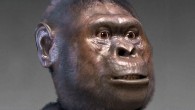
Paranthropus boisei, an early hominin that lived in East Africa between 2.3 and 1.2 million years ago, mainly ate tiger-nuts – edible bulbous tubers of the sedge Cyperus esculentus (also known as nut grass, chufa sedge, yellow nutsedge or earth almond), according to a new study involving modern-day baboons. The study, conducted by Oxford University scientist Dr Gabriele Macho, suggests that this hominin may have sought additional nourishment...

Jan 10, 2014 by News Staff

In a large-scale lab and field study, a multinational team of researchers has revealed the origins of huge underwater waves. This satellite image shows...

Jan 10, 2014 by News Staff

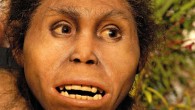
A new study, published in the Proceedings of the National Academy of Science, confirms close relationship of Ardipithecus ramidus – a species of...

Jan 4, 2014 by News Staff

Earthquake lights – a rare luminous phenomenon that appears in the sky during or before seismic activity or volcanic eruptions – are more likely...

Dec 20, 2013 by News Staff

A team of researchers led by Prof Artem Oganov of Stony Brook University has shown that, under certain conditions, ordinary rock salt can take on some...

Dec 18, 2013 by News Staff

A comparison of the high-quality genome sequence of a 50,000-year-old Neanderthal woman with those of modern humans and Denisovans reveals a long history...

Dec 17, 2013 by News Staff

A tiny bone of an early human species, possibly Homo erectus, found in Kenya is the earliest evidence of a modern human-like hand, according to a team...

Dec 10, 2013 by News Staff

Perfluorotributylamine – a chemical used in the electrical industry – has the potential to contribute significantly to global warming, according...

Dec 6, 2013 by News Staff

A team of scientists reporting in the Journal of Proteome Research has cracked the secret of the black Périgord truffle’s unique, pungent aroma. The...

Dec 6, 2013 by News Staff

A 1.34-million-year-old partial skeleton of the Plio-Pleistocene hominin Paranthropus boisei – including arm, hand, leg and foot fragments – found...

Dec 4, 2013 by News Staff

Researchers from the Max Planck Institute for Evolutionary Anthropology in Leipzig, Germany, have sequenced the mitochondrial genome of a 400,000-year-old...

Dec 3, 2013 by News Staff

According to an international group of anthropologists and archaeologists led by Dr Brigitte Holt from the University of Massachusetts, Neanderthals (Homo...

Nov 29, 2013 by News Staff

Australian scientists have revealed the bacterial killing potential of black silicon, a type of silicon that has been etched to create long narrow nanoprotrusions...

Nov 28, 2013 by News Staff

A team of researchers from the University of Cambridge’s Scott Polar Research Institute has discovered two lakes about 800 m below the ice sheet...

Nov 27, 2013 by News Staff

Using satellite images from Google Earth, Canadian scientists have found that fishing weirs off the coast of Persian Gulf countries could be catching up...

Nov 21, 2013 by News Staff

The genome sequence of a 24,000-year-old young Siberian individual found in Russia shows that 14 to 38 percent of modern Native American’s ancestry came...

Nov 19, 2013 by News Staff

A multinational team of researchers has cracked the mystery behind the unusually strong El Niño events that occurred in 1982-1983 and 1997-1998. El Niño,...

Nov 18, 2013 by News Staff

U.S. seismologists have made a surprising discovery near Mount Sidley in Marie Byrd Land, Antarctica – an active volcano smoldering under 1.2 km...

Nov 14, 2013 by News Staff

According to Durham University anthropologist Dr Jamshid Tehrani, evolutionary analysis can be used to study similarities among folktales. His findings...

Nov 6, 2013 by News Staff

A new study published this week in the Proceedings of the National Academy of Sciences correlates 93 small earthquakes near Snyder, Texas between 2009...