Paleontology News

Feb 9, 2023 by Enrico de Lazaro

One of the two new species, Kumimanu fordycei, weighed up to 160 kg and may have been the largest penguin ever to have lived, according to Bruce Museum paleontologist Daniel Ksepka and his colleagues from New Zealand, the United Kingdom and the United States. Life reconstructions of Kumimanu fordycei and Petradyptes stonehousei. Image credit: Simone Giovanardi. In their study, Dr. Ksepka and co-authors nine new penguin specimens from the Moeraki Formation...

Feb 6, 2023 by Enrico de Lazaro

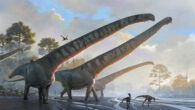
A new genus and species of giant colossosaurian titanosaur has been identified from fossils found in Patagonia, Argentina. An artist’s reconstruction...

Feb 2, 2023 by Enrico de Lazaro

Paleontologists have examined the fossilized brain and cranial nerve soft tissues of Coccocephalus wildi, a species of early ray-finned fish that lived...

Feb 1, 2023 by News Staff

The principal animal lineages diverged in the Cambrian period, but most diversity at lower taxonomic ranks arose more gradually over the subsequent 500...

Feb 1, 2023 by Natali Anderson

About 50 species of birds on Earth today do not belong to the same group as the other 10,000 currently in existence. Known as the paleognaths, this small...

Jan 31, 2023 by Enrico de Lazaro

Turnersuchus hingleyae, a new genus and species of thalattosuchian crocodylomorph from the Early Jurassic epoch, helps fill a gap in the fossil record...

Jan 30, 2023 by Sergio Prostak

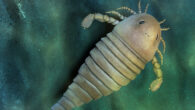
Hibbertopterus lamsdelli is only the fourth, yet most reliable record of an American hibbertopterid sea scorpion. Life reconstruction of a hibbertopterid...

Jan 27, 2023 by News Staff

Paleontologists have described two new species of the early primatomorphan genus Ignacius from Ellesmere Island, Nunavut, Canada. Life reconstruction of...

Jan 26, 2023 by Enrico de Lazaro

Funcusvermis gilmorei lived in the tropical forests of what is now Arizona, the United States, during the Triassic period, approximately 220 million years...

Jan 25, 2023 by Enrico de Lazaro

Paleontologists have described a previously unrecognized genus and species of hadrosaurid dinosaur from a partial bone found in Texas, the United States. Life...

Jan 23, 2023 by Enrico de Lazaro

Paleontologists have identified a new species of long-legged, filter-feeding pterodactyloid pterosaur from the well-preserved specimen found in a quarry...

Jan 20, 2023 by Enrico de Lazaro

Paleontologists have unearthed the fossilized remains of an extinct gannet species that lived in what is now Portugal during the Miocene epoch, some 15...

Jan 19, 2023 by Enrico de Lazaro

Paleontologists in India have documented 92 clutches containing a total of 256 fossilized eggs of titanosaur sauropods. Field photograph of titanosaur...

Jan 17, 2023 by News Staff

Suction is an especially effective way of feeding underwater, and adaptations to enhance it have evolved numerous times in jawed vertebrates. The only...

Jan 17, 2023 by Enrico de Lazaro

Paleontologists have examined five specimens with differently preserved feathers from Sapeornis chaoyangensis, an early bird species that lived during...

Jan 16, 2023 by Enrico de Lazaro

Paleontologists have described new specimens of theropods — a dinosaur group that includes both modern birds and their closest non-avian dinosaur...

Jan 16, 2023 by News Staff

Before humans arrived, giant tortoises occurred on many islands in the western Indian Ocean. In new research, Professor Uwe Fritz from the Senckenberg...

Jan 13, 2023 by Enrico de Lazaro

Amber exquisitely preserves the delicate organs of fossil flowers for millions of years. However, flower inclusions can be rare and usually do not exceed...

Jan 9, 2023 by Enrico de Lazaro

Paleontologists have described a new genus and species of long-tailed pachypleurosaur from a complete skeleton found in China. An artist’s impression...

Jan 9, 2023 by News Staff

In new research, paleontologists analyzed abundances of sunscreen-like chemicals in 800 fossil pollen grains from 250-million-year-old rocks in Tibet. The...