Norellraptor barsboldi, a new species of small microraptorine dinosaur from the 120-million-year-old rock beds of China’s Liaoning province, challenges the idea that the earliest fliers shared a common blueprint for taking to the air.
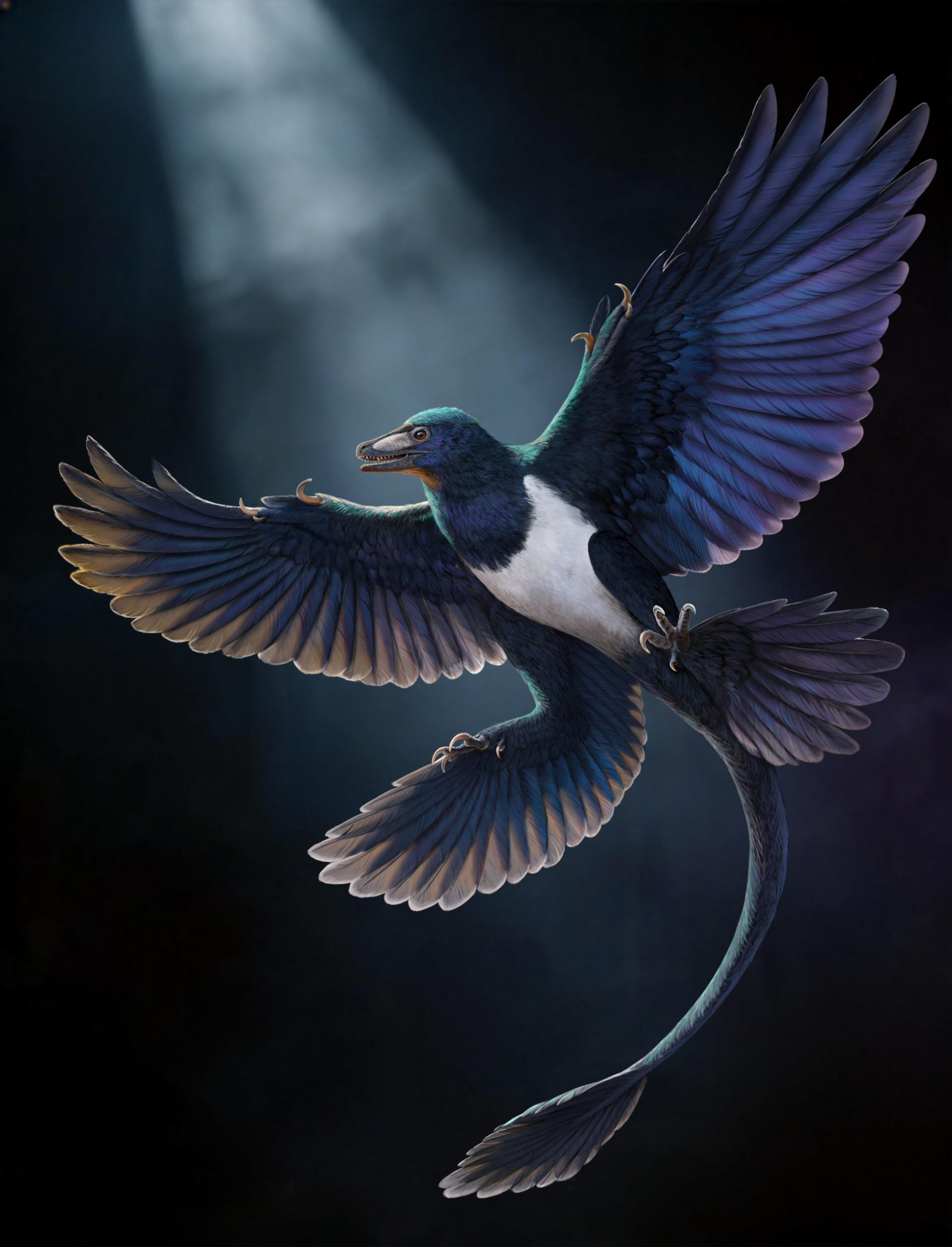
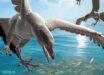
Life reconstruction of Norellraptor barsboldi. Image credit: Zhao Chuang.
Norellraptor barsboldi belongs to the Microraptorinae, a group of small, bird-like predatory dinosaurs.
Microraptorines combine wing-like arms with feathered legs, and some are thought to have glided or perhaps flown under their own power.
These dinosaurs have long been used as models for how flight began. One view holds that a rudimentary form of flight arose in the common ancestor of birds and their closest relatives, the paravians, and was later elaborated in some lines and lost in others. The other holds that flight-related traits evolved separately, at least twice.
“Microraptorinae is a clade of small-sized theropod dinosaurs mainly known from the Lower Cretaceous Jehol Biota of north-eastern China,” said Dr. Qiang Ji of Hebei GEO University, Dr. Andrea Cau of the OPHIS Paleontological Museum and their colleagues.
“Feather-like integumentary structures, true pennaceous feathers and remnants of the gut contents are found in exceptionally-preserved microraptorines, providing details of their anatomy and ecology rarely available for dinosaur fossils.”
“As members of Paraves, microraptorines are among the closest relatives of birds and display a peculiar combination of features in the limb and plumage which suggests that at least some members of the clade had acquired aerial adaptations.”
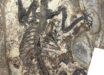
Norellraptor barsboldi’s nearly complete, 57-cm (22-inch) skeleton with part of the plumage imprints was discovered in the Jiufotang Formation near Lamadong town in China’s Liaoning province.
The paleontologists added the fossil to an evolutionary analysis, identifying 194 anatomical changes along the microraptorine branch of the family tree. About 30% of them, 57 features, also appear along the lineage leading to birds.
However, the order in which these features appeared, however, differed between the two groups.
In microraptorines, for instance, the hand’s finger bones shortened early, while features such as the fusion of wrist and hand bones came later.
“The findings challenge the idea that microraptorines and birds inherited either a common flight apparatus or a shared developmental process that drove its evolution,” the researchers said.
“Different selective pressures probably shaped the flight-related features of each lineage.”
The team’s paper was published in the journal Nature Communications.
_____
X. Wang et al. 2026. Independent assembly of the flight apparatus in a non-avian dinosaur clade. Nat Commun 17, 10074; doi: 10.1038/s41467-026-77804-6