Dr. Stephen Kane from the University of California, Riverside and colleagues offer a tidy explanation for one of the Solar System’s enduring puzzles: why Venus, so similar to Earth in size and mass, has no moon at all.
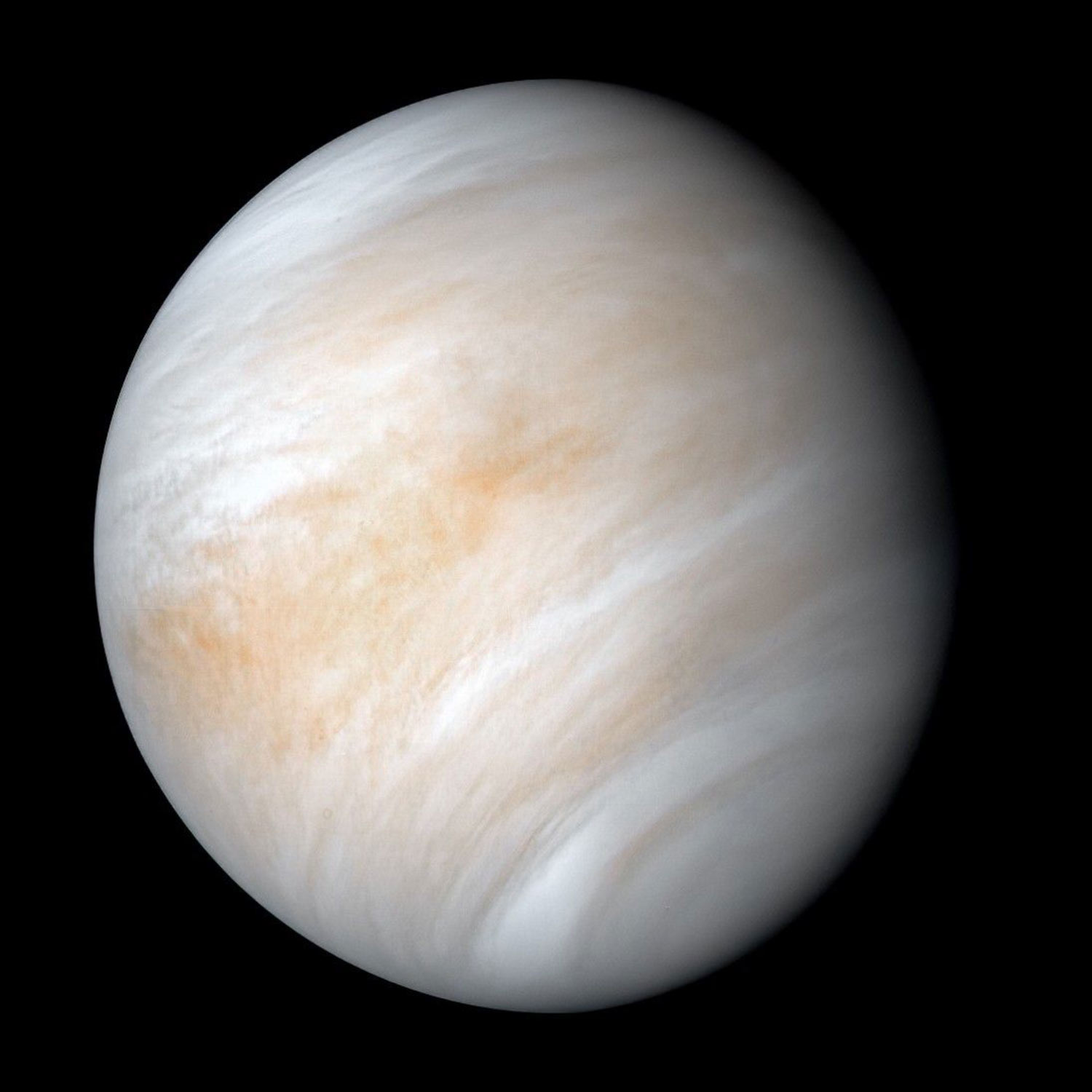
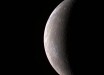
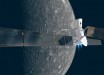
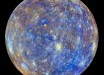
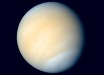
NASA’s Mariner 10 spacecraft captured this view of Venus in February 1974. Image credit: NASA / JPL-Caltech.
“Our study shows Venus didn’t require a catastrophe to arrive at what we can see today,” Dr. Kane said.
“It turns out the gravity of the planet itself combined with the rate at which it spins naturally caused the moon to collapse on top of it.”
Using computer simulations of how a hypothetical Venusian moon’s orbit would evolve under gravitational tides, the astronomers found that a moon’s fate hinges on how fast Venus was spinning after its formation.
If a moon-forming giant impact left an early Venus spinning rapidly, with a day shorter than about 12 hours, a lunar-mass satellite could actually have survived for billions of years.
But if the impact left Venus spinning more slowly, any moon would have been dragged inward by tidal forces and torn apart by Venus’ gravity within roughly 30 million to 1.7 billion years.
The researchers also modeled two different assumptions about how Venus’ rocky interior dissipates tidal energy.
They found that the two approaches agree at slower spins but diverge for more massive moons at fast spins, underscoring how much the outcome depends on poorly constrained properties of Venus’ interior.
Crucially, the scientists connected their results to separate simulations of the giant impacts themselves.
Those impact simulations suggest that collisions violent enough to produce Venus’ actual, slow retrograde rotation tend to produce debris disks that either fall back onto the planet without forming a moon, or leave any resulting moon sitting right at the tidal survival boundary.
Together, the findings suggest Venus’ moonless state doesn’t require an extra catastrophic event, such as a later impact stripping away an existing moon.
Instead, ordinary tidal evolution following a single giant impact could account for it.
The study also implies that any such moon, if it briefly existed, would have been destroyed early in Venus’ history and that similar Venus-like exoplanets orbiting close to their stars may generally be unable to hold onto large moons, with implications for their climate stability.
“My feeling is there are benefits to having a moon, but it isn’t required for habitability,” Dr. Kane said.
“The moon has definitely changed the way Earth has evolved through time, but we don’t fully know how important that role is.”
“The findings suggest that even planets capable of forming moons may not be able to keep them.”
“Slowly rotating worlds could send their moons spiraling toward their surfaces, dramatically changing the planets in the process.”
“When people think about Earth twins around other stars, one question they ask is, Does it have a moon?”
“Our study shows a disturbing scenario for many of those cases.”
“If these planets don’t rotate fast enough, the moon will crash to the surface, and that would change the course of history for those planets.”
The results were published in the Astrophysical Journal.
_____
Stephen R. Kane et al. 2026. Tidal Demise: The Evolution and Fate of a Hypothetical Venus Moon. ApJ 1009, 31; doi: 10.3847/1538-4357/ae9d6c