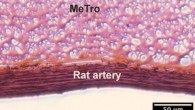
A team of researchers at the Cincinnati Children’s Heart Institute used an experimental targeted molecular therapy to block a matrix-forming protein,...
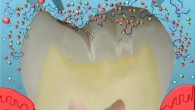
A team of scientists at the University of Washington has developed a new dental product that uses protein amelogenin-derived peptides to remineralize tooth...
Woodpeckers experience forces up to 1,200-1,400 g while pecking. It is assumed due to evolutionary adaptations, the woodpecker is immune to brain injury....
Consumption of fermentable fiber can prevent obesity, metabolic syndrome and adverse changes in the intestine by promoting growth of ‘good’ bacteria...
There are approximately 42 million protein molecules in a simple cell, according to University of Toronto’s Professor Grant Brown and co-authors.
Yeast...
Vasopressin, also called antidiuretic hormone, is released from the brain, and known to work in the kidney, suppressing a process called diuresis. According...
According to a study published in the Journal of Infectious Diseases, a new test that measures mRNAs or proteins in human nasal epithelial cells could...
Viruses can transfer genes to organisms they are not known to infect, including organisms in different domains (superkingdoms) of life, according to a...
Cinnamaldehyde, an essential oil that gives cinnamon its flavor, activates thermogenic and metabolic responses in fat cells, or adipocytes, according to...
A team of scientists led by Dr. Masanobu Komatsu of Sanford Burnham Prebys Medical Discovery Institute has identified a signaling pathway that is essential...
In a new study published in the journal eLife, Dr. Andrew Cowburn of the University of Cambridge and co-authors show that skin helps regulate blood pressure...
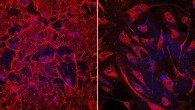
A team of researchers led by Case Western Reserve University School of Medicine has discovered a conserved molecular pathway that controls lifespan and...
A biocompatible and highly elastic hydrogel sealant can effectively seal wounds in shape-shifting tissues without the need for common staples or sutures,...
Archaeologists have found a well-preserved Early Bronze Age wooden vessel in the Swiss Alps. The artifact could help researchers shed new light on the...
A mysterious hominin species mated with the ancestors of modern-day Sub-Saharan Africans, according to an analysis of modern human genomes published this...
A group of researchers at the Feinstein Institute for Medical Research has identified a protein called Blimp-1 as a likely primary cause of the adverse...
Ancient, independent inactivations of the ucp1 gene, which encodes the uncoupling protein 1, or UCP1 (essential for thermogenesis in brown fat), were a...



![KLFs are a subfamily of zinc finger transcriptional regulators with highly characterized roles in proliferation, survival, metabolism, and response to stress. Hsieh et al demonstrate that KLFs are critical determinants of aging, influencing both lifespan and age-related deterioration, and are broadly required for lifespan extension in all four mechanistically distinct longevity models tested. Importantly, the team provides evidence that these effects are mediated by KLF regulation of autophagy (autophagy was assessed using a GFP::LGG-1 translational reporter; GFP-positive puncta [red arrow] were counted in 30-150 total hypodermal seam cells in 10–20 animals) and are conserved in a mammalian system via a functional ortholog, KLF4. Together, the findings provide a role for the KLFs as a transcriptional regulatory point in longevity. Image credit: Hsieh et al, doi: 10.1038/s41467-017-00899-5.](https://cdn.sci.news/images/2017/10/image_5324-Aging-Pathway-195x110.jpg)