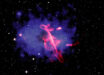
This new image from the NASA/ESA Hubble Space Telescope shows a portion of the N159 star-forming complex in the Large Magellanic Cloud, a dwarf galaxy approximately 160,000 light-years away from us.
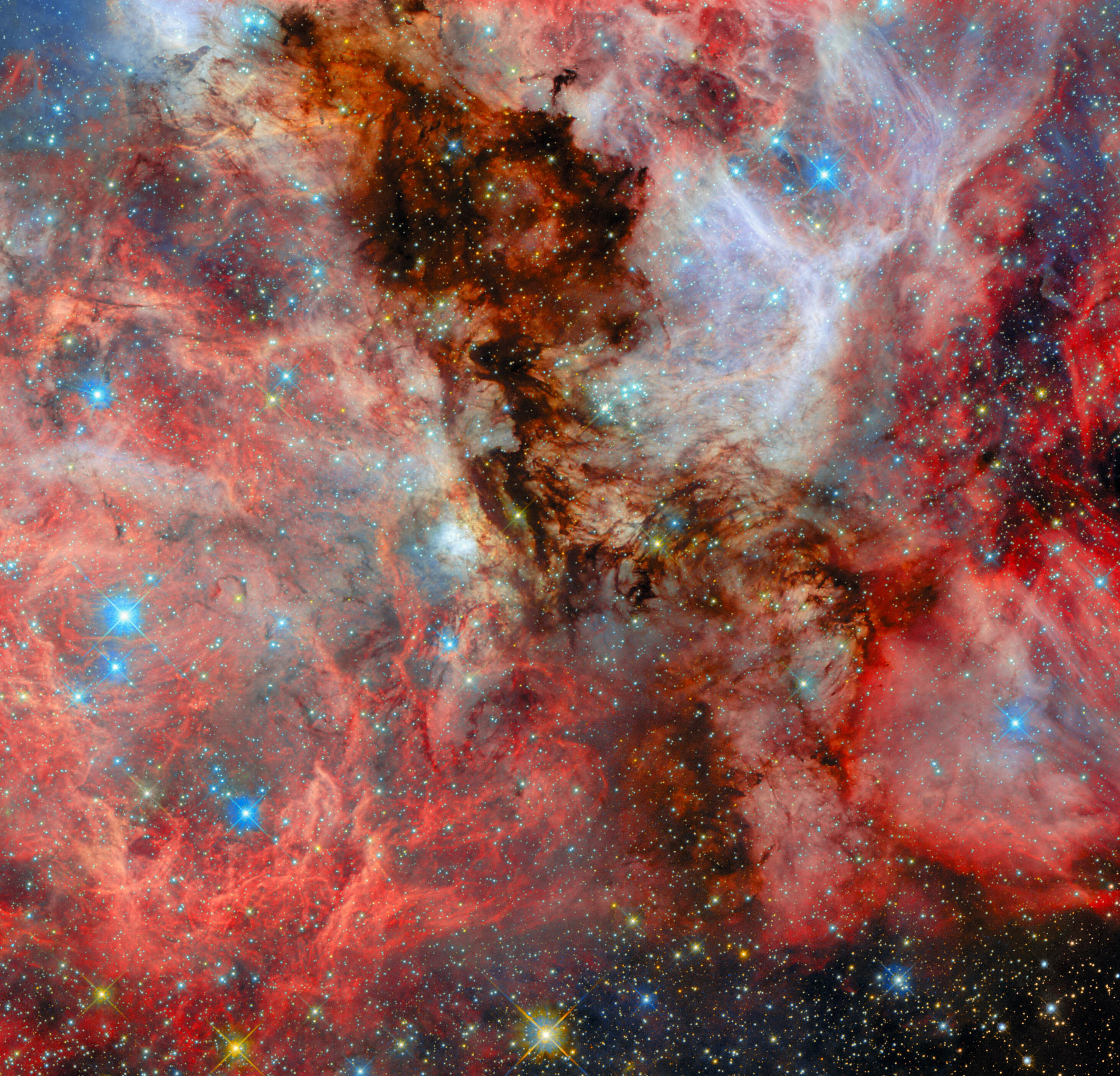
This Hubble image shows a portion of N159, a star-forming complex in the Large Magellanic Cloud. Image credit: NASA / ESA / Hubble / R. Indebetouw.
N159 is one of the most massive giant molecular clouds in the Large Magellanic Cloud, a companion to our own Milky Way Galaxy.
Located at the southwest tip of the famous Tarantula Nebula, the cloud is over 150 light-years across.
The new Hubble image shows just a portion of the N159 complex.
“Thick clouds of cold hydrogen gas dominate the scene, forming a complex network of ridges, cavities, and glowing filaments,” the Hubble astronomers said in a statement.
“Embedded within these dense clouds, newly formed stars begin to shine, their intense radiation causing the surrounding hydrogen to glow in deep red tones.”
“The brightest regions mark the presence of hot, massive young stars whose powerful stellar winds and energetic light reshape their environment.”
“These forces carve out bubble-like structures and hollowed cavities in the gas, clear signatures of stellar feedback in action.”
“Dark clouds in the foreground are lit from behind by new stars.”
“Together, the glowing clouds and sculpted bubbles reveal a dynamic interplay between star formation and the material from which stars are born, capturing the ongoing cycle of creation and transformation within this neighboring galactic system.”