A small songbird inhabiting the Babar Islands, in the Banda Sea, Indonesia, has been identified as a new species after a duo of researchers discovered that its distinctive song sets it apart from its closest relative. Named the cheerful fantail (Rhipidura laguceria), the bird had previously been treated as identical to the cinnamon-tailed fantail (Rhipidura fuscorufa), found 135 km (84 miles) to the east on the Tanimbar Islands.
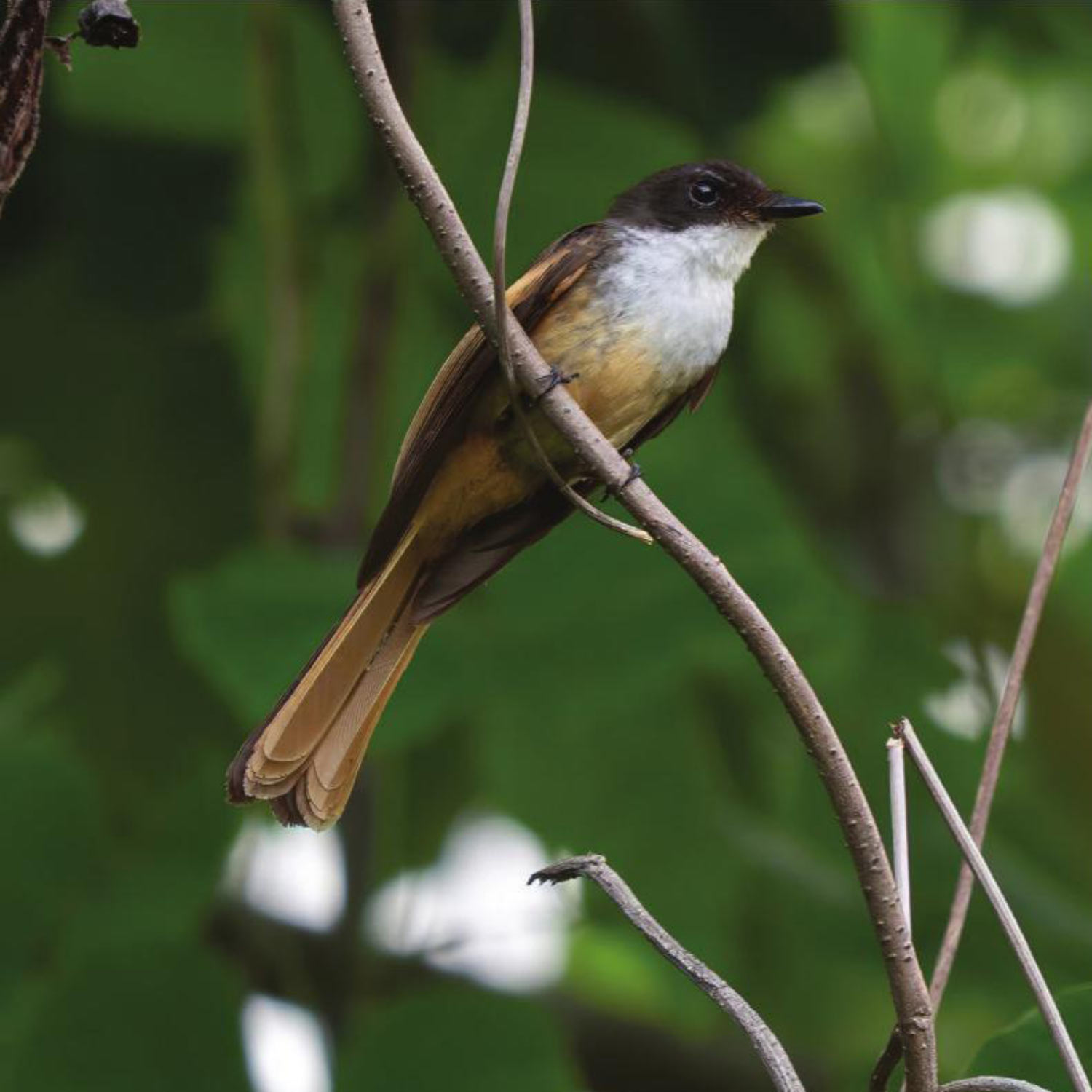
The cheerful fantail (Rhipidura laguceria) in November 2022. Image credit: James A. Eaton.
Rhipidura fuscorufa is a small insectivorous songbird in the fantail family Rhipiduridae.
This species is about 18 cm (7 inches) long and is known for its cinnamon-colored tail and underparts, as well as the characteristic tail-fanning behavior common to fantails.
Rhipidura fuscorufa was first described in 1883 from the Tanimbar Islands.
Birds from Babar, about 135 km to the west, were later collected and examined by ornithologists, who concluded that they belonged to the same species. That view remained largely unchanged for more than 120 years.
“Rhipidura fuscorufa is endemic to Indonesia, where it occurs on the island groups of Tanimbar and Babar,” said Dr. James Eaton from Birdtour Asia Limited and Dr. Alex Berryman of BirdLife International.
“It was described as a new species in 1883 from a series of specimens collected on the Tanimbar Islands.”
“Fifteen years later, Rhipidura fuscorufa specimens were also procured from Babar — the main island in the Babar group and the only one subject to specimen collection — but in reviewing the material in 1901 scientists concluded the specimens to be: ‘consistent with specimens from the Tanimbar Islands.”
“In the c. 120 years that have followed, the prevailing taxonomic treatment in global and regional reference works has been to treat Rhipidura fuscorufa as a monotypic species.”
Dr. Eaton first noted differences between the Babar and Tanimbar populations during a visit to Babar Island in 2011, later writing that the vocal distinctions suggested the existence of an undescribed species.
To investigate, the authors examined 19 museum specimens from the American Museum of Natural History in New York and the Natural History Museum at Tring in England, analyzed 18 sound recordings from the two island groups.
They found only subtle physical differences: birds from Babar tended to have darker upperparts and less extensive cinnamon-colored plumage on the underside than birds from Tanimbar. Measurements of wings, tails, bills and legs revealed no significant differences.
The songs, according to the researchers, told a different story.
“The songs of the two Rhipidura fuscorufa populations differ considerably,” they said.
“The song of Babar birds is typically a series of single whistles that rise in pitch towards the end, while that of Tanimbar birds typically combines very short with longer whistles rendering it a much more rhythmic cadence, and pitch typically goes up and down.”
“While strophes of Tanimbar and Babar birds are similar in duration, those of Tanimbar birds contain significantly more notes, which average shorter and have shorter gaps between them.”
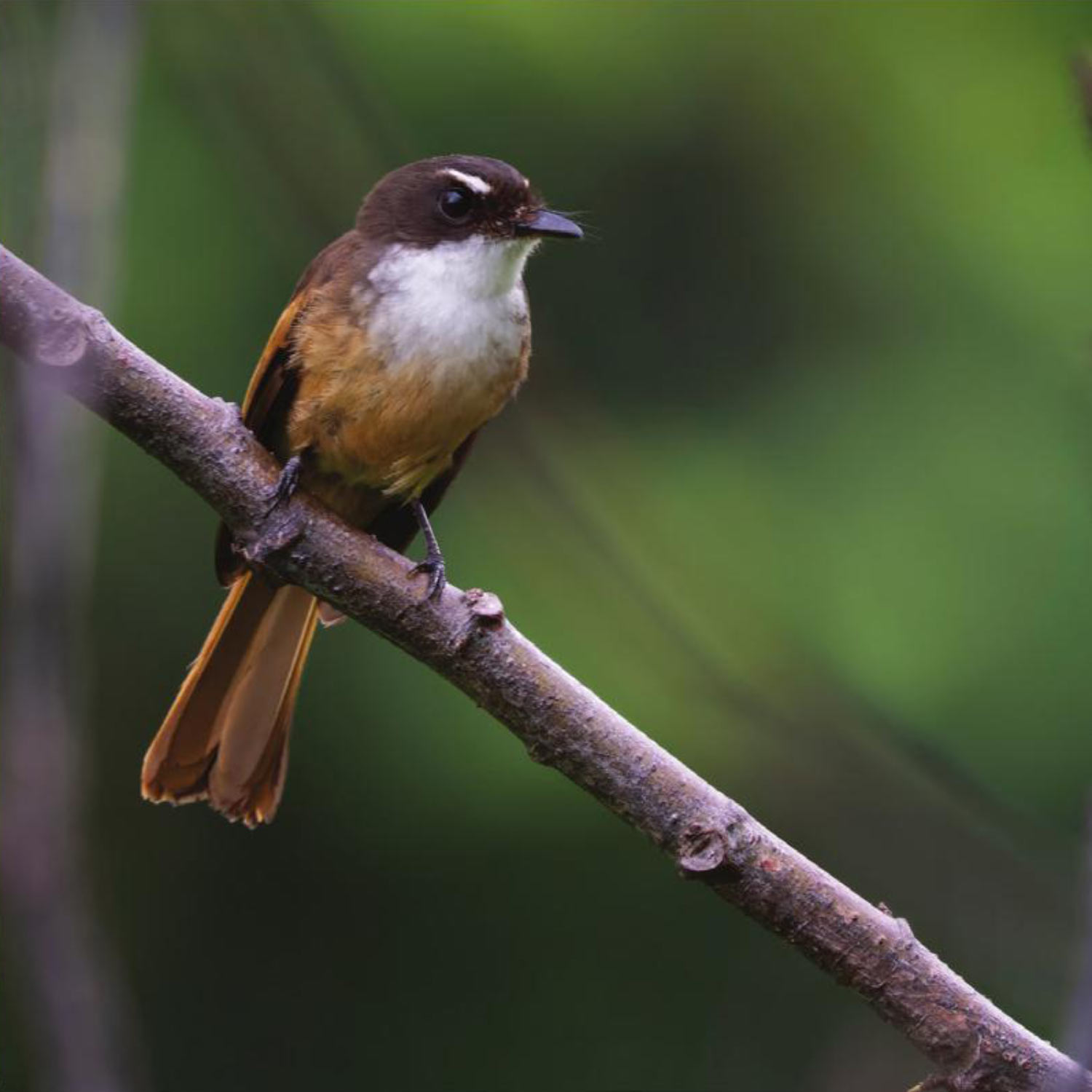
The cinnamon-tailed fantail (Rhipidura fuscorufa) in November 2022. Image credit: James A. Eaton.
The scientists then conducted 132 playback experiments over multiple years during recreational visits to Yamdena (Tanimbars) and Babar.
Birds on both island groups routinely responded to recordings from their own population but ignored recordings from the other island.
According to the study, not a single Babar bird responded to Tanimbar songs, and not a single Tanimbar bird responded to Babar songs.
“Despite currently being treated as monotypic, our data find discrete differences between Tanimbar and Babar populations of Rhipidura fuscorufa,” the researchers said.
“Morphologically the two populations differ subtly in upperpart coloration, and vocally they are highly divergent, with strong evidence from playback experiments that differences in song are strong enough to provide a premating reproductive barrier.”
“On this basis we consider that populations of Rhipidura fuscorufa on Babar merit taxonomic separation from those on the Tanimbars.”
“We are unaware of an available name for the Babar population, and describe it as Rhipidura laguceria.”
Both the newly described Rhipidura laguceria and its Tanimbar relative are, for now, considered of Least Concern by conservation standards — adaptable birds that thrive in degraded and edge habitats rather than closed-canopy forest.
“Rhipidura fuscorufa is currently listed as Least Concern on the IUCN Red List,” the scientists said.
“Following its division, Rhipidura fuscorufa and Rhipidura laguceria naturally have much smaller ranges which meet the initial thresholds for listing as threatened under Criteria B1 and B2 of the IUCN Red List.”
“However, both species are highly tolerant of habitat degradation, and are commonly found in edge habitats, clearings and glades, as well as scrub with taller mango trees.”
“Indeed, both fantails seem to favor heavily modified habitats and shun closed-canopy forests.”
“Accordingly, neither species meets any of the subcriteria for listing as B1 or B2, and should therefore continue to be listed as Least Concern.”
The discovery of Rhipidura laguceria is reported in a paper published this month in the Bulletin of the British Ornithologists’ Club.
_____
James A. Eaton & Alex J. Berryman. 2026. A new and cryptic fantail species from the Babar Islands, Maluku Province, Indonesia. Bulletin of the British Ornithologists’ Club 146 (2): 203-215; doi: 10.25226/bboc.v146i2.2026.a6