In the remote rainforests of New Guinea’s Vogelkop Peninsula, scientists have spotted two marsupial species — the pygmy long-fingered possum (Dactylonax kambuayai) and the ring-tailed glider (Tous ayamaruensis) — believed to have been lost for roughly 6,000 years. These discoveries suggest that New Guinea’s forests may still shelter remnants of an ancient faunal world.
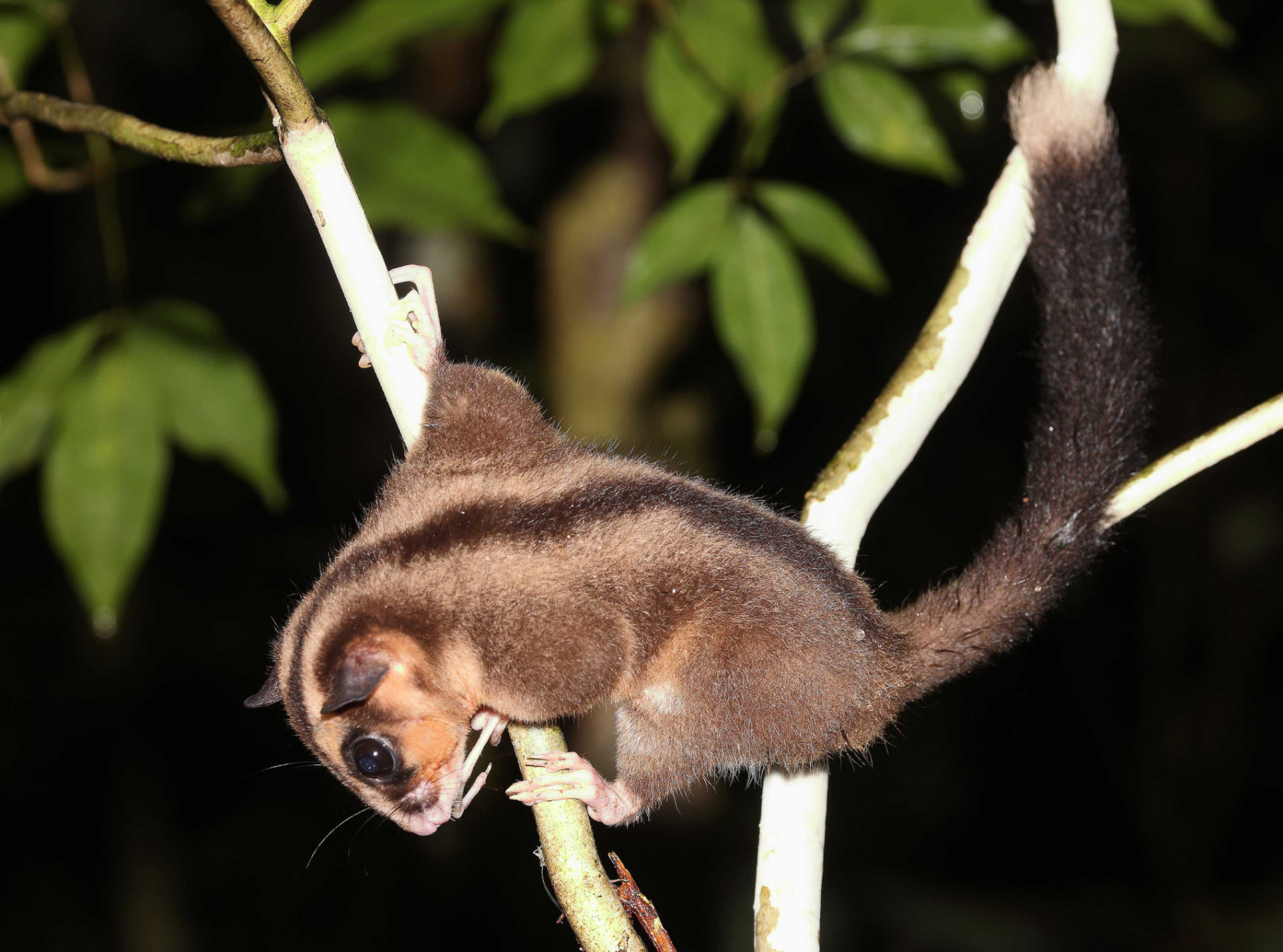
The pygmy long-fingered possum (Dactylonax kambuayai), a female in Klalik area, Vogelkop Peninsula. Image credit: Carlos Bocos.
“The discovery of one ‘Lazarus taxon,’ even if thought to have become extinct recently, is an exceptional discovery,” said Australian Museum Professor Tim Flannery.
“But the discovery of two species, thought to have been extinct for thousands of years, is remarkable.”
“The findings underscore the critical importance of preserving these unique bioregions and the value of collaborative research in uncovering and protecting hidden biodiversity.”
Previously known from Pleistocene fossils in Australia, and from Pleistocene-early Holocene fossils from New Guinea, the pygmy long-fingered possum and the ring-tailed glider have been found in isolated lowland forest habitats on the Vogelkop Peninsula.
“The Vogelkop is an ancient piece of the Australian continent that has become incorporated into the island of New Guinea,” Professor Flannery said.
“Its forests may shelter yet more hidden relics of a past Australia.”
The pygmy long-fingered possum is a boldly striped marsupial with a remarkable adaptation — one digit on each hand is twice the length of the next longest finger.
The species appears to have vanished from Australia during the Ice Age, the geological epoch when iconic megafauna, such as the diprotodon and the marsupial lion also became extinct.
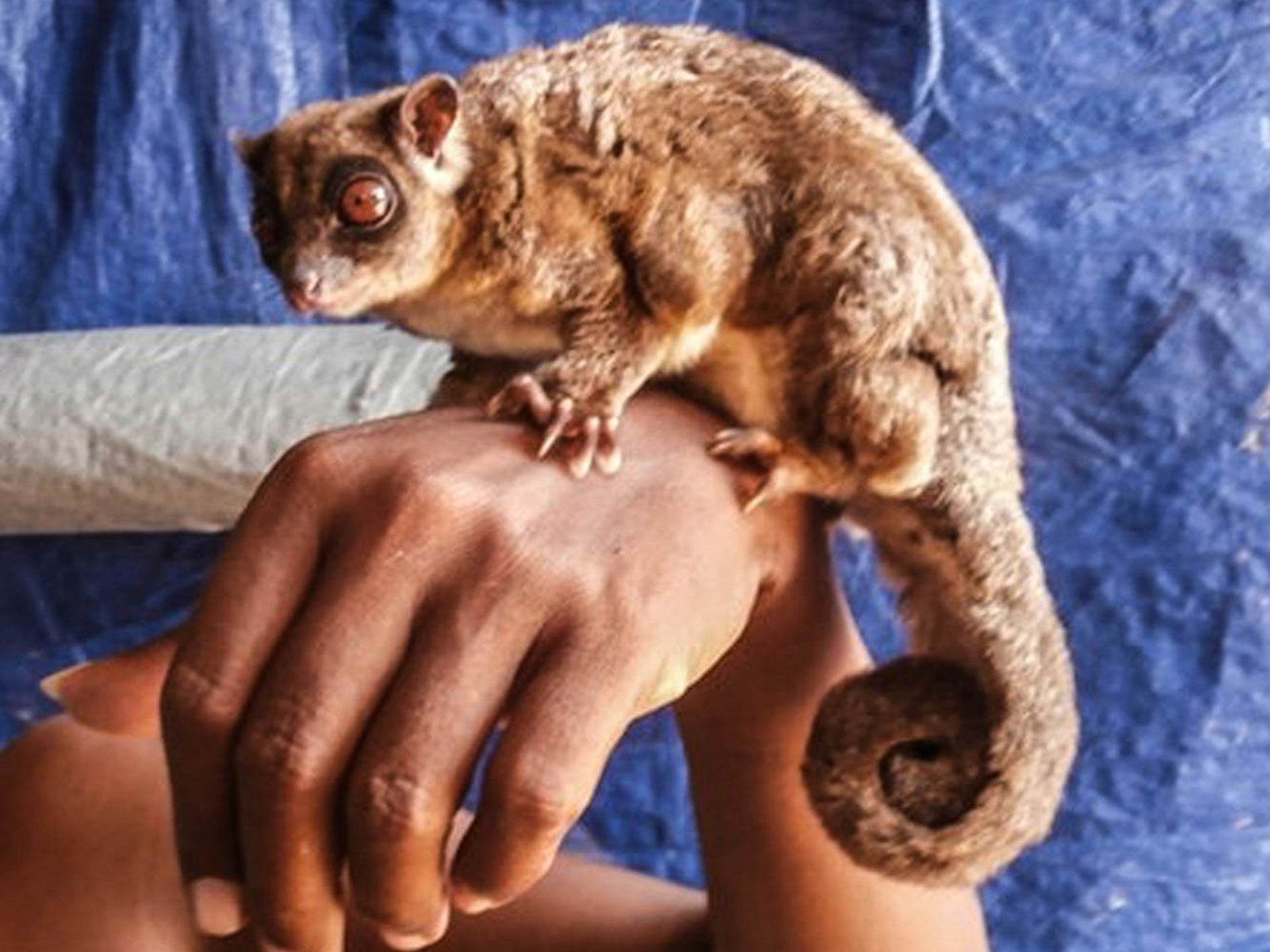
The ring-tailed glider (Tous ayamaruensis), a subadult in South Sorong area, Vogelkop Peninsula. Image credit: Arman Muharmansyah.
The ring-tailed glider is the nearest living relative of the Australian greater glider (Petauroides) and represents the first new genus of New Guinean marsupial described since 1937.
Smaller than its Australian cousins, with unfurred ears and a strongly prehensile tail, the species forms lifelong pair bonds and only raises one young annually.
Like greater gliders, the marsupial nests in tree hollows in the tallest forest trees and faces threats from logging.
“Referred to locally as Tous by some Tambrauw and Maybrat clans, the glider is a sacred animal,” said Rika Korain, a Maybrat woman.
“Considered a manifestation of ancestors’ spirits and central to an educational practice referred to as ‘initiation’.”
“We worked very carefully and collaboratively with Tambrauw Elders and identification would not have been possible without cooperation with Traditional Owners and this connection has been essential for ongoing work.”
“I’m very proud that Papuan researchers contributed to these landmark discoveries, and want to thank the people of the Misool, Maybrat and Tambrouw regions who supported us in the field,” added Dr. Aksamina Yohanita, a researcher at the University of Papua.
A paper descrinbing these discoveries was published on March 6 in the Records of the Australian Museum.
_____
Tim F. Flannery et al. 2026. Found alive after 6,000 years: modern records of an ‘extinct’ Papuan marsupial, Dactylonax kambuayai (Marsupialia: Petauridae), with a revision of the systematics and zoogeography of the genus Dactylonax. Rec. Aust. Mus 78 (1): 17-34; doi: 10.3853/j.2201-4349.78.2026.3003