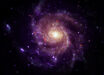
Astronomers using the NASA/ESA Hubble Space Telescope have captured this vivid image of the spiral galaxy NGC 3137, which is located in the constellation Antlia.
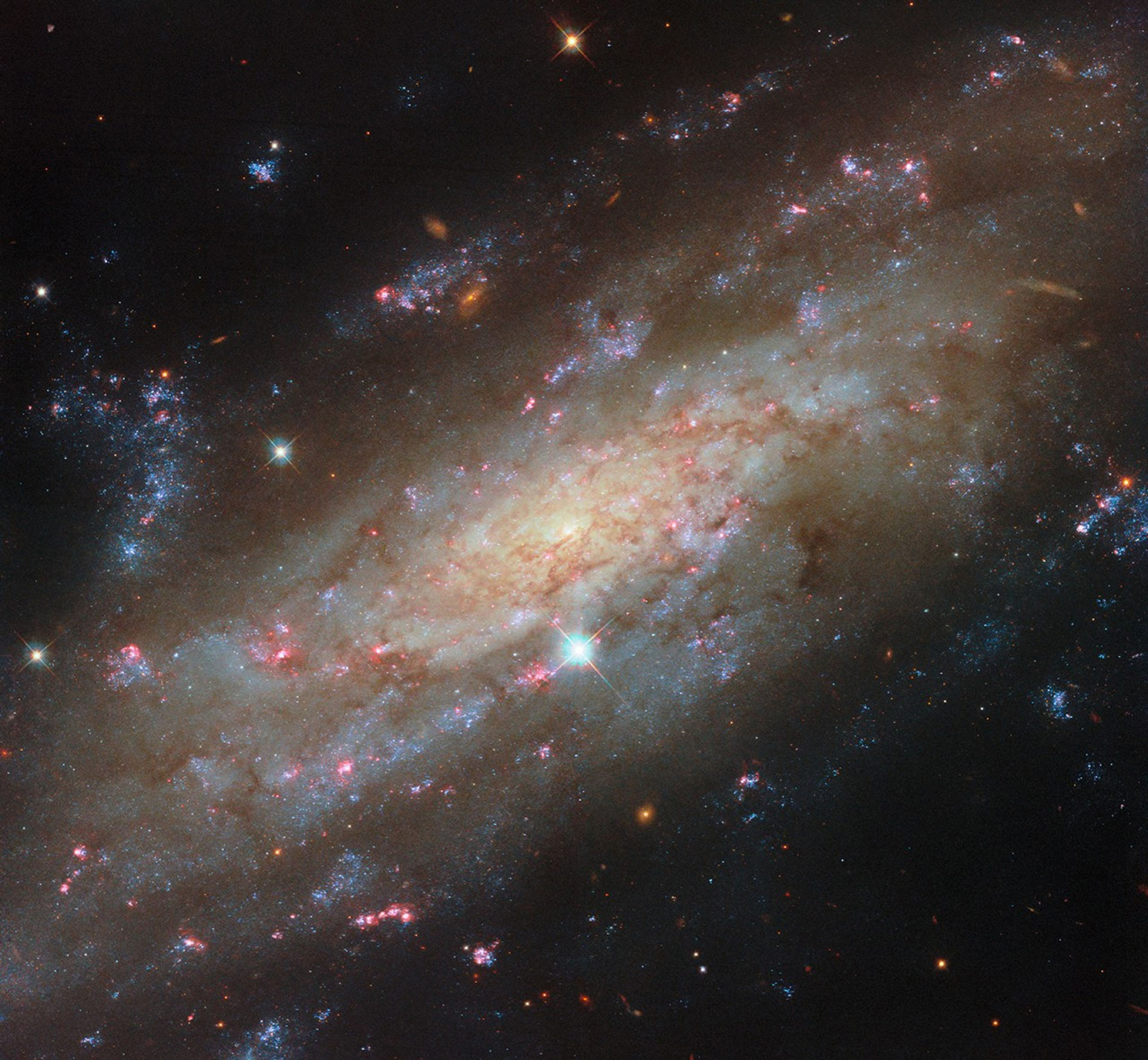
This Hubble image shows NGC 3137, a spiral galaxy some 53 million light-years away in the constellation of Antlia. Image credit: NASA / ESA / Hubble / D. Thilker / PHANGS-HST Team.
NGC 3137 is located approximately 53 million light-years away in the constellation of Antlia.
Also known as LEDA 29530, UGCA 203 or ESO 435-47, the galaxy has a diameter of 140,000 light-years.
NGC 3137 was discovered by the English astronomer John Herschel on February 5, 1837.
“NGC 3137’s center, which is encircled by a network of fine, dusty clouds, hosts a black hole estimated to be 60 million times more massive than the Sun,” the Hubble astronomers said in a statement.
“This spiral galaxy is highly inclined from our point of view, giving a unique perspective on its loose, feathery spiral structure.”
“As stunning as each of these features may be, it’s the galaxy’s brilliant star clusters that steal the show.”
“The galaxy is peppered with dense clusters of bright blue stars and glowing red gas clouds, which signal the presence of hot, young stars still encased in their birth nebulae.”
“Unsurprisingly, these star clusters are exactly what has drawn Hubble’s keen eye.”
This image of NGC 3137 was observed as part of the PHANGS (Physics at High Angular Resolution in Nearby Galaxies)-HST program, an observing program focusing on star clusters in 55 nearby galaxies.
The data collected will help astronomers identify star clusters and the glowing nebulae that surround them, providing a way to measure the ages of stars in galaxies like NGC 3137.
These observations give an in-depth view of stellar life in spiral galaxies, from the young stars still in the process of forming to the ancient stellar populations that grew up in the early years of their galactic hosts.
“NGC 3137 is of particular interest to astronomers because it travels through space with a group of galaxies that is thought to be similar to the Local Group, the galaxy group that contains our Milky Way,” the astronomers said.
“Similar to the Local Group, the NGC 3175 group contains two large spiral galaxies: NGC 3137 and NGC 3175, which Hubble has also observed.”
“In the Local Group, the largest members are the Milky Way galaxy and Andromeda, another spiral galaxy.”
“In addition to two large spiral galaxies, both groups also contain a number of smaller dwarf galaxies, although it’s not yet known how many of these tiny companions the NGC 3175 group has.”
“By studying this nearby galaxy group, astronomers can learn about the dynamics of our own Galactic home.”