Using environmental DNA (eDNA) collected from waters more than 4 km deep off Western Australia’s Nyinggulu (Ningaloo) coast, researchers identified a total of 226 species across 11 major animal groups, ranging from creatures previously undetected in the area, such as the giant squid, to others thought to be new to science.

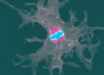
A giant squid, at least 10-12 feet in length, approaches the Medusa’s e-jelly lure before realizing the e-jelly is not food and retreating. Image credit: Edie Widder & Nathan Robinson.
“Our results highlight how little is known about Australia’s deep‑sea ecosystems,” said Dr. Georgia Nester, who conducted the research as part of her Ph.D. studies at Curtin University and is now at the University of Western Australia.
Dr. Nester and colleagues on board the Schmidt Ocean Institute’s R/V Falkor surveyed the deep Cape Range and Cloates submarine canyons about 1,200 km north of Perth, collecting more than 1,000 samples from depths of up to 4,510 m.
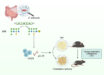
Using eDNA, they were able to document what species live in these deep habitats without needing to see or capture them.
Among the most striking finds were traces of the giant squid (Architeuthis dux) detected in both the Cape Range and Cloates Canyons across six separate samples, plus deep‑diving whales such as the pygmy sperm whale (Kogia breviceps) and the Cuvier’s beaked whale (Ziphius cavirostris).
“There were only two other records of giant squid from Western Australia, but there had not been a sighting or a specimen for more than 25 years,” said Dr. Lisa Kirkendale, a researcher at the Western Australian Museum.
“This is the first record of a giant squid detected off Western Australia’s coast using eDNA protocols and the northernmost record of Architeuthis dux in the eastern Indian Ocean.”
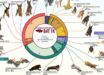
The researchers detected a total of 226 species across 11 major animal groups, including rare deep‑sea fish, cnidarians, echinoderms, squid, marine mammals and more.
Dozens of species were detected that had never previously been recorded in Western Australian waters, including the sleeper shark (Somniosus sp.), faceless cusk eel (Typhlonus nasus) and the slender snaggletooth (Rhadinesthes decimus).
“Finding evidence of a giant squid really captures people’s imagination, but it’s just one part of a much bigger picture,” Dr. Nester said.
“We found a large number of species that don’t neatly match anything currently recorded, which doesn’t automatically mean they’re new to science, but it strongly suggests there is a vast amount of deep‑sea biodiversity we’re only just beginning to uncover.”
“eDNA had the potential to transform how scientists explore and protect the deep ocean,” added Dr. Zoe Richards, a researcher at Curtin University.
“Deep‑sea ecosystems are vast, remote and expensive to study, yet they face growing pressure from climate change, fishing and resource extraction.”
“eDNA gives us a scalable, non‑invasive way to build baseline knowledge of what lives there, which is essential for informed management and conservation.”
“You can’t protect what you don’t know exists. The sheer number of discoveries, including megafauna, makes it clear that we still have so much to learn about what marine life lives in the Indian Ocean.”
The team’s results appear in the journal Environmental DNA.
_____
Georgia M. Nester et al. 2026. Environmental DNA Reveals Diverse and Depth-Stratified Biodiversity in East Indian Ocean Submarine Canyons. Environmental DNA 8 (2): e70261; doi: 10.1002/edn3.70261