Paleontologists have descibed a new species of the multituberculate mammal genus Cimolodon based on a fossil found in Baja California, Mexico.
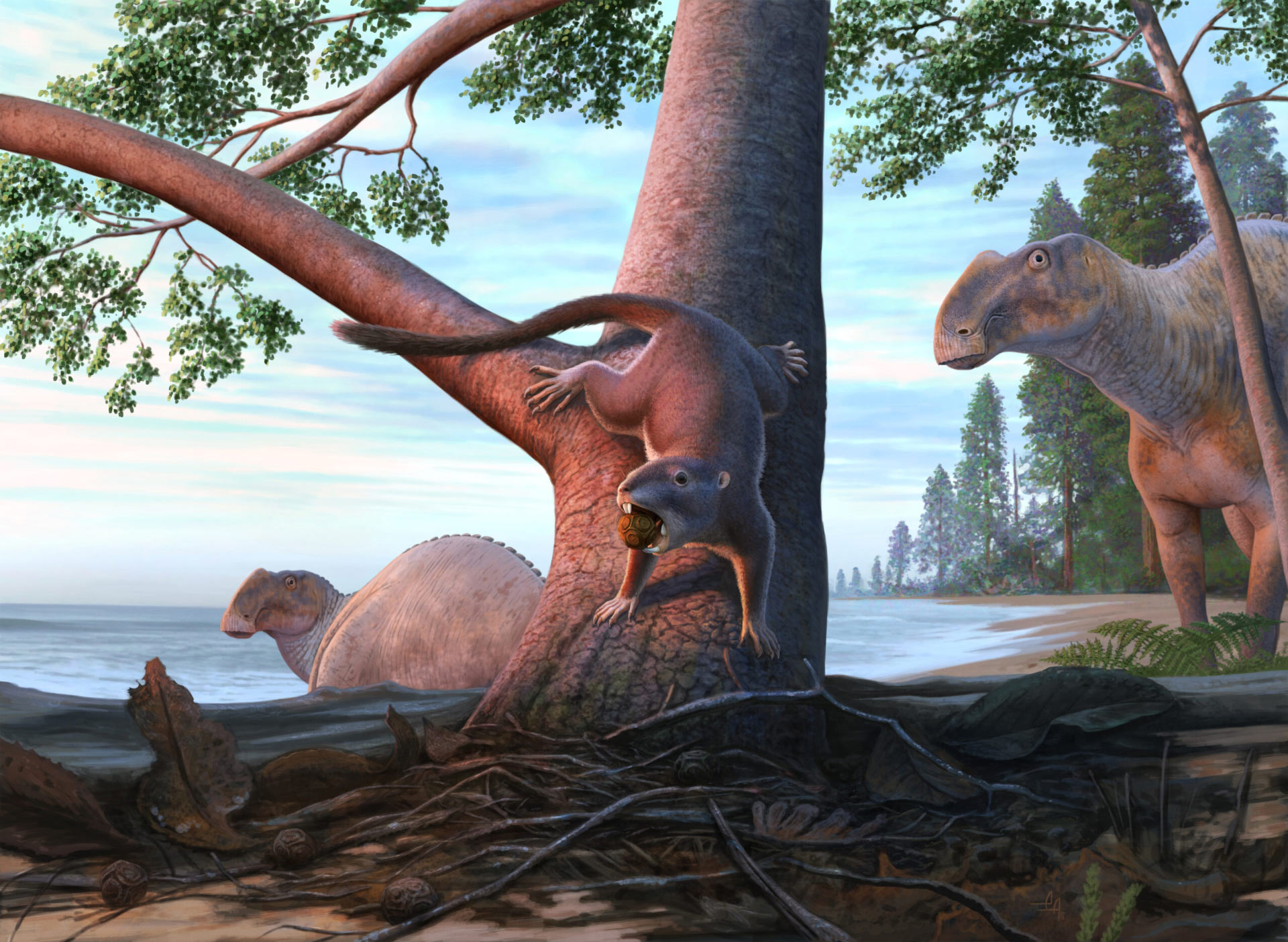
An illustration of Cimolodon desosai on the tree with a fruit in its mouth. Image credit: Andrey Atuchin.
The newly-described mammal species lived in what is now Mexico about 75 million years ago (Cretaceous period).
Named Cimolodon desosai, the ancient creature was about the size of a golden hamster and weighed 100 g.
The animal likely scampered on the ground and in trees and ate fruits and insects.
“The genus Cimolodon was a pretty common mammal during the Late Cretaceous, the last epoch of the Age of Dinosaurs,” said Professor Gregory Wilson Mantilla, a paleontologist at the University of Washington and curator of vertebrate paleontology at the Burke Museum.
“Cimolodon fossils have been found throughout western North America, from western Canada down through Mexico.”
“This new species, Cimolodon desosai, was ancestral to the species that survived the extinction event.”
“It and its descendants were relatively small and omnivorous — two traits that were advantageous for surviving.”
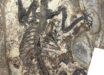
The fossilized remains of Cimolodon desosai — teeth, a skull, jaws and parts of the skeleton, including a femur and an ulna — were found in 2009 in the El Gallo Formation of Baja California.
The specimen represents the most complete mammal known from the Mesozoic of México and one of the best known cimolodontan multituberculates from North America.
“It’s very hard to find fossils at this site compared to other areas,” Professor Wilson Mantilla said.
The fact that the paleontologists uncovered more than just teeth for Cimolodon desosai means that they can better understand its size and shape and how it likely moved.
It also helps fill out the picture of this genus and the habitat in which it lived, and contributes to a better understanding of the multituberculate group in general.
“The El Gallo mammalian local fauna is now known from 16 specimens referred to three multituberculate species, one metatherian, and one eutherian,” the researchers said.
“Although further sampling is needed, the mammalian local fauna presently shows greatest biogeographic affinities with the Terlingua local fauna of western Texas.”
The team’s paper was published this month in the Journal of Vertebrate Paleontology.
_____
Gregory P. Wilson Mantilla et al. Cranial and postcranial remains of a new species of Cimolodon (Mammalia, Multituberculata, Cimolodontidae) from the Upper Cretaceous (Campanian) El Gallo Formation of Baja California, México. Journal of Vertebrate Paleontology, published online April 22, 2026; doi: 10.1080/02724634.2026.2641109