A new study by Texas A&M University scientists offers fresh clues to a long-standing puzzle: why people who drink coffee tend to live longer and develop fewer chronic diseases. Their results suggest brewed coffee contains compounds that interact with a little-understood protein in the body, potentially influencing inflammation, aging and cancer-related processes.

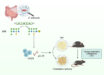
Hailemariam et al. demonstrate that brewed coffee and its major polyphenolics and polyhydroxy constituents are NR4A1 ligands and that NR4A1 may play an important role in the health-protective effects of coffee. Image credit: Sci.News.
“Coffee is the most highly consumed beverage worldwide,” said Texas A&M University’s Professor Stephen Safe and colleagues.
“Coffee drinkers are a large cohort of individuals that consume an aqueous extract of roasted and ground coffee derived from the coffee bean, which is a fruit.”
“The health impacts of coffee, the most widely consumed beverage worldwide, are similar to those observed among vegetarians and other ‘blue zone’ populations with lower rates of mortality and age-related diseases.”
“Although coffee is derived from many different coffee bean varieties and there is variability in the roasting, grinding and extraction processes, there is evidence from population studies showing that coffee drinkers live longer.”
“Moreover, they are at lower risk of several age-related diseases, including metabolic disease, some cancers, Parkinson’s disease, dementia and cardiovascular diseases.”
In their study, the authors focused on NR4A1, a receptor that responds to compounds found in the diet and plays a role in maintaining health as the body ages.
It is activated under conditions such as inflammation and cellular damage, and previous research suggests it plays a role in protecting tissues.
“If you damage almost any tissue, NR4A1 responds to bring that damage down,” Professor Safe explained.
“If you take that receptor away, the damage is worse.”
Using a series of biochemical experiments, the researchers found that brewed coffee — along with several of its key chemical components — can bind to NR4A1.
Among the compounds identified were common coffee polyphenols such as caffeic acid, chlorogenic acid and ferulic acid, as well as diterpenes like kahweol and cafestrol.
“What we’re saying is that at least part of coffee’s health benefits may come through binding and activating this receptor,” Professor Safe noted.
In experiments on cancer cell lines, coffee extracts and several of these compounds slowed cell growth.
When the scientists reduced the cells’ levels of NR4A1, that effect was diminished, suggesting the receptor helps mediate coffee’s biological activity.
They also found that many of these compounds act as so-called inverse agonists, dampening the activity of NR4A1 in ways that may counteract tumor-promoting signals.
“Coffee is a very complex mixture of compounds. It’s a very potent combination,” Professor Safe said.
Not all components behaved the same way. Caffeine — often considered coffee’s defining ingredient — showed more variable and relatively weak effects on the receptor compared with the polyphenols.
The findings help reinforce the idea that coffee’s benefits may come less from caffeine itself and more from a complex mixture of bioactive compounds.
Brewed coffee contains more than 1,000 chemicals, many of which have antioxidant or anti-inflammatory properties.
“Caffeine binds the receptor, but it doesn’t do much in our models,” Professor Safe said.
“The polyhydroxy and polyphenolic compounds are much more active.”
“This may help explain why both regular and decaffeinated coffee have been associated with similar health benefits in large population studies.”
The results appear in the journal Nutrients.
_____
Amanuel Hailemariam et al. 2026. Brewed Coffee and Its Components Act Through Orphan Nuclear Receptor 4A1 (NR4A1). Nutrients 18 (6): 877; doi: 10.3390/nu18060877