New research reveals that 3.4 billion years ago (Archean Eon), ancient microbes relied on molybdenum — a metal that was vanishingly rare at the time — and even experimented with tungsten. The findings may rewrite how astrobiologists search for life on other planets.

Early Earth. Image credit: Peter Sawyer / Smithsonian Institution.
Geochemical evidence suggests that molybdenum’s availability in early Earth’s anoxic oceans was extremely limited, yet modern life depends on it almost universally.
Scientists previously theorized that life may have used tungsten first and then evolved to use molybdenum once it became more available.
University of Wisconsin-Madison’s Professor Betül Kaçar and colleagues aimed to test that assumption.
“The transition metal molybdenum displays an enigmatic evolutionary history in biology in relation to the environment,” the reseatchers said.
“Molybdenum participates in key biogeochemical transformations of carbon, nitrogen, and sulfur, and previous studies have proposed that many of these metabolic pathways have ancient histories.”
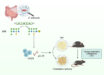
In the study, the authors screened genomic databases to identify which living species carry the genes responsible for molybdenum transport, storage, and enzyme-building.
Using a technique called phylogenetic reconciliation, they reconstructed the evolutionary history of molybdenum- and tungsten-utilizing proteins across the modern tree of life.
They also tracked how molybdenum moves through and is used inside living cells, studying its intracellular trafficking from uptake to catalysis.
In parallel, they examined the history of biological tungsten usage for transport and catalysis.
They gathered available data on the prevalence of molybdenum through time and found that, although molybdenum was scarce, ancient microbes on Earth still found a way to use it — as far back as 3.3-3.7 billion years ago.
“What is kind of counterintuitive is that, according to the geochemical record, molybdenum abundance on the early Earth seems to have been a lot lower billions of years ago, particularly before the advent of oxygenic photosynthesis,” said Aya Klos, a Ph.D. student at the University of Wisconsin-Madison.
“Yet for some reason, despite its limited availability, life continued to evolve using biochemical processes that rely on molybdenum.”
“Those processes have been passed down to modern-day organisms.”
“Understanding which elements early life relied on can aid astrobiologists in identifying other planets that could potentially support life,” Professor Kaçar said.
“This study shows that just because an element is scarce in the environment doesn’t mean life will not find a way to use it and even build an empire with it.”
“Life works in surprising ways. Discoveries like this remind us that the search for life beyond Earth may require us to imagine possibilities we haven’t yet considered.”
A paper on the findings was published today in the journal Nature Communications.
_____
A.S. Klos et al. 2026. Biological use of molybdenum and tungsten stems back to 3.4 billion years ago. Nat Commun 17, 3943; doi: 10.1038/s41467-026-72133-0