Astronomy News

Mar 2, 2020 by News Staff

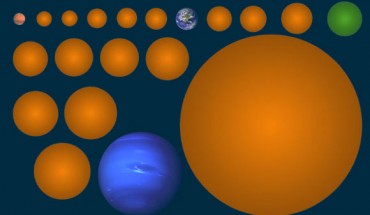
Using data gathered by NASA’s Kepler space telescope, a team of astronomers in Canada has discovered 17 new exoplanets, including an Earth-sized world. Designated KIC 7340288b, this planet is both rocky and in the habitable zone of its parent star. Sizes of 17 new planet candidates, compared to Mars, Earth, and Neptune. The planet in green is KIC 7340288b. Image credit: Michelle Kunimoto. “KIC 7340288b is about 1,000 light-years away, so we’re...

Mar 2, 2020 by Enrico de Lazaro

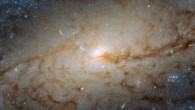
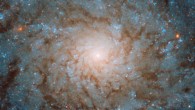
The NASA/ESA Hubble Space Telescope has captured an amazing photo of the central region of a barred spiral galaxy called NGC 3887. This Hubble image shows...

Feb 28, 2020 by News Staff

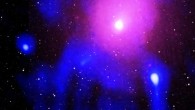
Using data from ESA’s XMM-Newton and NASA’s Chandra X-ray space observatories, along with two ground-based radio telescopes in Australia and India,...

Feb 27, 2020 by News Staff

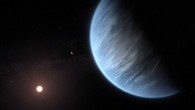
A team of astronomers from the Institute of Astronomy at the University of Cambridge, UK, has found K2-18b, a planet of almost nine Earth masses in orbit...

Feb 27, 2020 by The Conversation

The Minor Planet Centre has just announced that our planet has been orbited by a second moon for the past three years or so. Designated 2020 CD3, the object...

Feb 27, 2020 by News Staff

Astronomers using the Gemini South telescope on the summit of Cerro Pachon in Chile have taken a picture of CVMP 1, a planetary nebula located some 6,500...

Feb 26, 2020 by News Staff

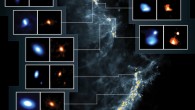
Using NSF’s Karl G. Jansky Very Large Array (VLA) and the Atacama Large Millimeter/submillimeter Array (ALMA), astronomers have captured images of 328...

Feb 25, 2020 by News Staff

Using data from the European Photon Imaging Camera (EPIC) onboard ESA’s XMM-Newton X-ray observatory, astronomers have detected for the first time a...

Feb 24, 2020 by News Staff

Astronomers using the Spectro-Polarimetric High-contrast Exoplanet Research (SPHERE) imager, an instrument installed on ESO’s Very Large Telescope (VLT)...

Feb 24, 2020 by Enrico de Lazaro

The NASA/ESA Hubble Space Telescope has produced this beautiful image of the unbarred spiral galaxy NGC 691. This Hubble image shows NGC 691, a spiral...

Feb 21, 2020 by News Staff

Messier 104, a lenticular galaxy located 28 million light-years away in the constellation Virgo, now has a new chapter in its story — an extended...

Feb 20, 2020 by News Staff

Breakthrough Listen, the largest ever scientific research program aimed at finding evidence of intelligent life beyond Earth, has released data from its...

Feb 20, 2020 by News Staff

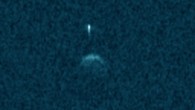
Astronomers using a radio telescope at the Arecibo Observatory have captured the first images of the recently-discovered near-Earth asteroid 2020 BX12....

Feb 19, 2020 by News Staff

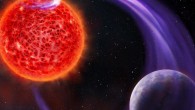
Using the Low Frequency Array (LOFAR) radio telescope, astronomers have observed radio waves that carry the distinct signatures of extraterrestrial aurorae,...

Feb 18, 2020 by News Staff

The Breakthrough Listen Initiative, the largest ever scientific research program aimed at finding evidence of alien civilizations, has released data from...

Feb 17, 2020 by News Staff

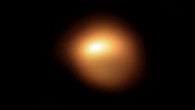
Astronomers using two instruments on ESO’s Very Large Telescope (VLT) have captured new images of a red supergiant star called Betelgeuse. The images...

Feb 17, 2020 by Enrico de Lazaro

Astronomers using the NASA/ESA Hubble Space Telescope have photographed the central part of a spiral galaxy called NGC 4689. This Hubble image shows the...

Feb 14, 2020 by News Staff

Using data from the Atacama Large Millimeter/submillimeter Array (ALMA), a team of Japanese researchers has found that Galactic cosmic rays affect the...

Feb 13, 2020 by News Staff

Astronomers using data from ESA’s Gaia star-mapping satellite have discovered a newborn gaseous exoplanet closer to Earth than any other of similarly...

Feb 12, 2020 by News Staff

In February 2020, NASA’s Solar Dynamics Observatory (SDO) is celebrating its 10th year in space. NASA’s Solar Dynamics Observatory (SDO) spacecraft,...