Biology News

Apr 23, 2018 by News Staff

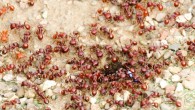
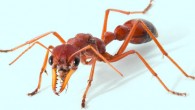
Entomologists are claiming they have discovered a new species of so-called ‘exploding ant’ living in the remote rainforests of Borneo, Thailand, and Malaysia. When their colony is threatened by an intruder, minor workers of the new species — named Colobopsis explodens — can tear their own body apart, in order to release toxins and either kill or repel the enemy. Colobopsis explodens is described in a paper published online April 19...

Apr 18, 2018 by News Staff

An international team of researchers from the United States, UK and Brazil has engineered an enzyme which can digest polyethylene terephthalate (PET),...

Apr 18, 2018 by News Staff

One of New Guinea’s dancing birds-of-paradise — the Vogelkop Superb Bird-of-Paradise (Lophorina niedda) — was finally confirmed to be an...

Apr 18, 2018 by News Staff

A team of scientists from the University of California, Riverside (UCR) has identified three new species of bacteria — Lactobacillus micheneri, L....

Apr 16, 2018 by News Staff

The Costa’s hummingbird (Calypte costae) is a small species of hummingbird endemic to the far west region of the United States and Mexico. During breeding...

Apr 13, 2018 by News Staff

A team of marine biologists from the University of Kansas and the Field Museum, Chicago has discovered a remarkable defensive system — ‘lachrymal...

Apr 12, 2018 by News Staff

A new study published online in the journal eLife indicates that satellite DNA — commonly called ‘junk’ DNA — performs the vital function...

Apr 10, 2018 by News Staff

In a groundbreaking genetic kinship study, a research team led by the Florida Atlantic University’s Harbor Branch Oceanographic Institute is the first...

Apr 9, 2018 by News Staff

A team of scientists from Australia and China has found that many of the viruses infecting us today have ancient evolutionary histories that date back...

Apr 6, 2018 by News Staff

Bonobos (Pan paniscus) are willing to share meat with members of neighboring communities. This unusual behavior, documented in a study in the journal Human...

Apr 4, 2018 by News Staff

Japanese macaques (Macaca fuscata), also known as snow monkeys, are the world’s most northerly species of non-human primates. They have been enjoying...

Apr 2, 2018 by News Staff

A team of researchers at the University of British Columbia in Canada has isolated and characterized the Bodo saltans virus, a giant virus that infects...

Apr 2, 2018 by News Staff

Over their short lifetimes though, bird eggshells change their strength: they get thinner and weaker before hatching begins. Now, an international team...

Mar 29, 2018 by News Staff

According to a new study published online in the journal PeerJ, foraging marine turtles use flippers to handle prey despite the limbs being evolutionarily...

Mar 27, 2018 by News Staff

The bootlace worm (Lineus longissimus) — the longest animal on Earth — produces a neurotoxin that can kill both crabs and cockroaches, a team...

Mar 26, 2018 by News Staff

A newly-released video, captured in the waters around Portugal’s Azores islands, shows a pair of deep-sea anglerfish called the fanfin angler (Caulophryne...

Mar 22, 2018 by News Staff

University of Lincoln researcher Malgorzata Pilot and colleagues have found small blocks of dog ancestry in the genomes of 62% Eurasian grey wolves. Published...

Mar 19, 2018 by News Staff

Two new species of dog-faced bats have been discovered in the tropical forests of Central and South America. Both new species are described in the March...

Mar 13, 2018 by News Staff

Researchers have long suspected that color-changing animals like hogfish (Lachnolaimus maximus) don’t just rely on their eyes to tune their appearance...

Mar 7, 2018 by News Staff

Dr. Tanai Cardona, a researcher with Imperial College London, UK, studied molecular machines responsible for oxygenic photosynthesis and found the process...