Biologists studying how bacteria break down a new generation of plant-based bioplastics — long-chain aliphatic polyesters — have discovered an enzyme that can dismantle both plastic and antibiotics.
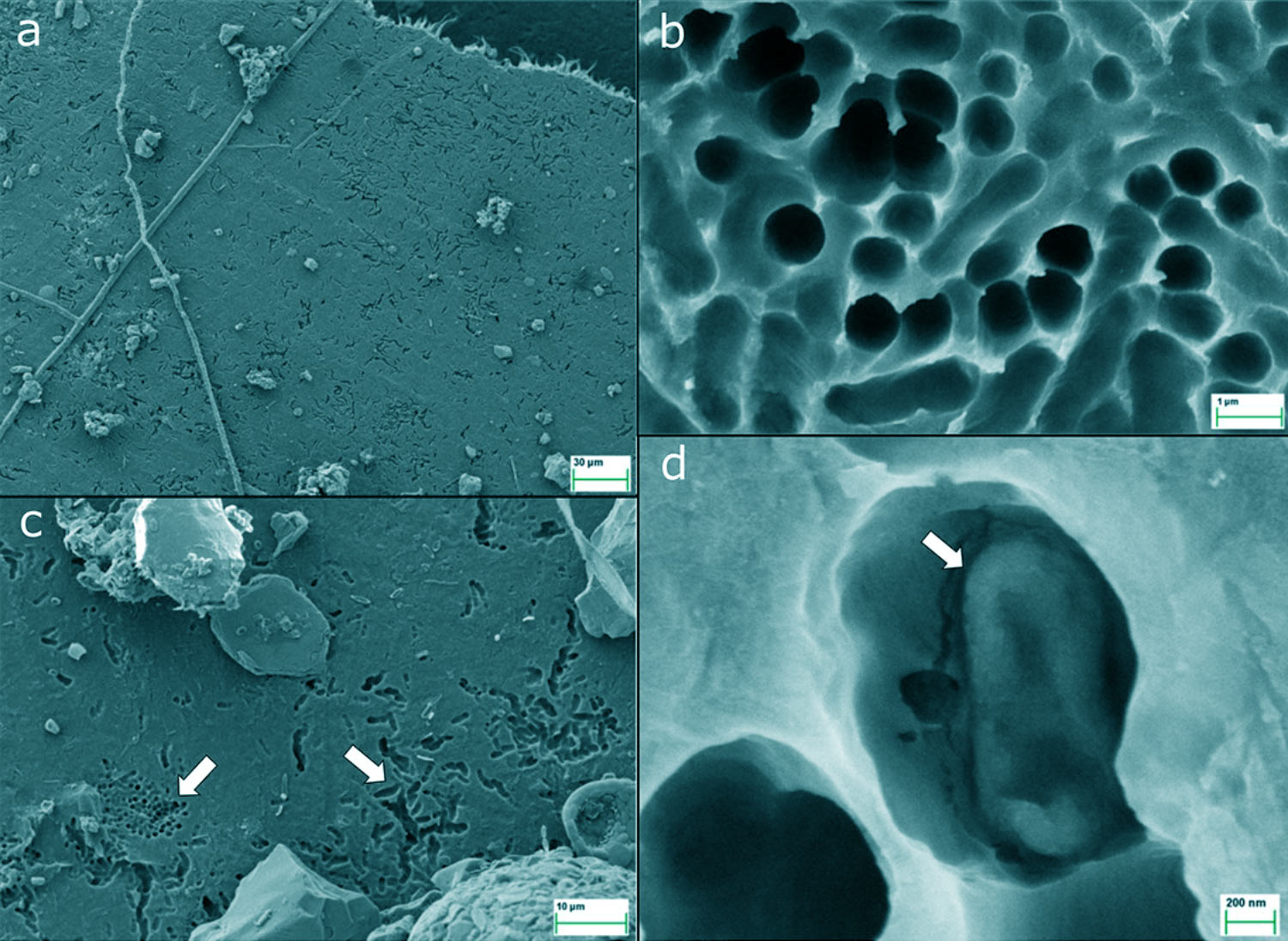
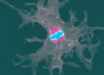
SEM images of LCAP films incubated undisturbed for more than a year in pristine forest soil. The arrow in panel (d) points at an object inside of such a cavity that might represent a (damaged) microbial cell; however, these were found very rarely; empty cavities were more representative (a-c). Image credit: Lerner et al., doi: 10.1093/ismejo/wrag203.
“Plastic waste and its deterioration into micro- and nanoplastics, paired with slow biodegradation of most present-day plastic materials, has developed into a major environmental and human health concern,” said lead author Dr. Harry Lerner and his colleagues from the University of Konstanz.
“In addition to being recalcitrant physical pollutants, plastic debris can act as a vector for transporting chemical contaminants and colonizing microbes.”
“Furthermore, microorganisms inhabiting the plastisphere, the biofilm community on plastic surfaces, have been shown to harbor disproportionately high levels of antibiotic resistance genes, raising concerns about plastic-mediated dissemination of antibiotic resistance genes throughout ecosystems.”
In the study, the researchers buried strips of a biodegradable plastic called LCAP, made from long-chain molecules derived from plant oils, in forest soil for more than a year.
Microscopic images later showed the plastic riddled with tiny, bacteria-shaped pits, evidence that microbes had been eating away at its surface.
“We buried small pieces of LCAP bioplastic film in the upper humus layer in the forest at the university’s botanical garden, about ten centimeters deep,” Dr. Lerner said.
“This layer is where the breakdown of cellulose and other natural polymers, such as cutin — a plant-based polyester — takes place.”
By sequencing the DNA of soil microbes thriving on the plastic, the scientists identified a bacterial enzyme, which they named LCPH1, that closely resembled a class of proteins bacteria use to disable penicillin-type antibiotics.
Structural modeling showed the enzyme had an unusually wide, open active site — nicknamed a ‘pac-man’ shape — capable of grabbing both plastic strands and antibiotic molecules.
The enzyme also broke down the bioplastic into its component parts and also destroyed penicillin and ampicillin, even stripping the drugs of their ability to kill bacteria.
The findings raise a provocative question for the growing field of plastic pollution research.
“The enzyme’s structure resembles that of esterases, but also that of beta-lactamases, which are bacterial enzymes that are capable of cleaving the beta-lactam ring of certain antibiotics, such as penicillin, thereby making bacteria resistant to antibiotics,” Dr. Lerner said.
“The plastisphere is a new habitat in our environment,” added Dr. David Schleheck, senior author of the study.
“Humans have only been introducing plastic into the environment in significant quantities for around 50 to 75 years.”
“Since then, it has theoretically been available to microbial communities — such as bacteria, yeasts and fungi — as an additional source of carbon and energy for their growth.”
“By theoretically, I mean that they would certainly like to use the plastic as a growth substrate — but they cannot, because the materials are actually indigestible to microbial metabolism and are therefore hardly degraded.”
“I find this encouraging, because it seems that bacteria can adapt to breaking down polyester plastics more quickly than we expected.”
“To tackle the environmental problem of plastic pollution, we humans need to work with the capabilities of microbes.”
“Ideally, this would involve using only polymers with biochemical breaking points, such as the hydrolysable ester bonds in polyesters like LCAP or other types of bioplastics.”
The team’s paper was published this month in The ISME Journal.
_____
Harry Lerner et al. 2026. Bacterial family-VIII esterase displays dual activities: hydrolysis of polyester bioplastics and β-lactam antibiotics. The ISME Journal 20 (1): wrag203; doi: 10.1093/ismejo/wrag203