Geology News

Jun 17, 2014 by News Staff

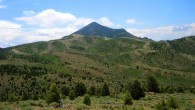
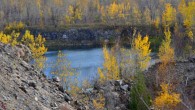
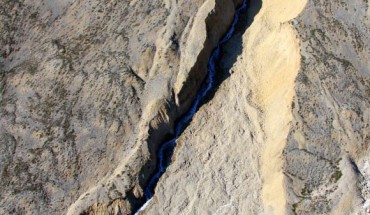
A team of researchers from Canada has announced the discovery of the Earth’s highest latitude perennial spring, located in the polar desert of the Canadian High Arctic. View looking north at the Ice River Spring. Located in the polar desert of northern Ellesmere Island, Nunavut, this spring carves a gully remarkable similar to those observed on Mars. Image credit: Stephen Grasby. Dr Stephen Grasby from the University of Calgary and Geological Survey...
May 20, 2014 by News Staff

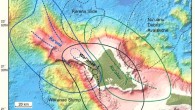
Geologists from France and the United States have discovered that the island of O’ahu consists of three major volcanoes, not two, as previously thought. This...

May 8, 2014 by News Staff

Scientists from Alberta Geological Survey and the University of Alberta have discovered an 8 km wide bowl-shaped impact crater near Bow City in southern...

Apr 22, 2014 by News Staff

Scientists led by Dr Christo Buizert of Oregon State University have successfully used an innovative radiometric-Krypton-dating technique to determine...

Apr 22, 2014 by Natali Anderson

A multinational group of scientists led by Dr Peter Elliott of South Australian Museum and the University of Adelaide has described a new mineral from...

Apr 18, 2014 by News Staff

In two separate studies, geologists led by Dr Haley Sapers from the University of Western Ontario and Dr Pete Schultz of Brown University have found floral,...

Apr 17, 2014 by News Staff

U.S. geologists have discovered what they say is a Pleistocene landscape preserved about 3 km beneath the Greenland Ice Sheet. Abour 3 million years ago,...

Mar 21, 2014 by Sergio Prostak

The stony meteorite D’Orbigny is the source of a newly discovered mineral, kuratite. Its name honors Dr Gero Kurat (1938-2009), a world-renowned meteorite...

Mar 14, 2014 by News Staff

First terrestrial discovery of an extremely rare mineral called ringwoodite confirms theory about huge water ‘reservoirs’ 410 to 660 km beneath...

Feb 24, 2014 by News Staff

A small fragment of a mineral called zircon extracted from a remote rock outcrop in Australia confirms that the Earth’s crust first formed at least 4.4...

Jan 30, 2014 by Natali Anderson

An anomalous magma chamber has been observed at 8–11 km depth beneath the upper east rift zone of one of the world’s most active volcanoes –...

Dec 25, 2013 by News Staff

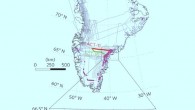
An international team of researchers has uncovered a giant reservoir of water beneath the ice sheet in Southeast Greenland. This map shows locations of...

Dec 23, 2013 by News Staff

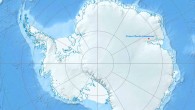
For the first time, researchers have found kimberlite – a type of volcanic rock that often bears diamonds – in Antarctica. This map shows the...

Dec 11, 2013 by News Staff

Geologists from Brigham Young University, Berkeley Geochronology Center and the Pacific Northwest National Laboratory have found evidence of twenty ancient...

Dec 6, 2013 by News Staff

According to a group of researchers led by Dr Vincent Post from the Australia’s National Center for Groundwater Research and Training and Flinders University,...

Nov 15, 2013 by Natali Anderson

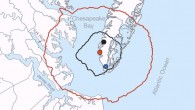
A new study published in Nature provides chemical, isotopic and physical evidence that groundwater found more than 3,200 feet deep under the Chesapeake...

Nov 12, 2013 by News Staff

According to geologists led by Dr Antonio Simonetti from the University of Notre Dame, a detailed analysis of calcite-rich minerals from the 120-million-year-old...

Nov 7, 2013 by News Staff

European scientists examined liquid basalt at record high pressures and temperatures to better understand how our planet evolved billions of years ago. Early...

Oct 23, 2013 by News Staff

Australian researchers reporting in the journal Nature Communications have detected particles of gold in the branches and leaves of eucalyptus trees growing...

Sep 26, 2013 by Natali Anderson

An analysis of three-billion-year-old soils from South Africa shows that oxygen appeared in the atmosphere more than 600 million years earlier than previously...