Geology News

Sep 11, 2015 by News Staff

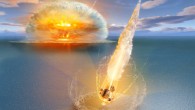
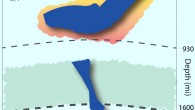
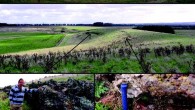
A team of scientists from the University of Gothenburg, Sweden, has found traces of two meteorite impacts in the Swedish county of Jämtland, a twin strike that occurred 458 million years ago (Ordovician period). Artist’s conception of two meteorites striking Earth. Image credit: Don Dixon / Erik Sturkell / University of Gothenburg. Prof Erik Sturkell from the University of Gothenburg’s Department of Earth Sciences and his colleagues found one...

Aug 26, 2015 by News Staff

The mineral diversity of Earth is unique and could not be duplicated anywhere in the cosmos. That’s according to a group of researchers, led by Dr Robert...

Jul 21, 2015 by News Staff

A multinational group of researchers using undersea vehicles in the waters off Greece’s Santorini has discovered an interconnected series of subsea pools...

Mar 24, 2015 by News Staff

New research led by Dr Hauke Marquardt of the University of Bayreuth, Germany, suggests the existence of a previously unknown superviscous layer inside...

Mar 23, 2015 by News Staff

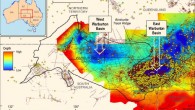
A 400 km-wide (250 mile-wide) impact basin from a massive asteroid that broke in two moments before it slammed into our planet has been found in north-eastern...

Feb 10, 2015 by News Staff

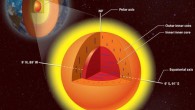
An international team of geologists, headed by Prof Xiaodong Song from the University of Illinois at Urbana-Champaign and Nanjing University in China,...

Feb 3, 2015 by News Staff

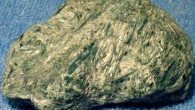
A team of geologists led by Dr Brenda Buck from the University of Nevada-Las Vegas has discovered naturally occurring asbestos minerals in Clark County...

Jan 17, 2015 by News Staff

A golf-ball sized chunk of rock with at least 30,000 diamonds has been found in the Udachnaya diamond mine in Yakutia, according to a team of scientists...

Dec 15, 2014 by News Staff

A massive volcanic eruption in what is now India about 250,000 years before the cataclysmic Chicxulub asteroid impact may have played a role in the extinction...

Oct 31, 2014 by News Staff

According to a team of researchers led by Dr Brian Monteleone of the Woods Hole Oceanographic Institution, Earth’s oceans have likely existed since...

Aug 4, 2014 by News Staff

According to a new study led by Dr Joanne Whittaker of the University of Tasmania’s Institute for Marine and Antarctic Studies, the Australia’s...

Jun 28, 2014 by News Staff

Scientists at Monash University have announced the discovery of three previously unrecorded ancient volcanoes in the Hamilton area of the Newer Volcanics...

Jun 18, 2014 by News Staff

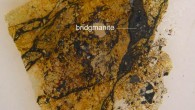
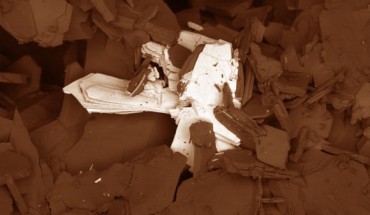
A new mineral, believed to be the most abundant on our planet, has been named after U.S. physicist Percy Williams Bridgman (1882 – 1961), who won the...

Jun 17, 2014 by News Staff

A team of researchers from Canada has announced the discovery of the Earth’s highest latitude perennial spring, located in the polar desert of the Canadian...

May 20, 2014 by News Staff

Geologists from France and the United States have discovered that the island of O’ahu consists of three major volcanoes, not two, as previously thought. This...

May 8, 2014 by News Staff

Scientists from Alberta Geological Survey and the University of Alberta have discovered an 8 km wide bowl-shaped impact crater near Bow City in southern...

Apr 22, 2014 by News Staff

Scientists led by Dr Christo Buizert of Oregon State University have successfully used an innovative radiometric-Krypton-dating technique to determine...

Apr 22, 2014 by Natali Anderson

A multinational group of scientists led by Dr Peter Elliott of South Australian Museum and the University of Adelaide has described a new mineral from...

Apr 18, 2014 by News Staff

In two separate studies, geologists led by Dr Haley Sapers from the University of Western Ontario and Dr Pete Schultz of Brown University have found floral,...

Apr 17, 2014 by News Staff

U.S. geologists have discovered what they say is a Pleistocene landscape preserved about 3 km beneath the Greenland Ice Sheet. Abour 3 million years ago,...